
East Asia
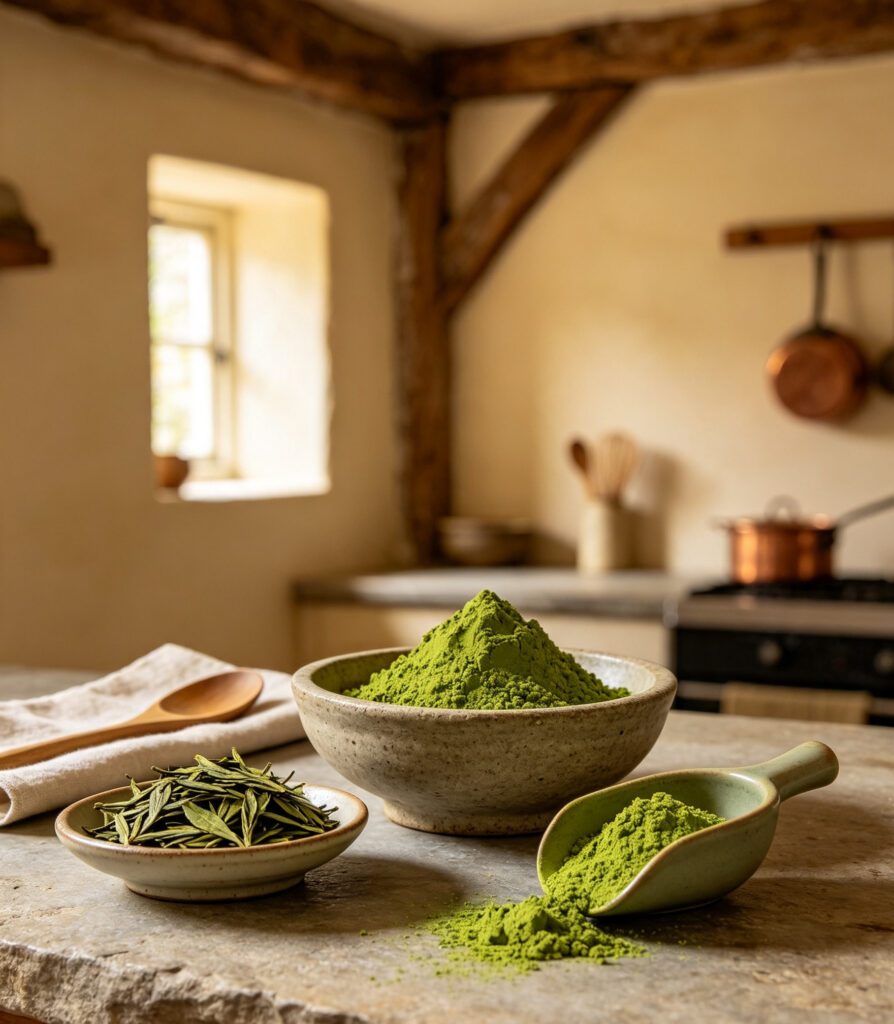
Green Tea Powder / Matcha
Camellia sinensis, shade-grown leaves, stone-ground into fine powder.
Local / Regional Names
Matcha (Japanese).
Countries / Cuisines
Japan (Uji and Nishio are particularly prestigious growing regions).
Flavor & Aroma
Vegetal, umami-rich, mildly bitter, with a distinctive smooth, slightly sweet finish in high grades.
Culinary Uses
Traditional whisked tea preparation (chanoyu, the tea ceremony) and, increasingly, a flavoring for desserts and confections.
Classic Dishes
Usucha/koicha whisked tea; matcha-flavored sweets and desserts (a more modern, non-ceremonial application).
Pairings
Sweetened red bean, white chocolate, milk.
Timing
Whisk into hot (not boiling) water for tea; fold into batters for baking applications.
Storage
Keeps only a few months at peak quality even sealed and refrigerated – matcha degrades faster than most items in this reference.
Substitutions
No true substitute; lower culinary-grade matcha for baking versus higher ceremonial-grade for drinking.
Cultural / History Notes
The distinction between ceremonial-grade (for drinking, whisked with water) and culinary-grade (for baking and flavoring) matcha is significant and worth flagging, as the two are not generally interchangeable for their respective traditional purposes.
Blend Cross-References
Not a spice blend component in the conventional sense; used as a standalone flavoring/beverage base.
Please log in to leave a comment.