
East Asia
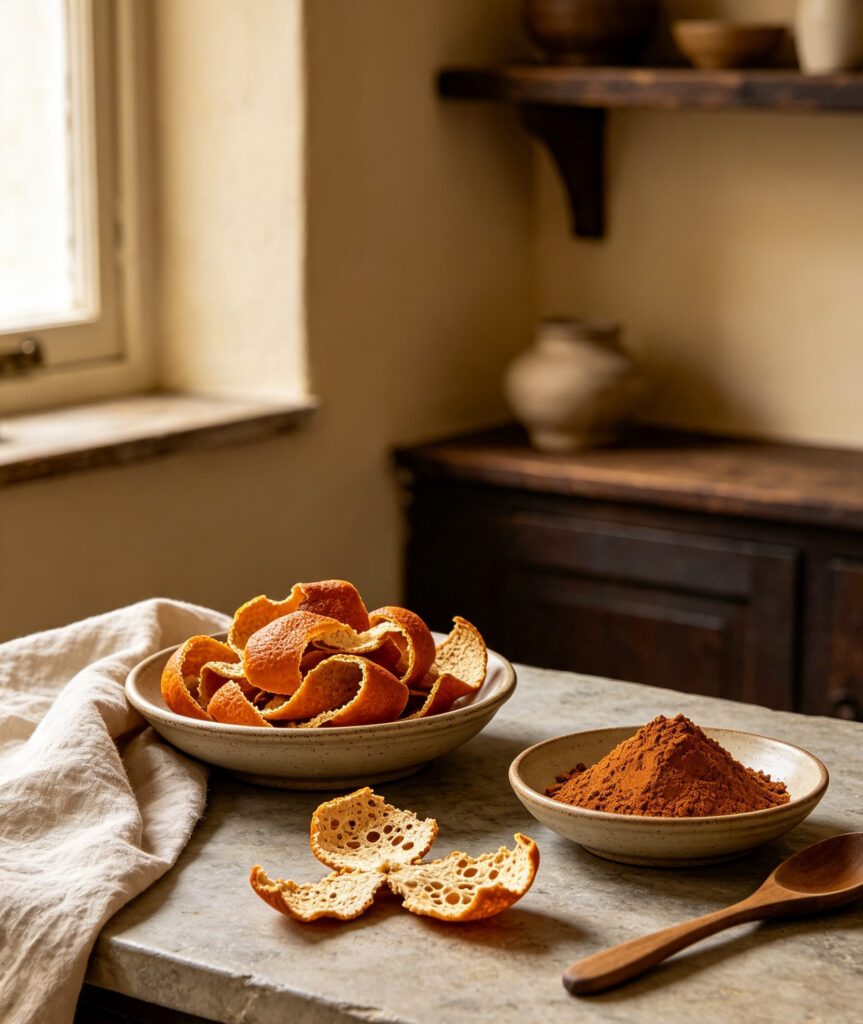
Dried Tangerine Peel / Chenpi
Citrus reticulata, specifically aged/dried peel from particular cultivars (notably Citrus reticulata cv. Chachiensis).
Local / Regional Names
Chenpi / chen pi (Mandarin, literally 'aged peel'); guǒpí is a related general term for dried citrus peel.
Countries / Cuisines
China (Guangdong's Xinhui district is especially prized).
Flavor & Aroma
Bittersweet, citrusy, developing deeper, more complex, less sharply bitter notes the longer it ages.
Culinary Uses
Aromatic addition to soups, braises, desserts, and tea; also used medicinally in Traditional Chinese Medicine.
Classic Dishes
Braised duck; various soups and stews; red bean soup with chenpi; tangerine beef.
Pairings
Star anise, ginger, pork and duck.
Timing
Add whole or torn pieces early in a simmer; rehydrate briefly in warm water first if very dry and aged.
Storage
Properly dried peel can be stored and aged for years to decades, with well-aged chenpi commanding significantly higher prices, much like fine wine or aged tea.
Substitutions
Fresh orange or tangerine zest in a pinch, though this lacks the deep, mellowed complexity that aging provides.
Cultural / History Notes
Aged chenpi is genuinely prized and priced like a fine collectible in Guangdong food culture – a striking contrast to most dried citrus peel used elsewhere in this reference, which is typically used fresh-dried rather than deliberately aged for years.
Blend Cross-References
Five-spice-adjacent braising spice bundles (lu wei).
Please log in to leave a comment.