
East Asia
Sichuan Pepper
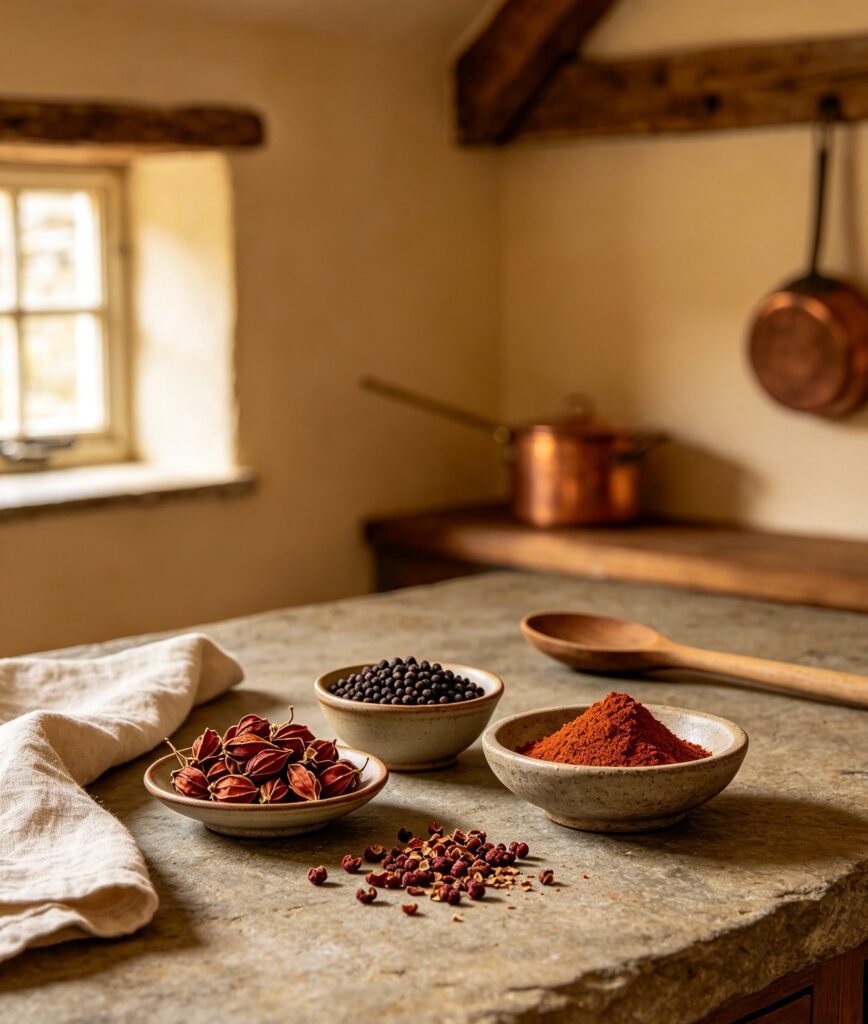
Zanthoxylum bungeanum (red Sichuan pepper).
Local / Regional Names
Huajiao (Mandarin); sansho is the related but distinct Japanese species.
Countries / Cuisines
China (Sichuan and Chongqing regions).
Flavor & Aroma
Not hot in the capsaicin sense; produces a distinctive tingling, numbing (má) sensation alongside a citrusy-floral aroma.
Culinary Uses
Foundational spice of Sichuan cuisine's signature 'numbing-and-hot' (mala) flavor profile.
Classic Dishes
Mapo tofu; dan dan noodles; Chongqing hot pot.
Pairings
Dried chile (together forming 'mala'), star anise, ginger.
Timing
Toast whole in dry oil briefly to release aroma before grinding or infusing into oil.
Storage
Whole husks keep well over a year sealed and dark; ground loses potency within weeks.
Substitutions
Green Sichuan pepper for a sharper, more intensely numbing result; no true substitute exists outside the Zanthoxylum genus.
Cultural / History Notes
Botanically unrelated to true black pepper (Piper nigrum) despite the shared English 'pepper' name – its numbing effect is a genuinely unique sensory property among the spices in this entire reference.
Blend Cross-References
Mala spice blend; five-spice powder (some regional formulations); Sichuan salt & pepper mix.
Please log in to leave a comment.