
Central Asia
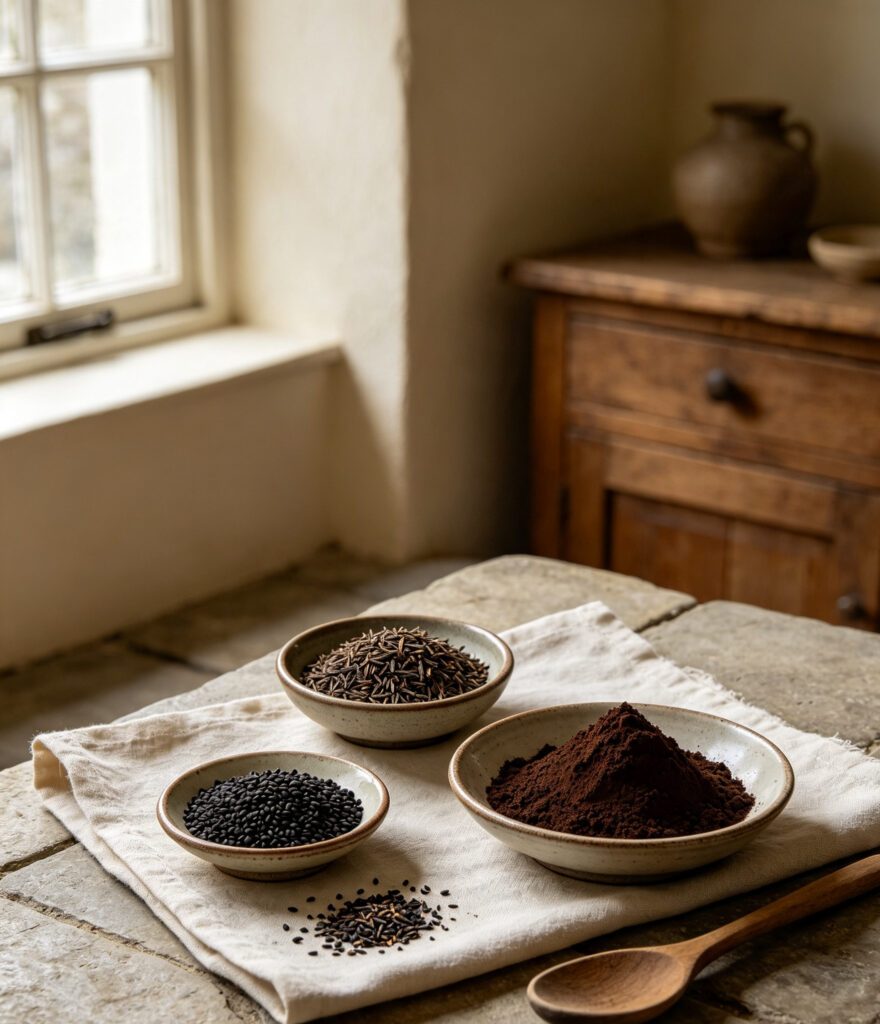
Black Cumin / Zira
Bunium persicum.
Local / Regional Names
Siyoh zira (Uzbek), qora zira; the same plant as the Middle East's 'black cumin/shahi jeera' and South Asia's kala zeera.
Countries / Cuisines
Tajikistan, Kyrgyzstan (wild-harvested in mountainous regions), used across Uzbek and broader Central Asian cooking.
Flavor & Aroma
Smoky, resinous, sharper and more complex than ordinary cumin, with a bittersweet edge and faint burnt-caramel note when chewed.
Culinary Uses
A premium, more intensely flavored alternative to ordinary cumin in richer regional plov and meat preparations, particularly associated with Bukhara-style cooking.
Classic Dishes
Bukhara-region plov variants; rich meat preparations.
Pairings
Ordinary cumin (often used alongside, not instead of), black pepper, coriander.
Timing
Add during the zirvak stage, similar to ordinary cumin.
Storage
Whole seed keeps 2+ years sealed and dark.
Substitutions
Ordinary cumin, though the result is milder and less smoky.
Cultural / History Notes
The central naming hazard across Central Asia, the Middle East and South Asia: 'zira' in Persian/Central Asian usage can mean either true cumin or Bunium persicum ('black zira'), and English retail commonly muddles the two further with Nigella sativa, which is unrelated.
Blend Cross-References
Georgian khmeli suneli (in some formulations, cross-region); Bukhara-style plov spice.
Please log in to leave a comment.