
South Asia
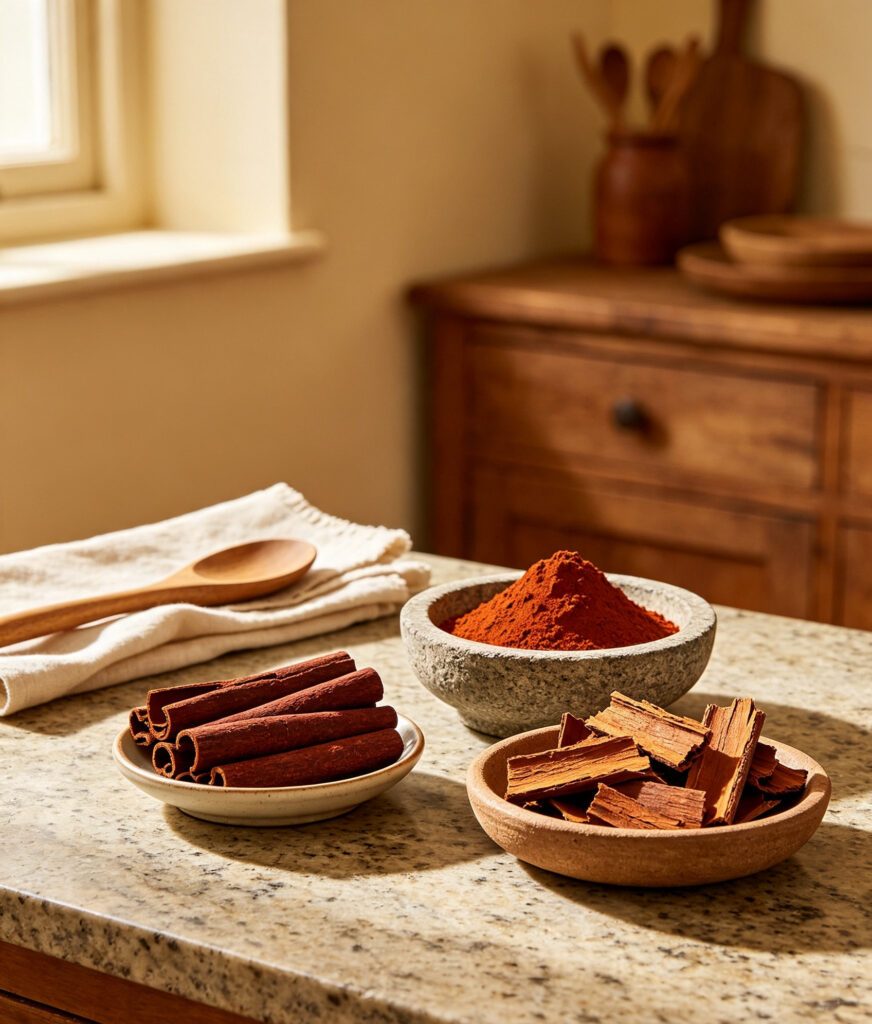
Indian Cassia
Cinnamomum cassia / Cinnamomum tamala-adjacent species depending on region.
Local / Regional Names
Dalchini (Hindi) – the same word is often used generically for both cassia and true cinnamon in everyday South Asian usage, a naming overlap worth flagging.
Countries / Cuisines
India, more broadly used across South Asia than true Ceylon cinnamon.
Flavor & Aroma
Stronger, more one-dimensionally sweet-hot than Ceylon cinnamon, with less complexity.
Culinary Uses
The default 'cinnamon' in most everyday South Asian savory cooking.
Classic Dishes
Garam masala; biryani; most North Indian curries.
Pairings
Cardamom, clove, bay leaf.
Timing
Add whole pieces early in a braise or rice dish.
Storage
Bark pieces keep 2+ years sealed and dark.
Substitutions
Ceylon cinnamon for a milder, more delicate result.
Cultural / History Notes
In most South Asian markets and home kitchens, 'dalchini' means this cassia bark by default, not true Ceylon cinnamon – the reverse of Western retail convention, where 'cinnamon' more often implies cassia too, but the naming confusion is worth flagging explicitly.
Blend Cross-References
Garam masala; biryani masala; virtually all major South Asian whole-spice blends.
Please log in to leave a comment.