
Middle East
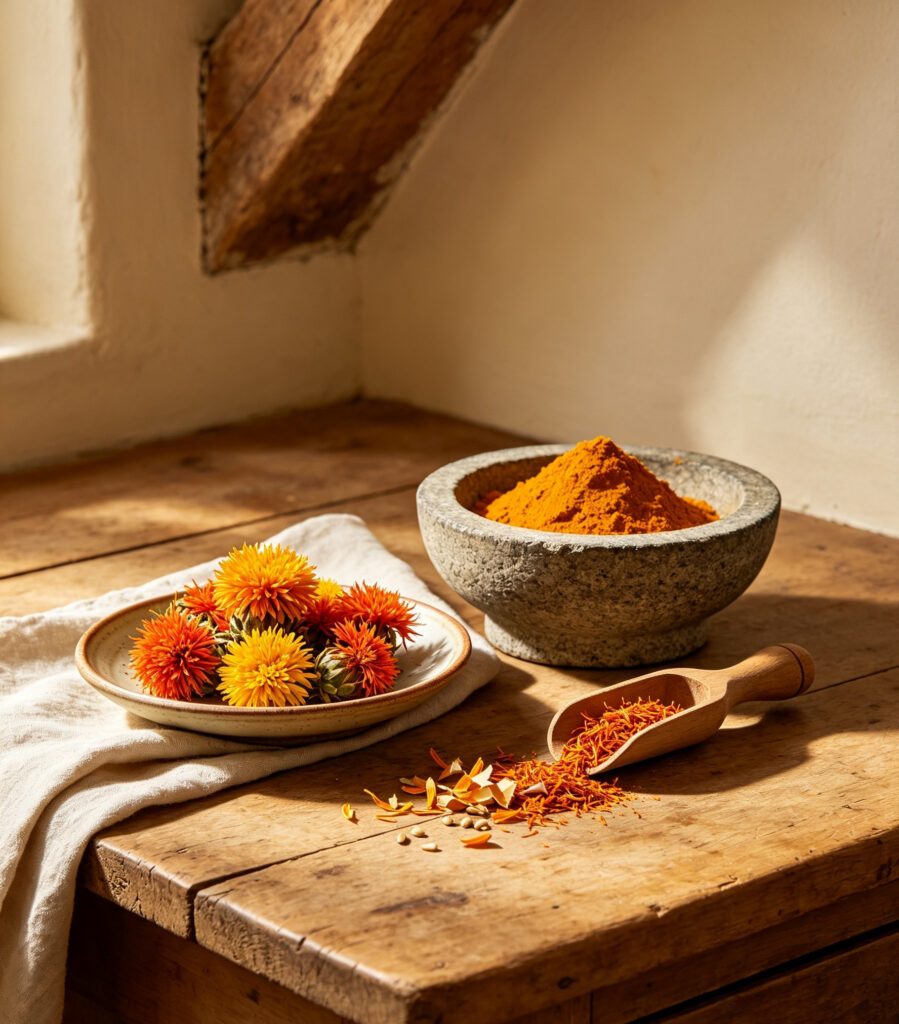
Safflower
Carthamus tinctorius.
Local / Regional Names
Usfur / qurtum (Arabic); sometimes marketed as 'Persian saffron' or 'poor man's saffron' – a significant and potentially deceptive naming hazard, as it is not true saffron.
Countries / Cuisines
Iran, Turkey, broader Middle East and Mediterranean.
Flavor & Aroma
Mild, slightly bitter, with far less aromatic complexity than true saffron.
Culinary Uses
Inexpensive yellow-orange coloring agent, historically used to stretch or fraudulently substitute for true saffron.
Classic Dishes
Budget rice colorings; some regional stews where color matters more than saffron's specific aroma.
Pairings
Rice, mild stews.
Timing
Steep in warm liquid before adding, similar to saffron, to extract color.
Storage
Keeps a year or more sealed and dark.
Substitutions
Turmeric is a comparably inexpensive color substitute; neither safflower nor turmeric replicates true saffron's aroma.
Cultural / History Notes
IMPORTANT CONSUMER-SAFETY/AUTHENTICITY FLAG: safflower is one of the most common adulterants sold as or mixed into fraudulent 'saffron' products worldwide. To tell them apart when buying: safflower has flat, straw-like petals with little aroma, while true saffron threads are trumpet-shaped and intensely aromatic.
Blend Cross-References
Not a standard blend component; occasionally used alone as a cheap colorant.
Please log in to leave a comment.