
Middle East
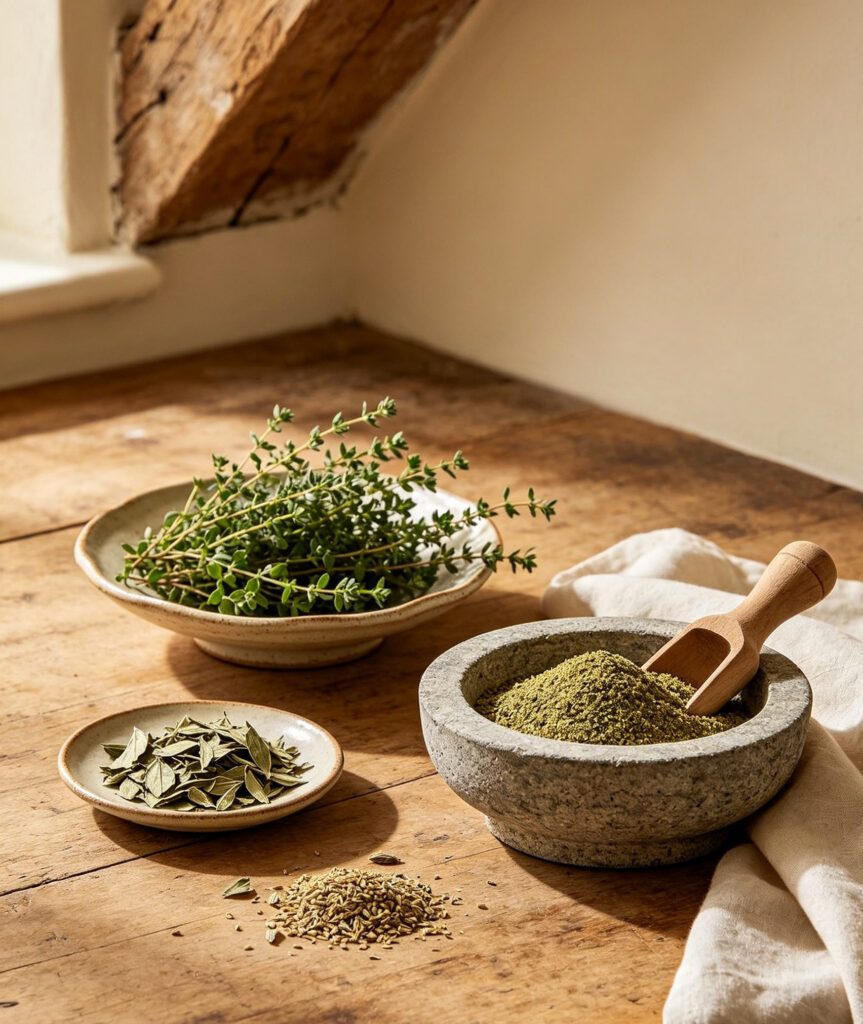
Syrian Oregano / Za’atar Herb
Origanum syriacum.
Local / Regional Names
Za'atar is used both for this specific herb and for the blend made from it – an important naming distinction.
Countries / Cuisines
Syria, Lebanon, Jordan, Palestine, Israel.
Flavor & Aroma
Pungent, herbaceous, with thyme, oregano, and marjoram-like notes combined.
Culinary Uses
The defining herb of the za'atar spice blend; also brewed as tea.
Classic Dishes
Za'atar manakish (flatbread); za'atar tea.
Pairings
Sumac, sesame, olive oil.
Timing
Dried leaf is typically pre-mixed into the za'atar blend rather than added separately during cooking.
Storage
Dried leaf keeps a year or more sealed and dark.
Substitutions
A mix of dried thyme, oregano, and marjoram approximates the flavor.
Cultural / History Notes
THE central name-identity hazard for this region: 'za'atar' names both this specific wild herb AND the multi-ingredient blend built around it (herb + sesame + sumac + salt). In recipes, check whether 'za'atar' means the herb or the blend.
Blend Cross-References
Za'atar (all regional variants – Palestinian, Syrian, Lebanese, Jordanian).
Please log in to leave a comment.