
Middle East
Aleppo Pepper
Capsicum annuum, historically grown around Aleppo, Syria; today grown mostly in southern Turkey due to the Syrian conflict's disruption of farming.
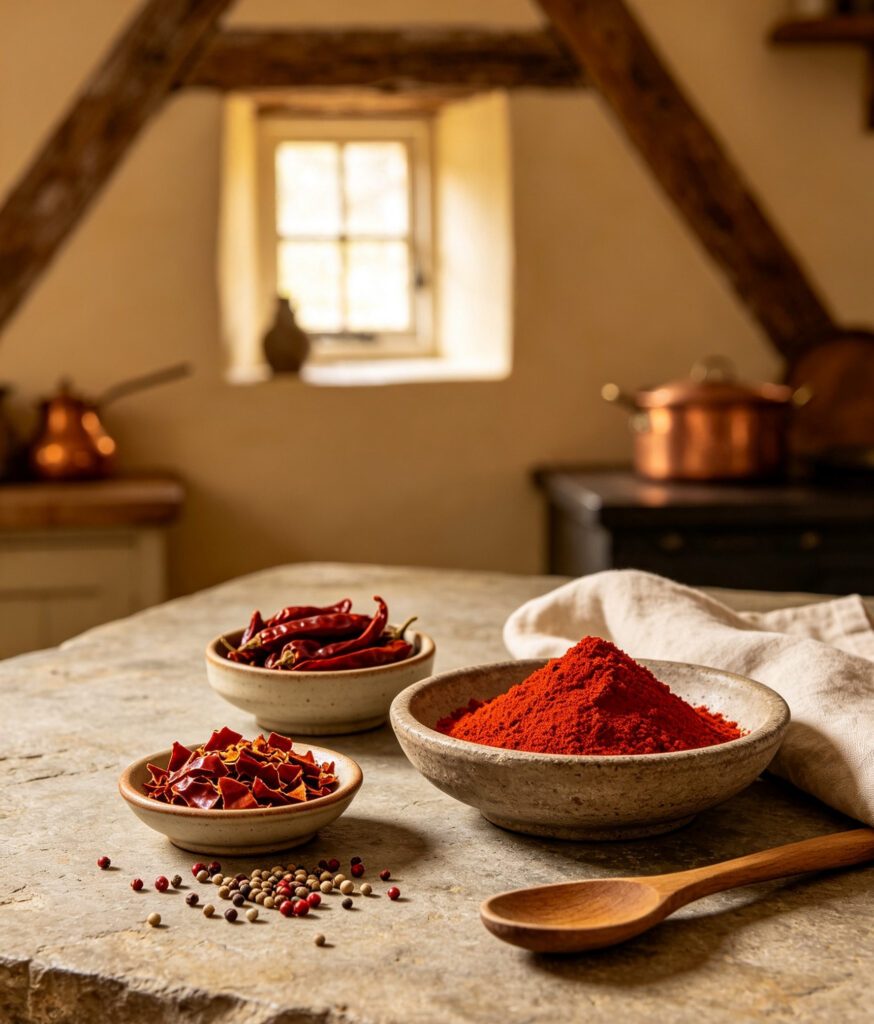
Local / Regional Names
Halaby pepper; pul biber is the generic Turkish flake category it's sometimes grouped under.
Countries / Cuisines
Syria (traditional origin), Turkey (current main production), broader Levant.
Flavor & Aroma
Fruity, tart, moderately hot with a mild cumin-like earthiness; brighter and more immediate than Urfa biber.
Culinary Uses
Finishing spice sprinkled over yogurt, hummus, eggs, roasted vegetables, and grilled meat.
Classic Dishes
Muhammara; labneh with Aleppo pepper and olive oil; grilled kebabs.
Pairings
Olive oil, sumac, walnuts, pomegranate molasses.
Timing
Add at the end as a finishing touch – flavor is brightest uncooked or barely warmed in oil.
Storage
Keeps 1–2 years sealed and dark; slight oiliness is normal and helps preserve aroma.
Substitutions
Urfa biber (darker, smokier result) or a mix of paprika and a pinch of cayenne.
Cultural / History Notes
Most 'Aleppo pepper' sold internationally today is grown in Turkey rather than Syria, a sourcing shift worth noting given the ongoing conflict's effect on Syrian agriculture.
Blend Cross-References
Not typically a blend component; used as a standalone finishing spice.
Please log in to leave a comment.