
Africa
Dawadawa / Fermented Locust Bean
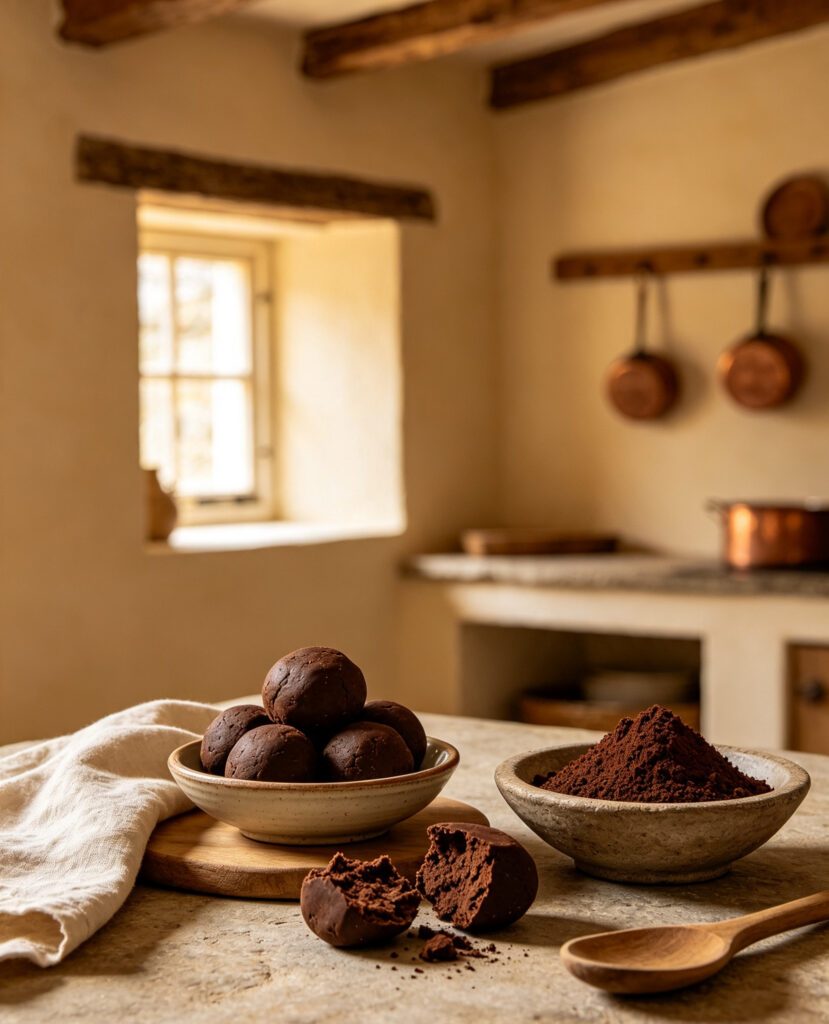
Parkia biglobosa (African locust bean tree) seeds, alkaline-fermented.
Local / Regional Names
Dawadawa (Hausa), iru (Yoruba), ogiri or eware, soumbala/sumbala (Mandinka/Bambara, francophone West Africa), netetou (Wolof).
Countries / Cuisines
West Africa broadly – Nigeria, Ghana, Burkina Faso, Mali, Senegal, Benin; the tree ranges from Senegal through southern Sudan to northern Uganda.
Flavor & Aroma
Intensely pungent and umami – often compared to aged cheese, fermented fish, and dark chocolate; an acquired aroma with a deep savory payoff.
Culinary Uses
Umami-building condiment and traditional bouillon substitute in soups, stews, and jollof rice.
Classic Dishes
Jollof rice (regional variants); egusi and okra soups; general West African stews.
Pairings
Palm oil, crayfish, chile, leafy greens.
Timing
Crumble in early so the pungent aroma mellows and integrates over the cooking time.
Storage
Dried cakes keep many months at room temperature in a sealed container, though the smell can permeate a pantry.
Substitutions
Fish sauce or a small amount of miso approximates the umami depth, though the flavor is not truly equivalent.
Cultural / History Notes
Functioned as the original umami seasoning across West Africa long before commercial bouillon cubes became dominant; production is traditionally organized as women's communal work.
Blend Cross-References
Functions as a savoury base ingredient rather than part of a dry spice blend.
Please log in to leave a comment.