
Africa
African Blue Basil
Ocimum kilimandscharicum × Ocimum basilicum hybrid (African blue basil).
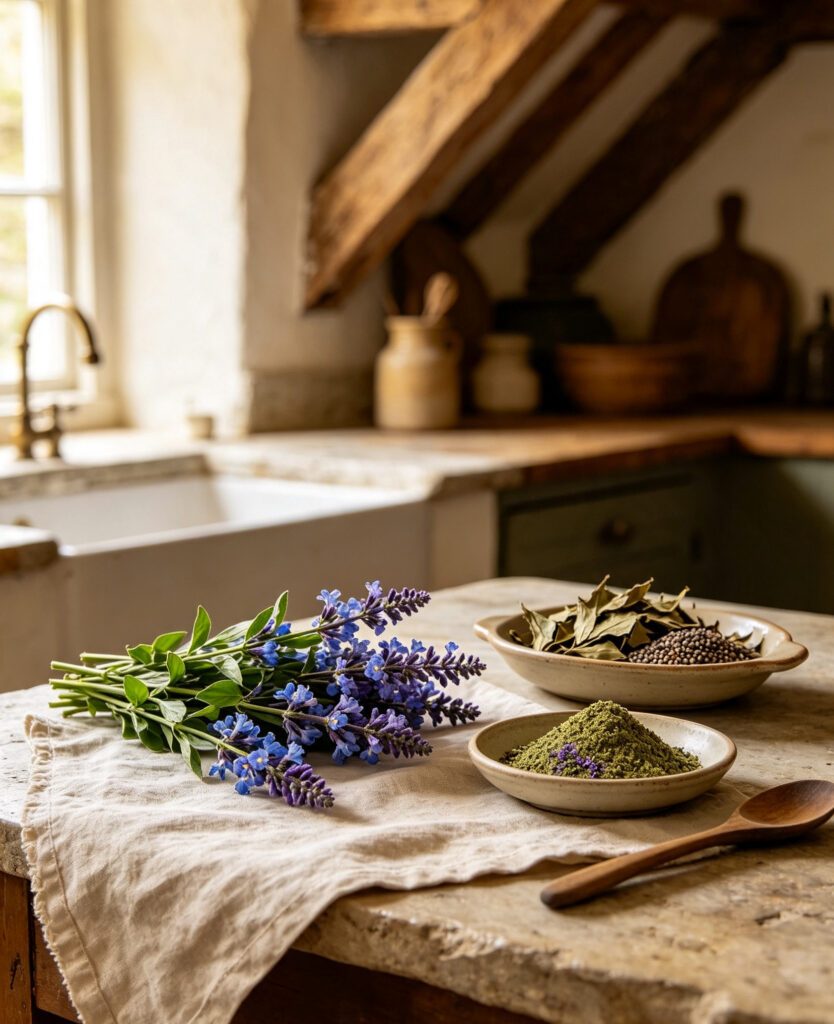
Local / Regional Names
Sometimes marketed under the same 'scent leaf' umbrella as African basil, though it is a distinct ornamental-culinary hybrid.
Countries / Cuisines
East and Central Africa in origin (Kilimanjaro region parentage); grown more widely today, including as a garden/culinary crop outside Africa.
Flavor & Aroma
Camphorous and spicy-sweet, more perfumed than African basil.
Culinary Uses
Garnish and flavoring herb; valued as much for aroma as for a specific dish role.
Classic Dishes
Used more generally as a fresh basil substitute in East/Central African contexts than tied to one classic dish.
Pairings
Ginger, chile, citrus.
Timing
Add fresh, at the end of cooking.
Storage
Fresh only; does not dry well without losing most of its character.
Substitutions
Sweet basil or Thai basil.
Cultural / History Notes
A hybrid rather than a wild traditional culinary plant – include with a note distinguishing it from the traditionally foraged/cultivated African basil.
Blend Cross-References
Not a blend component.
Please log in to leave a comment.