
Africa
Marrakesh Saffron / Moroccan Saffron
Crocus sativus stigmas.
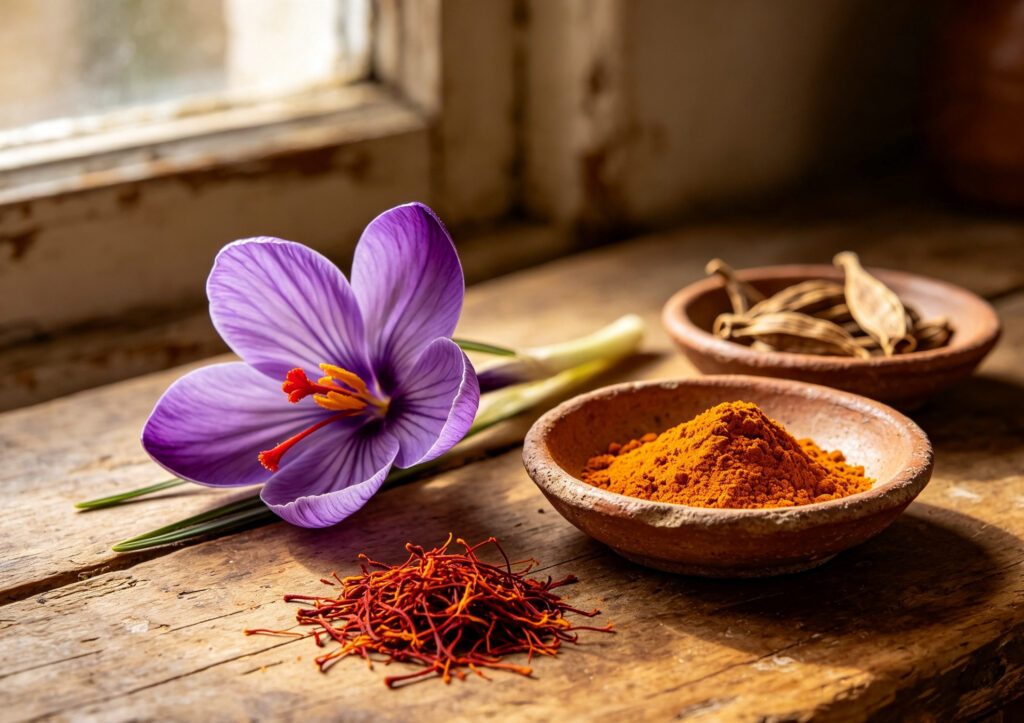
Local / Regional Names
Zaafran (Arabic); grown mainly around Taliouine in the Souss-Massa region.
Countries / Cuisines
Morocco (Taliouine is the principal growing region, despite the 'Marrakesh' trade name).
Flavor & Aroma
Earthy, honeyed, faintly metallic-bitter with a deep golden color payoff.
Culinary Uses
Color and aromatic backbone of tagines, rice, and celebratory dishes.
Classic Dishes
Chicken tagine with preserved lemon and olives; Moroccan seafood pastilla; saffron-infused breads.
Pairings
Ginger, cinnamon, preserved lemon, ras el hanout.
Timing
Steep threads in a little warm water or broth before adding, to release color and aroma evenly.
Storage
Keeps 2+ years sealed, dark, and dry; flavor and color slowly fade.
Substitutions
Turmeric mimics the color but not the aroma; there is no true flavor substitute.
Cultural / History Notes
Despite the common trade name, most Moroccan saffron is grown around Taliouine, not Marrakesh, which is chiefly a trading and export hub.
Blend Cross-References
Ras el hanout (in some formulations).
Please log in to leave a comment.