
Desserts
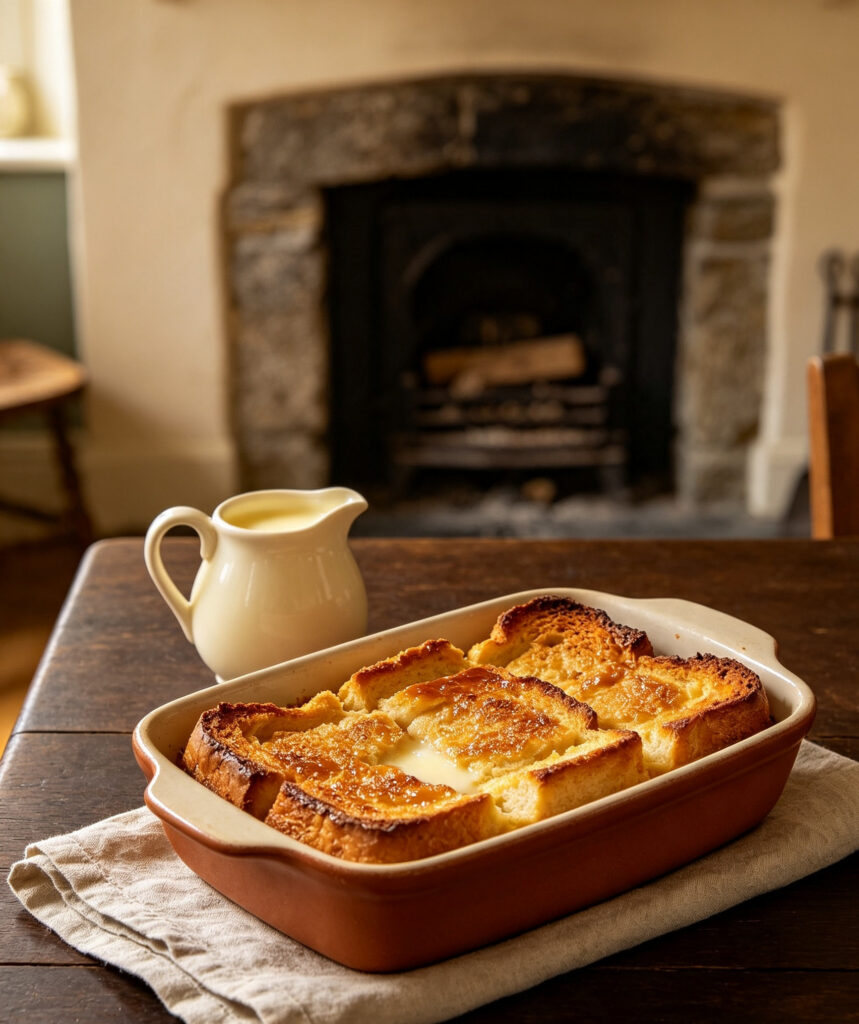
Bread and Butter Pudding (Bread and Butter Pudding)
sjfegan
Ingredients
- 8 slices slightly stale bread, buttered
- 75g (1/2 cup) Raisins or currants
- 3 eggs
- 480ml (2 cups) Milk
- 65g (1/3 cup) Sugar
- 1 tsp vanilla extract
- 1/2 tsp ground nutmeg
Method
- Arrange the buttered bread slices, overlapping slightly, in a baking dish, scattering the raisins between the layers.
- Whisk together the eggs, milk, sugar and vanilla extract.
- Pour the custard mixture evenly over the bread, pressing down gently to ensure it's absorbed.
- Let sit for 20 minutes to soak.
- Preheat the oven to 180°C (350°F).
- Sprinkle with nutmeg.
- Bake for 35–40 minutes until set and golden on top.
- Serve warm.
Introduction: Buttered bread layered with dried fruit and baked in a rich custard, a comforting and economical Victorian dessert born of thrifty leftover cookery.
Cultural Background: Bread and butter pudding reflects the Victorian household’s careful economy, transforming stale bread into a comforting, custard-rich dessert, its combination of thrift and indulgence making it a beloved feature of family tables across the era.
Tips: Let the bread soak in the custard for a good period before baking, as this ensures even absorption throughout. Use slightly stale bread, as it absorbs the custard better than very fresh bread.
Variations: Add a swirl of marmalade between the bread layers for a citrusy twist. Serve with a little cream or custard poured over.
Storage: Refrigerate in an airtight container for up to 3 days.
Reheating: Reheat gently in an oven at 160°C (325°F) for 15–20 minutes until warmed through.
Nutrition: Per serving (approx.): 280 kcal, 9 g protein, 10 g fat, 38 g carbohydrate.
FAQs:
Q: Why was this dish so appealing to Victorian households?
A: It reflected the era’s strong emphasis on thrift and avoiding waste, transforming stale bread into a genuinely indulgent, comforting dessert.
Q: Can other dried fruits be used?
A: Yes, sultanas or chopped dried apricots can be substituted or added alongside the traditional raisins or currants.
Please log in to leave a comment.