
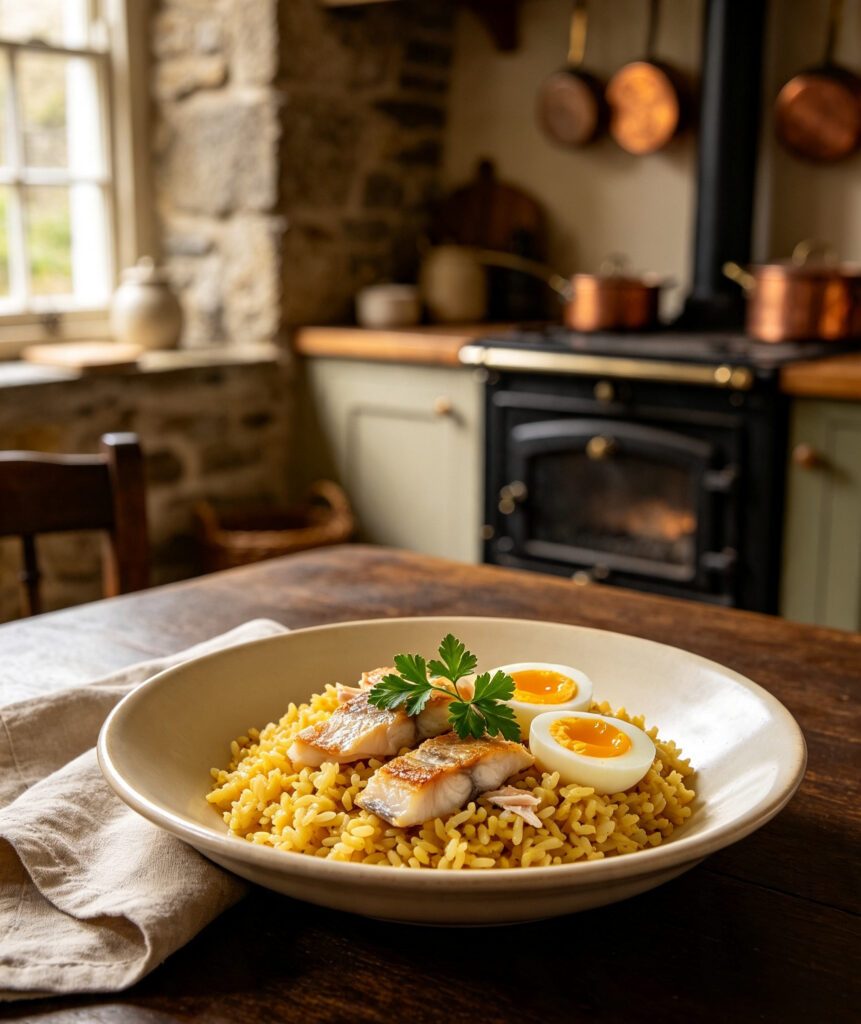
Kedgeree (Kedgeree)
The Quirky Foodster Team
Ingredients
- Rice — 280 g (1.5 cups)
- Smoked haddock — 400 g (14 oz)
- Hard-boiled eggs, chopped — 3
- Onion, chopped — 1
- Butter — 2 tbsp
- Curry powder — 1 tsp
- Milk — 480 ml (2 cups)
- Chopped parsley, to garnish
- Salt and pepper — to taste
Method
- Poach the smoked haddock gently in the milk for 8–10 minutes until cooked through; remove, reserving the milk, and flake the fish, discarding skin and bones.
- Cook the rice in salted water until tender; drain.
- Melt the butter in a frying pan and sauté the onion until softened.
- Add the curry powder and cook briefly.
- Add the cooked rice and flaked fish, stirring to combine, and add a splash of the reserved poaching milk to moisten.
- Fold in the chopped hard-boiled egg.
- Season with salt and pepper, and garnish with chopped parsley before serving hot.
Introduction: Smoked fish, rice and hard-boiled egg combined with a touch of curry powder, a beloved Victorian breakfast dish reflecting Britain’s colonial ties to India.
Cultural Background: Kedgeree entered Victorian British breakfast tables via colonial connections with India, its combination of rice, fish and mild spice becoming a fixture of the elaborate breakfast spreads fashionable in Victorian country houses.
Tips: Poach the smoked haddock gently rather than boiling vigorously, to keep it tender. Use day-old rice if possible, as it holds together better in the finished dish.
Variations: Add a squeeze of lemon for brightness, a common modern addition. Adjust the curry powder quantity to taste.
Storage: Refrigerate leftovers in an airtight container for up to 2 days.
Reheating: Reheat gently in a pan with a splash of milk, stirring, until warmed through.
Nutrition: Per serving (approx.): 380 kcal, 26 g protein, 14 g fat, 40 g carbohydrate.
FAQs:
Q: How did kedgeree come to Britain?
A: It reflects the culinary exchange of the British Raj, colonial administrators and their families bringing the dish back from India and adapting it for the British breakfast table.
Q: Was kedgeree a common everyday breakfast?
A: It was particularly associated with the elaborate breakfast spreads of Victorian country houses and the upper and middle classes rather than an everyday meal for all.
- Rice — 280 g (1.5 cups)
- Smoked haddock — 400 g (14 oz)
- Hard-boiled eggs, chopped — 3
- Onion, chopped — 1
- Butter — 2 tbsp
- Curry powder — 1 tsp
- Milk — 480 ml (2 cups)
- Chopped parsley, to garnish
- Salt and pepper — to taste
Please log in to leave a comment.