
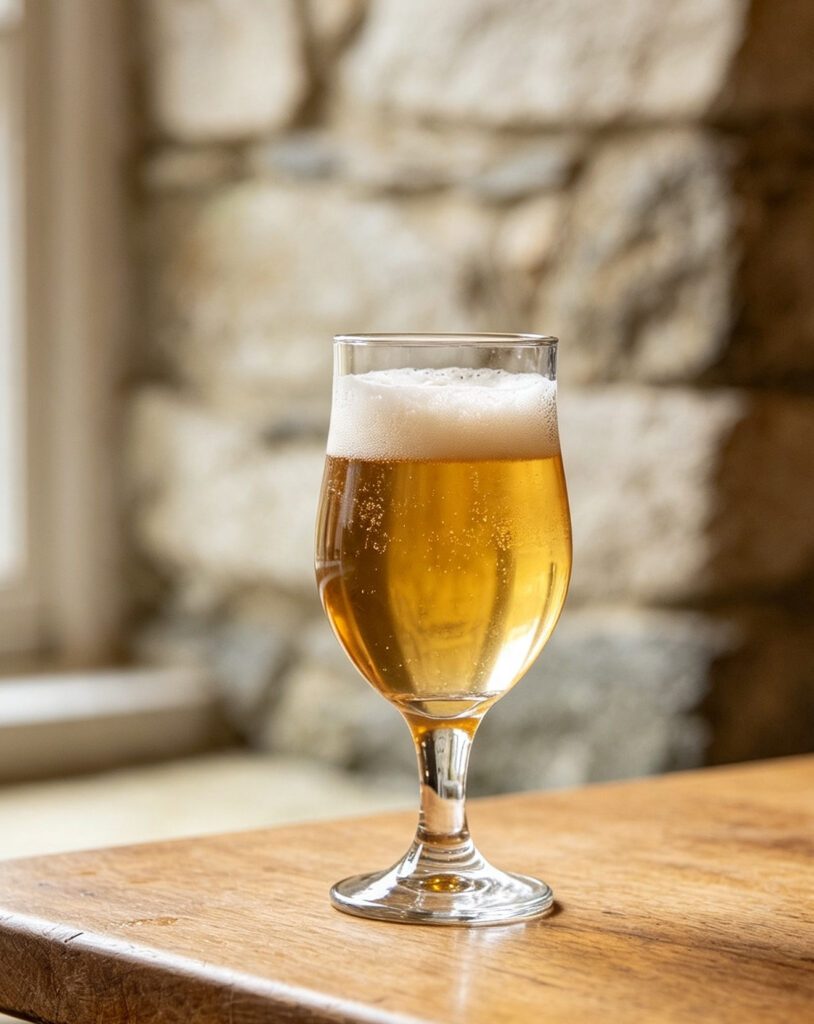
Small Ale (Table Beer)
The Quirky Foodster Team
Ingredients
- Pale malt extract (or malted barley, for traditional mashing) — 500 g (1.1 lb)
- Water, divided — 4 L (1 gallon)
- Hops (optional, for a lightly bittered version) — 20 g (0.7 oz)
- Brewing yeast — 5 g (1 tsp)
- Sugar (if priming for slight carbonation) — 100 g (1/2 cup)
Method
- Bring 3 litres of the water to the boil in a large pot and dissolve the malt extract into it, stirring well.
- If using hops, add them at this stage and boil gently for 45-60 minutes.
- Remove from the heat and add the remaining 1 litre of cold water to help cool the mixture more quickly.
- Once the liquid has cooled to below 25°C (77°F), transfer it to a sanitised fermentation bucket and sprinkle the yeast over the surface.
- Fit an airlock and leave to ferment in a cool, dark place for 5-7 days, until the vigorous bubbling has slowed considerably.
- If priming for carbonation, dissolve the sugar in a little warm water and stir into the ale before bottling.
- Bottle the ale in sanitised bottles, seal, and leave at room temperature for a further 3-4 days before refrigerating and serving.
Introduction: A light, low-alcohol ale brewed for everyday drinking, small ale was consumed by Tudor households of all classes, often in place of water.
Cultural Background: Small ale was drunk daily by men, women and children alike in Tudor England, as it was generally considered safer than untreated water and provided modest nourishment from the grain used in brewing. It was distinct from the stronger ales reserved for special occasions, being lower in alcohol and intended for regular, everyday consumption throughout the day.
Tips: (cid:127) Small ale is intentionally low in alcohol; do not extend the fermentation time expecting a stronger result, as this changes the character of the drink significantly. (cid:127) Cleanliness of all equipment is essential throughout the process to avoid contamination and off-flavours.
Variations: (cid:127) Omit the hops entirely for an unhopped ale closer to the very earliest Tudor brewing methods, before hopped beer became widespread in England. (cid:127) A small handful of dried herbs such as sage or rosemary can be added during the boil for a traditional herbal variation.
Storage: Store bottled small ale in a cool, dark place or the refrigerator, and consume within 4-6 weeks for best flavour.
Reheating: This drink is served cold or at cellar temperature and should not be reheated.
Nutrition: Per serving (approx., 330 ml): 90 kcal, 1 g protein, 9 g carbohydrate, 0 g fat, 0 g fibre, 10 mg sodium.
FAQs:
Q: Is small ale suitable for children, as it was historically?
A: While historically consumed by children due to its low alcohol content, this modern recreation still contains alcohol and is not recommended for children today. (cid:127) Q: Can I make small ale without brewing equipment? A: A basic setup of a large pot, a fermentation bucket with an airlock, and sanitised bottles is the minimum needed for safe, successful home brewing.
- Pale malt extract (or malted barley, for traditional mashing) — 500 g (1.1 lb)
- Water, divided — 4 L (1 gallon)
- Hops (optional, for a lightly bittered version) — 20 g (0.7 oz)
- Brewing yeast — 5 g (1 tsp)
- Sugar (if priming for slight carbonation) — 100 g (1/2 cup)
Please log in to leave a comment.