
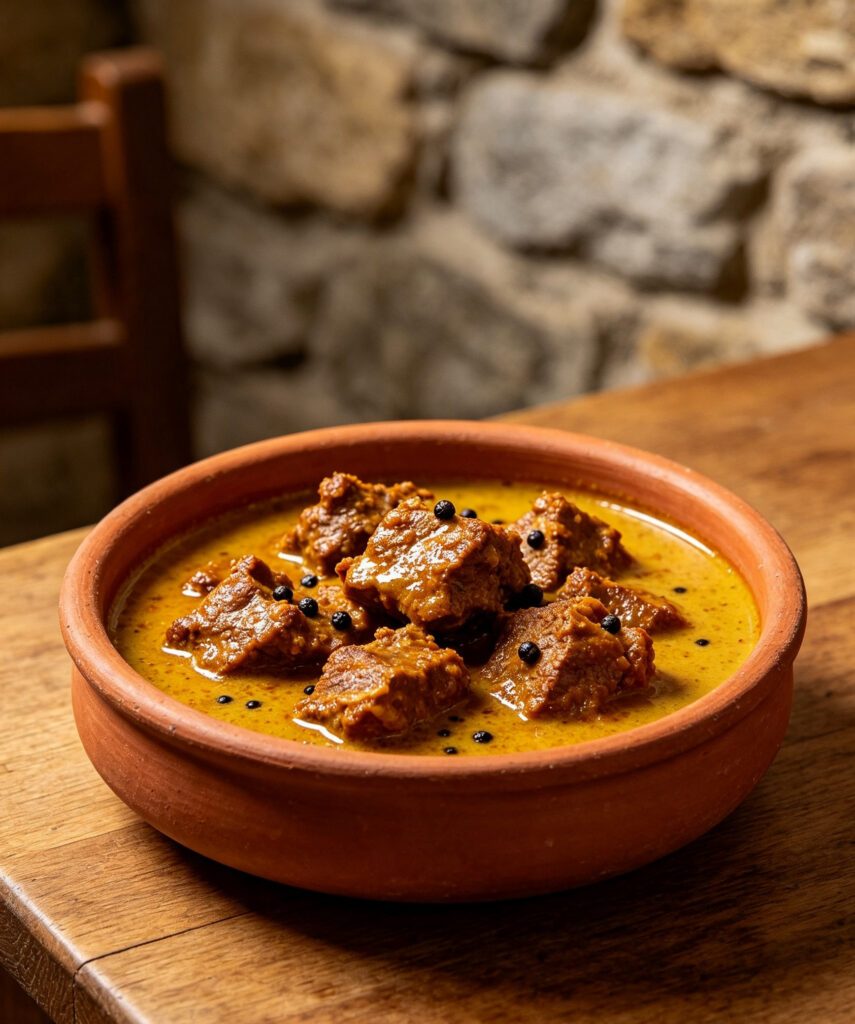
Mamsa with Pepper and Ghee (Spiced Meat, Goat or Venison)
The Quirky Foodster Team
Ingredients
- Goat, mutton or venison, bone-in pieces — 800 g (1.75 lb)
- Ghee — 3 tbsp
- Whole black peppercorns, coarsely crushed — 1 tsp
- Ground coriander — 1/2 tsp
- Ground ginger — 1/4 tsp
- Small onion, finely chopped (regional addition, optional) — 1
- Rock salt — 1 tsp
- Water — 250 ml (1 cup)
- Fresh cilantro, chopped — 2 tbsp
Method
- Heat the ghee in a large heavy pot over medium-high heat and brown the meat pieces on all sides, about 8-10 minutes total, working in batches if necessary.
- Add the onion if using, and cook for a further 4-5 minutes until softened.
- Stir in the crushed peppercorns, ground coriander and ginger, cooking for 1 minute until fragrant.
- Add the water and salt, and bring to a simmer.
- Reduce the heat to low, cover, and cook for 1.5 to 2 hours, stirring occasionally and adding a little more water if needed, until the meat is very tender and the sauce has reduced and thickened.
- Scatter with fresh cilantro and serve hot.
Introduction: Meat slowly cooked in ghee with black pepper and warm spices until deeply tender, mamsa represents the substantial, protein-rich main dishes recorded in the Arthashastra’s detailed regulation of meat markets and royal kitchens.
Cultural Background: Kautilya’s Arthashastra devotes considerable attention to the regulation of meat markets, hunting rights and the supply of the royal kitchen, indicating meat’s established place within at least parts of Mauryan society, even as Ashoka’s later edicts promoted growing restraint. Black pepper, native to the Indian subcontinent and already an established part of the region’s cuisine well before its later fame as an export spice, forms the backbone of this simply but richly spiced dish.
Tips: (cid:127) Browning the meat thoroughly at the start builds a deeper flavour base for the finished dish. (cid:127) Crushing the peppercorns coarsely rather than using ground pepper gives bursts of sharper heat throughout the dish, closer to how whole spices were often used in this period.
Variations: (cid:127) Venison offers a leaner alternative to goat or mutton and reflects the range of game meats mentioned in Mauryan-era hunting regulations. (cid:127) A pinch of ground long pepper (pippali), a spice distinct from black pepper and well documented in ancient Indian sources, can be added alongside the black pepper for a more complex, historically layered heat.
Storage: Store in an airtight container in the refrigerator for up to 3 days, or freeze for up to 3 months.
Reheating: Reheat in a covered saucepan over medium-low heat, stirring occasionally, until piping hot throughout, adding a splash of water if the sauce has thickened too much.
Nutrition: Per serving (approx.): 380 kcal, 32 g protein, 4 g carbohydrate, 26 g fat, 1 g fibre, 520 mg sodium.
FAQs:
Q: Can I use a different cut of meat?
A: Bone-in shoulder, shank or leg pieces all work well, as they become tender and flavourful over the long, slow cook. (cid:127) Q: How spicy is this dish? A: It has a warm, peppery heat rather than a chili-based spiciness, since chilies are a much later introduction to India; adjust the quantity of crushed peppercorns to suit your taste.
- Goat, mutton or venison, bone-in pieces — 800 g (1.75 lb)
- Ghee — 3 tbsp
- Whole black peppercorns, coarsely crushed — 1 tsp
- Ground coriander — 1/2 tsp
- Ground ginger — 1/4 tsp
- Small onion, finely chopped (regional addition, optional) — 1
- Rock salt — 1 tsp
- Water — 250 ml (1 cup)
- Fresh cilantro, chopped — 2 tbsp
Please log in to leave a comment.