
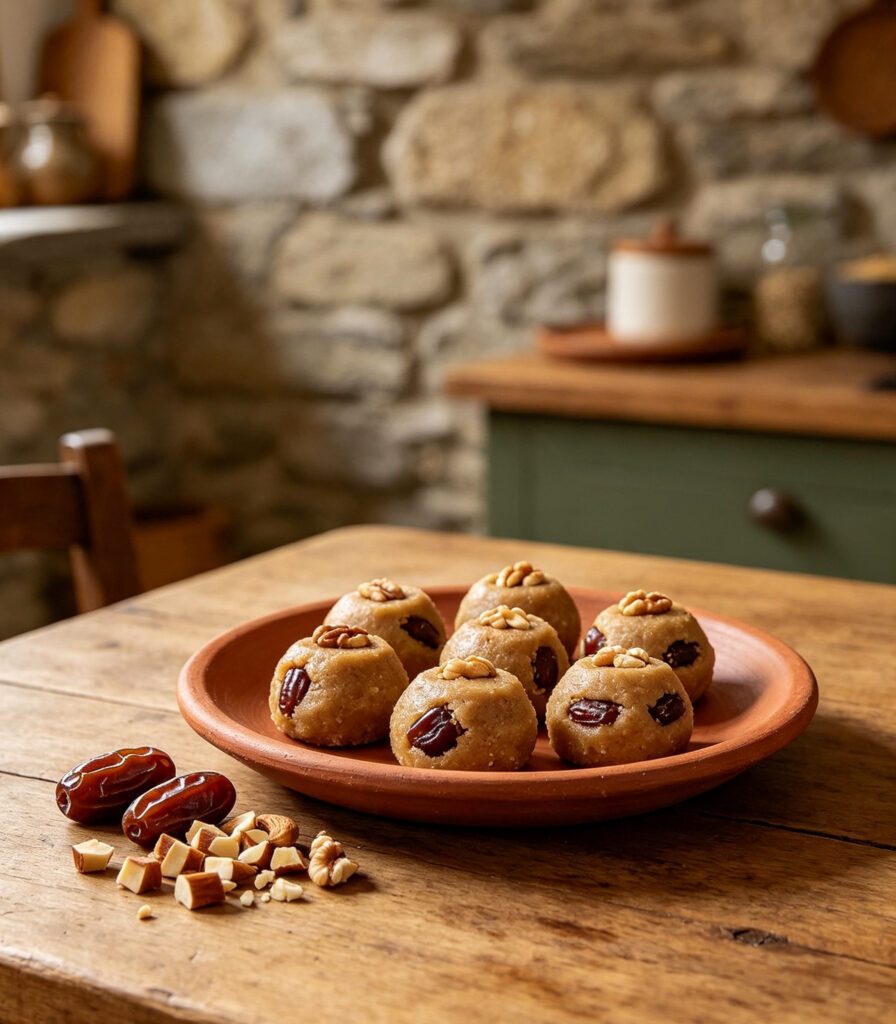
Mersu (Date and Nut Cakes)
The Quirky Foodster Team
Ingredients
- Pitted dates, chopped — 300 g (1.5 cups)
- Shelled pistachios or almonds, chopped — 100 g (0.7 cup)
- Sesame oil — 1 tbsp
Method
- Pound the chopped dates in the mortar (or pulse in a food processor) until they break down into a sticky paste.
- Add the chopped nuts and continue working until evenly combined.
- Work in the sesame oil to help bind and soften the mixture.
- Shape into small cakes or rounds by hand.
- Let sit for 30 minutes to firm slightly before serving.
Introduction: A dense sweet cake of pounded dates and nuts, a genuinely named Mesopotamian confection recorded in administrative and offering texts as a prestige sweet food.
Cultural Background: Mersu is a well-attested term in Akkadian administrative and religious texts, referring to a rich confection of dates mixed with nuts or other ingredients, recorded among the foods presented as temple offerings and prestige items in Mesopotamian sources; this recipe reconstructs a plausible preparation method from that well-documented named food, as period sources record the dish’s existence and ingredients more clearly than exact preparation steps.
Tips: – Very soft, sticky dates work best; if using drier dates, soak briefly in warm water first to soften. – Wetting your hands slightly makes shaping the sticky paste much easier.
Variations: – Naturally vegan as written. – Other nuts available in the region, such as walnuts, can be substituted for pistachios or almonds.
Storage: Keeps well wrapped at room temperature for up to 2 weeks, owing to the dates’ natural preservative sugars.
Reheating: Not applicable; served at room temperature.
Nutrition: Per serving (approx.): 210 kcal, 4 g protein, 32 g carbohydrate, 9 g fat, 4 g fibre.
FAQs:
Q: Is mersu a real Mesopotamian food term?
A: Yes, mersu is a well-attested term in Akkadian administrative and religious texts, referring to a rich date-and-nut-based confection recorded among temple offerings and prestige foods, though exact preparation methods are less fully documented than the food’s existence and general ingredients.
Q: Was this a food for ordinary people or for special occasions?
A: Its appearance in offering and prestige-food contexts suggests mersu held a somewhat elevated status, though dates and nuts were also broadly available crops, so simpler home versions were plausible alongside its documented ceremonial uses.
- Pitted dates, chopped — 300 g (1.5 cups)
- Shelled pistachios or almonds, chopped — 100 g (0.7 cup)
- Sesame oil — 1 tbsp
Please log in to leave a comment.