
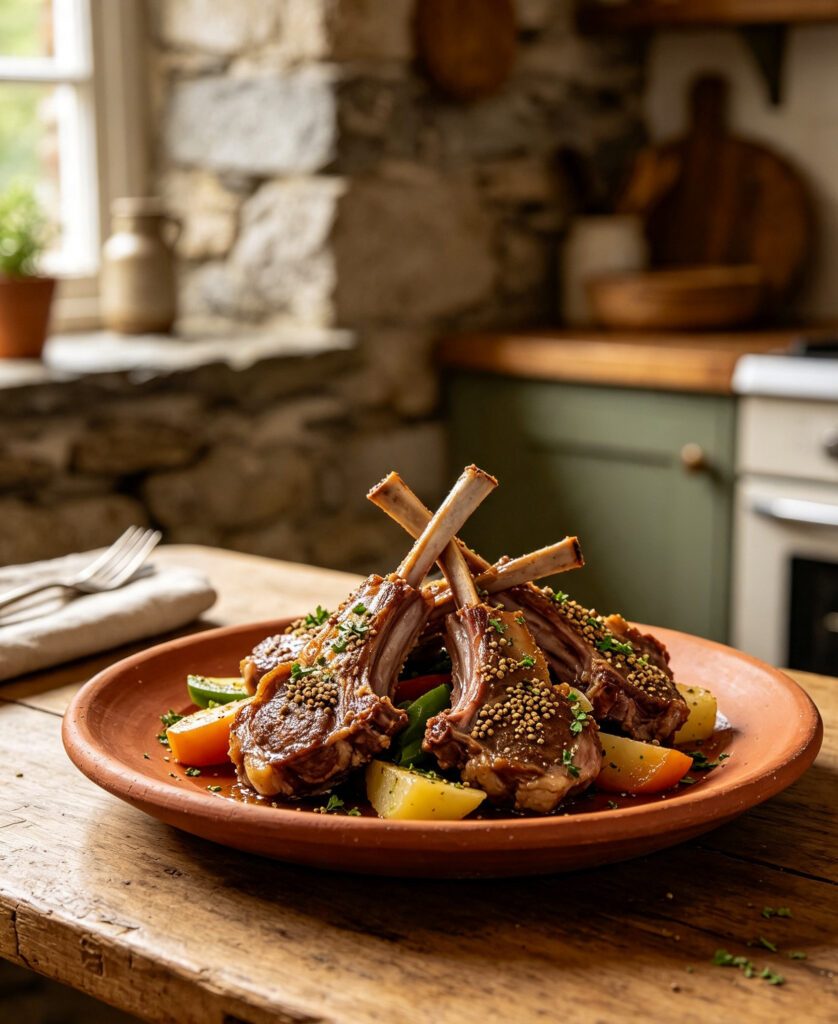
Roasted Kid with Cumin and Coriander
The Quirky Foodster Team
Ingredients
- Goat (kid) joint — 1.5 kg (3.3 lb)
- Ground cumin — 1 tbsp
- Ground coriander seed — 1 tbsp
- Salt — 1 pinch
Method
- Rub the goat joint all over with the cumin, coriander and salt.
- If using an open fire, mount on a spit and roast, turning regularly, for approximately 1.5-2 hours, until fully cooked through.
- If using a conventional oven as a modern substitute, roast at 180C (350F) for approximately 25 minutes per 500g (1.1 lb), until fully cooked through.
- Rest for 10-15 minutes before carving and serving.
Introduction: A joint of young goat rubbed with cumin and coriander and roasted over an open fire, drawing on Mesopotamia’s extensively documented goat-herding economy.
Cultural Background: Goat husbandry is very well documented in Sumerian and Akkadian administrative texts, including detailed temple and palace records tracking flocks and the allocation of animals for consumption and sacrifice, and both cumin and coriander are attested spices in the wider Mesopotamian culinary and medical textual tradition; combining a well-attested meat with well-attested seasonings in a straightforward roast is a plausible reconstruction rather than one directly named period recipe.
Tips: – Turn regularly over an open fire to ensure even cooking without burning. – Resting the meat before carving allows the juices to redistribute for a more tender result.
Variations: – Lamb can be substituted for goat, as both were common Mesopotamian meats. – A simpler salt-only rub suits those wanting a plainer roast, reflecting variation in how elaborately such dishes may have been seasoned depending on occasion.
Storage: Refrigerate cooked meat covered for up to 3 days.
Reheating: Reheat in a covered dish in a moderate oven (160C/325F) for 15-20 minutes until hot throughout.
Nutrition: Per serving (approx.): 290 kcal, 30 g protein, 1 g carbohydrate, 18 g fat.
FAQs:
Q: Was goat meat commonly eaten in ancient Mesopotamia?
A: Yes, goat husbandry is extensively documented in Sumerian and Akkadian administrative records, with temple and palace texts tracking flock sizes and allocations of animals for consumption and religious sacrifice.
Q: Were cumin and coriander really used in Mesopotamian cooking?
A: Both spices are attested in the wider Mesopotamian textual tradition, including culinary and medical contexts, supporting their use here, though their pairing on this specific dish is a plausible reconstruction rather than a directly named recipe.
- Goat (kid) joint — 1.5 kg (3.3 lb)
- Ground cumin — 1 tbsp
- Ground coriander seed — 1 tbsp
- Salt — 1 pinch
Please log in to leave a comment.