
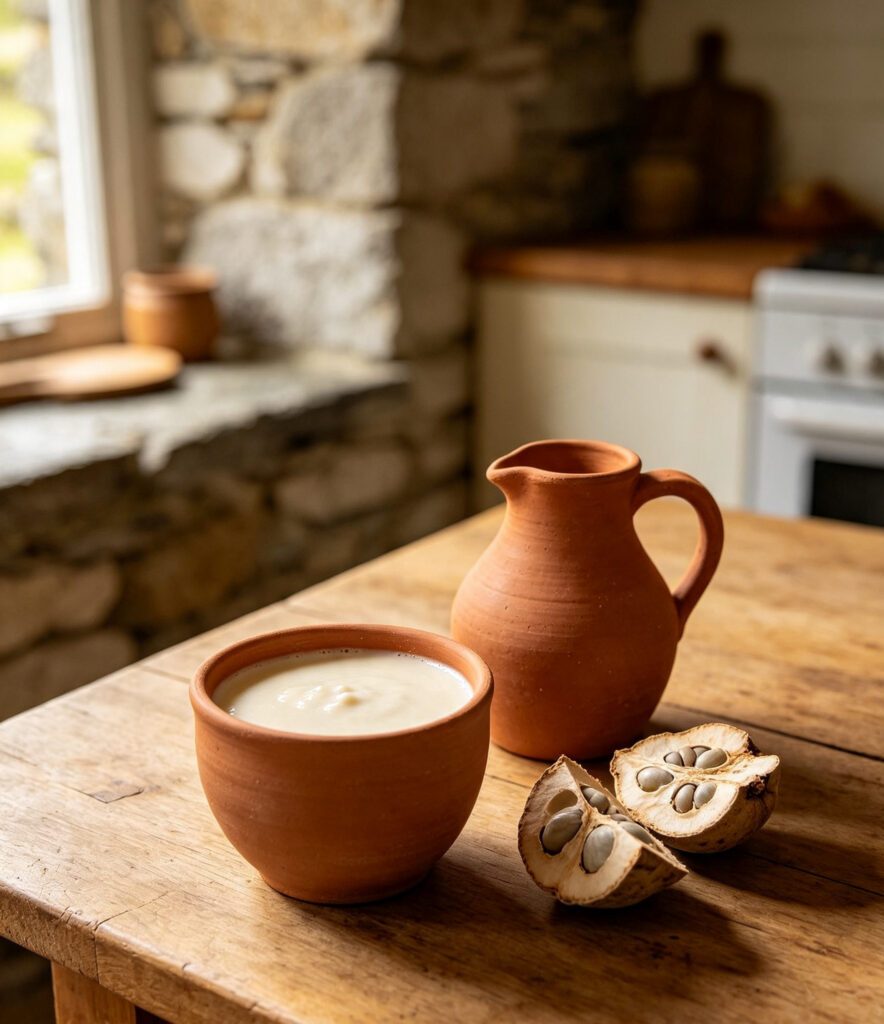
Baobab Fruit Drink (Bouye)
The Quirky Foodster Team
Ingredients
- Baobab fruit pulp powder — 100 g (0.5 cup)
- Water — 750 ml (3 cups)
- Honey — 2 tbsp
Method
- Combine the baobab fruit pulp powder and water in the bowl or jug.
- Whisk well until the powder is fully dissolved and the mixture is smooth.
- Stir in the honey until dissolved.
- Strain through a cloth or fine sieve if a smoother drink is preferred.
- Serve chilled or at room temperature.
Introduction: A refreshing drink made from baobab fruit pulp mixed with water and a little sweetener, continuing one of the oldest and most enduring uses of a tree central to the Sahelian landscape of the Mali Empire.
Cultural Background: As established in the Soups and Desserts sections, the baobab tree is native to the African savanna belt that includes the core Mali Empire territory, and its tart fruit pulp has been used as a food and drink source across the Sahel for a very long history; the drink made from this pulp is known widely across the region today under names such as bouye, representing a continuation of considerable antiquity even though no Mali Empire-period text specifically names this exact drink.
Tips: – Baobab powder can settle at the bottom; stir or shake well before serving if it has been left to stand. – Adjust the honey to taste depending on how tart the specific batch of baobab powder is.
Variations: – Naturally vegan if a plant-based syrup is substituted for honey. – A squeeze of tamarind can be added for extra tartness, drawing on another well-attested regional fruit.
Storage: Refrigerate covered for up to 3 days.
Reheating: Not applicable; this is a cold or room-temperature beverage.
Nutrition: Per serving (approx.): 70 kcal, 0.5 g protein, 18 g carbohydrate, 0.2 g fat, 1 g fibre.
FAQs:
Q: Is bouye a genuinely old drink?
A: The baobab tree’s use as a food and drink source across the Sahel has a very long history, and drinks of this general kind, known widely today under names such as bouye, represent a continuation of that old tradition, even though no single Mali Empire-period text specifically names this exact drink.
Q: Is baobab drink still popular in West Africa today?
A: Yes, it remains a widely enjoyed drink across West Africa today, and baobab products more broadly have also gained wider international recognition in recent years.
- Baobab fruit pulp powder — 100 g (0.5 cup)
- Water — 750 ml (3 cups)
- Honey — 2 tbsp
Please log in to leave a comment.