
Okra and Fish Soup
The Quirky Foodster Team
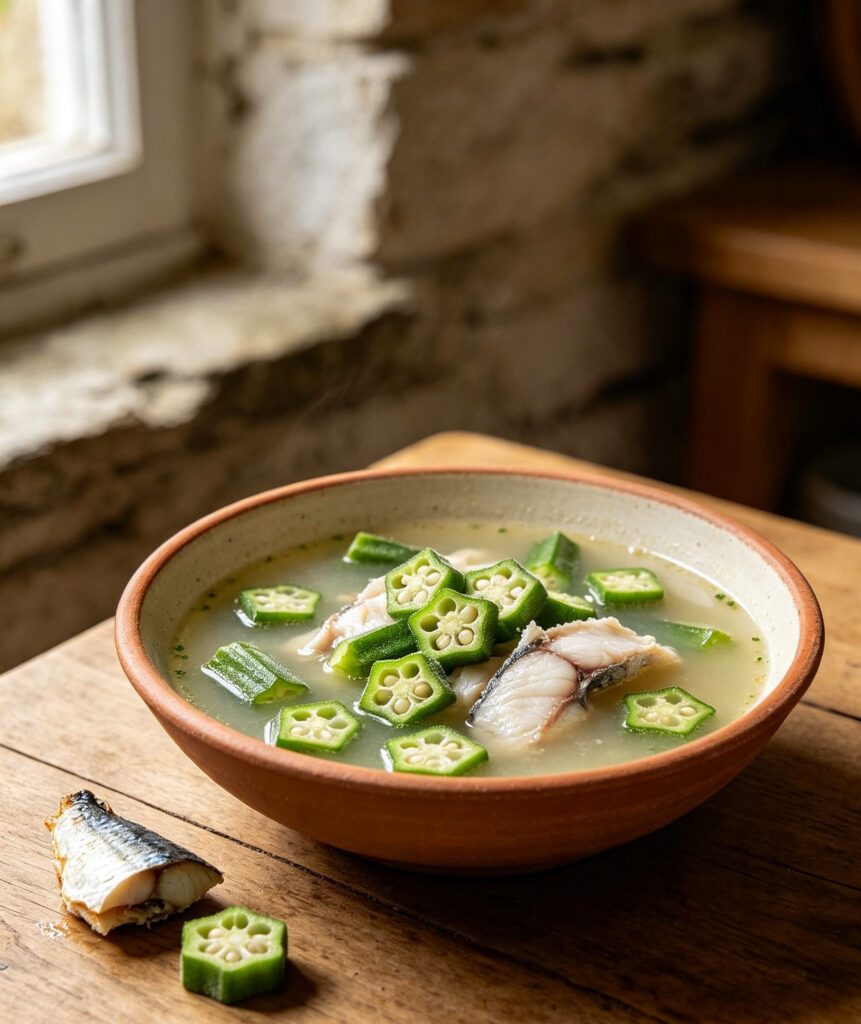
Ingredients
- Okra, sliced — 250 g (0.6 lb)
- River fish, cleaned and cut into pieces — 300 g (0.7 lb)
- Onion, chopped — 1
- Water — 750 ml (3 cups)
- Salt — 1 pinch
Method
- Bring the water to a simmer in the pot and add the chopped onion.
- Cook for 5 minutes, until softened.
- Add the fish pieces and poach gently for 6-8 minutes, until just cooked through.
- Add the sliced okra and simmer for a further 5-6 minutes, until tender and the soup has thickened slightly.
- Season with salt and serve hot.
Introduction: A soup of okra and river fish, using a vegetable native to Africa alongside the fish that formed a major part of Niger River communities’ diet.
Cultural Background: Okra is native to Africa, most likely originating in the northeastern part of the continent before spreading widely, and is a long-established part of West African cooking traditions; combined with river fish, separately documented as a major dietary resource for communities along the Niger during its seasonal floods, this soup reflects two well-attested regional foods rather than one specifically named period recipe.
Tips: – Add the okra toward the end of cooking to avoid overcooking it into excessive sliminess. – Keep the broth at a gentle simmer once the fish is added, so it stays tender rather than toughening.
Variations: – Naturally gluten-free and dairy-free as written. – Baobab leaf powder can be added alongside the okra for an even thicker, more traditionally textured soup.
Storage: Refrigerate covered for up to 1 day, as fish soups are best eaten fresh.
Reheating: Reheat very gently over low heat for 3-4 minutes; avoid vigorous reheating, which can toughen the fish.
Nutrition: Per serving (approx.): 160 kcal, 20 g protein, 8 g carbohydrate, 5 g fat, 3 g fibre.
FAQs:
Q: Is okra native to West Africa?
A: Okra is native to Africa, most likely originating in the northeastern part of the continent before spreading widely across the continent, including into West African cooking traditions well before the modern era.
Q: Why fish specifically from the Niger?
A: The Niger River’s seasonal floods supported major fishing activity documented as a significant subsistence resource for much of the Mali Empire’s population, alongside farming and herding.
- Okra, sliced — 250 g (0.6 lb)
- River fish, cleaned and cut into pieces — 300 g (0.7 lb)
- Onion, chopped — 1
- Water — 750 ml (3 cups)
- Salt — 1 pinch
Please log in to leave a comment.