
Breakfast
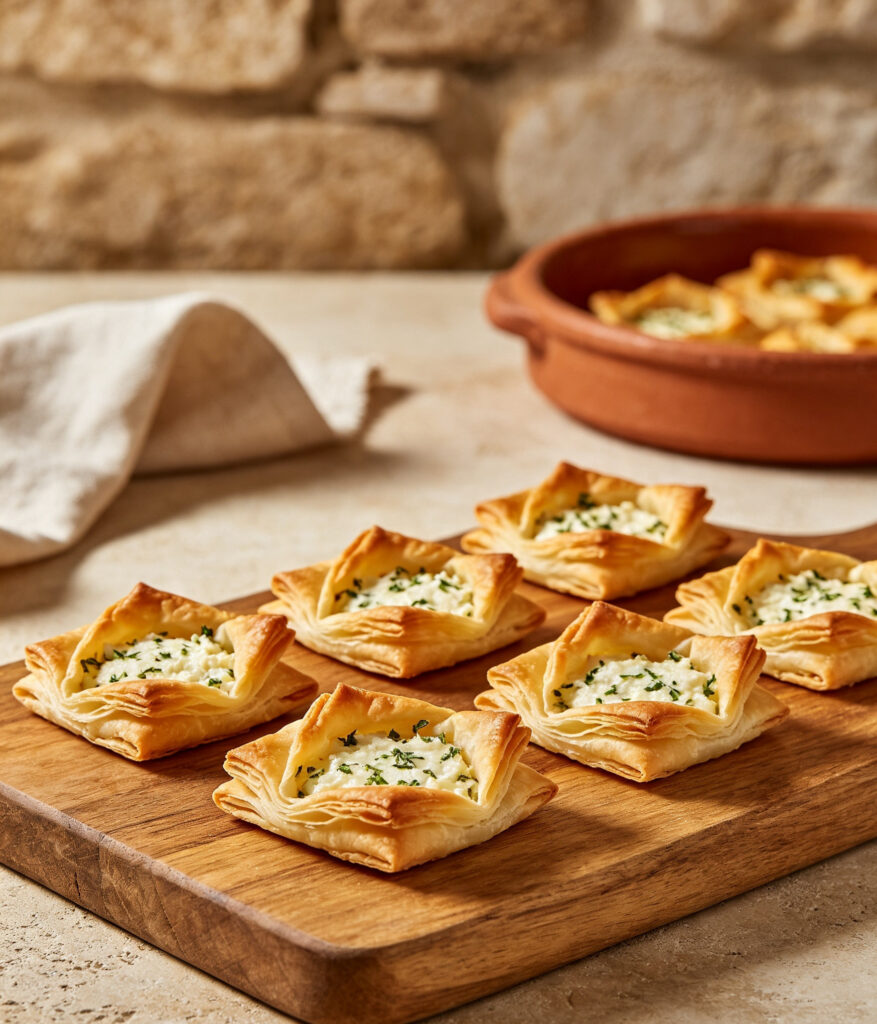
Cheese and Herb Pies (Tyropitakia)
sjfegan
Ingredients
- 250g (2 cups) Flour
- 120ml (1/2 cup) Olive oil, plus extra for brushing
- 180ml (3/4 cup) Warm water
- 300g (10.5 oz) Fresh soft cheese, crumbled
- 2 tbsp chopped fresh dill
- 1 egg
- Pinch of salt
Method
- Combine the flour, olive oil, water and salt into a smooth, pliable dough; rest for 20 minutes.
- Combine the cheese, dill and egg for the filling.
- Divide the dough into small portions and roll each thin.
- Place a spoonful of filling in the centre, fold the dough over, and pinch to seal into a small parcel.
- Preheat the oven to 190°C (375°F).
- Brush the parcels with olive oil and place on a baking tray.
- Bake for 22–25 minutes until golden.
Introduction: Small pastries filled with fresh cheese and herbs, an early ancestor of the beloved cheese pies still eaten across Greece and the Balkans today.
Cultural Background: Byzantine cuisine’s love of cheese-filled pastry laid the groundwork for the cheese pies found throughout the modern Balkans and Greece, this breakfast version wrapping soft cheese and herbs in a simple, hand-worked pastry.
Tips: Seal the edges of the pastry firmly to prevent the cheese filling from leaking during baking. Roll the dough thin for the best texture once baked.
Variations: Add a little chopped mint alongside the dill for extra fragrance. Serve warm or at room temperature.
Storage: Refrigerate cooked pies in an airtight container for up to 2 days.
Reheating: Reheat in an oven at 180°C (350°F) for 8–10 minutes.
Nutrition: Per serving (approx., 2 pies): 320 kcal, 10 g protein, 18 g fat, 30 g carbohydrate.
FAQs:
Q: Is this dish related to modern Greek cheese pies?
A: Yes, Byzantine cheese pastries are widely considered a direct ancestor of the tyropita found across Greece and the Balkans today.
Q: What cheese would have been used?
A: Fresh, soft cheeses made from sheep’s or goat’s milk, common dairy sources across the Byzantine Empire.
Please log in to leave a comment.