
Breakfast
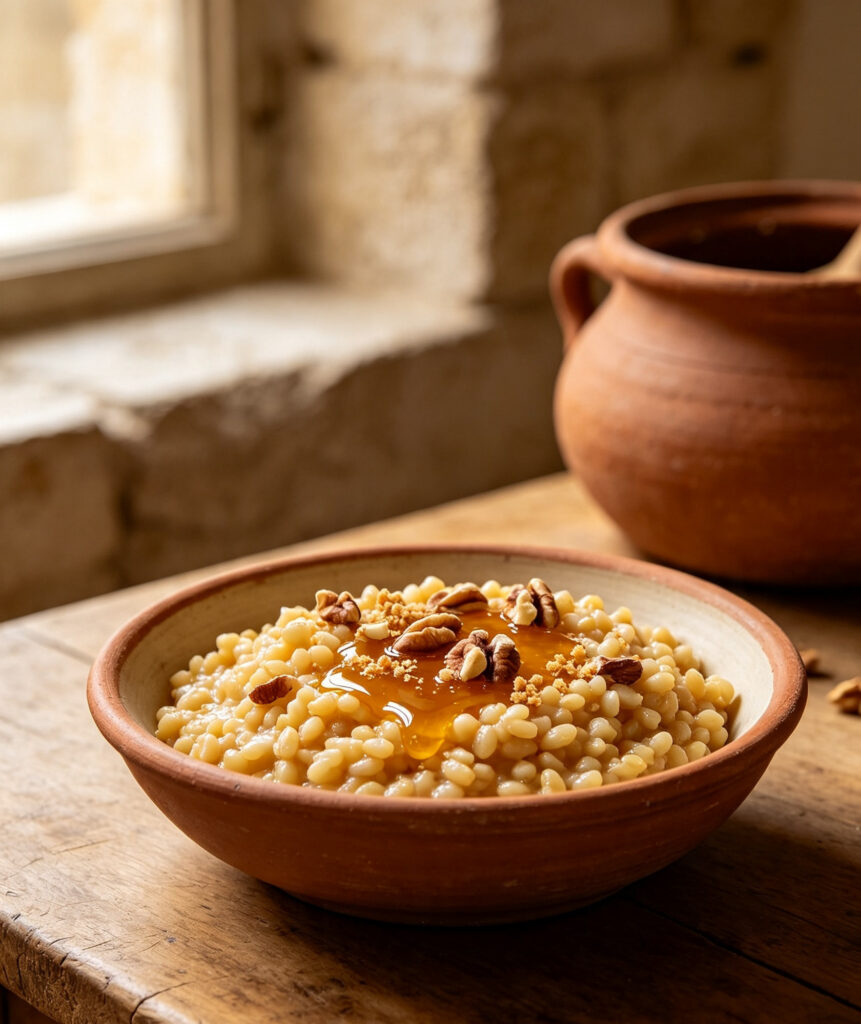
Wheat Groats with Honey and Nuts (Pyros me Meli)
sjfegan
Ingredients
- 200g (1 cup) Whole wheat groats, soaked overnight
- 720ml (3 cups) Water
- 3 tbsp honey
- 30g (1/4 cup) Chopped walnuts
- Pinch of salt
Method
- Drain the soaked wheat groats and combine with the water and salt in a saucepan.
- Bring to a boil, then reduce to a low simmer, cover, and cook for 45–50 minutes until the groats are tender and the water mostly absorbed.
- Stir in the honey.
- Serve warm, topped with chopped walnuts.
Introduction: Boiled wheat groats sweetened with honey and scattered with walnuts, a nourishing breakfast reflecting Byzantine Constantinople’s grain-rich diet.
Cultural Background: Wheat, shipped in vast quantities from Egypt and later the Black Sea region to feed the imperial capital, formed the backbone of the Byzantine diet, and this simple sweetened porridge would have started the day for citizens of many social classes.
Tips: Soaking the groats overnight significantly reduces the cooking time and improves the texture. Stir occasionally toward the end of cooking to prevent sticking.
Variations: Add a few dried figs or raisins for extra sweetness. Use barley groats as a substitute, another common Byzantine grain.
Storage: Refrigerate leftovers in an airtight container for up to 3 days.
Reheating: Reheat gently with a splash of water, stirring, until warmed through.
Nutrition: Per serving (approx.): 260 kcal, 7 g protein, 6 g fat, 46 g carbohydrate.
FAQs:
Q: Why was wheat so central to Byzantine Constantinople?
A: The capital relied on massive grain shipments, particularly from Egypt until its loss in the 7th century, and later other provinces, to feed its enormous urban population through the state grain distribution system.
Q: Were nuts commonly used in Byzantine cooking?
A: Yes, walnuts, almonds and pistachios were valued ingredients across Byzantine cuisine, used in both sweet and savoury dishes.
Please log in to leave a comment.