
Curds with Honey
The Quirky Foodster Team
Ingredients
- Fresh milk, soured — 1 L (4 cups)
- Honey — 1 tbsp
Method
- Warm the soured milk gently, without boiling, until it visibly separates into curds and whey, about 8-10 minutes.
- Pour through a cloth-lined strainer set over a bowl and let drain for 10-15 minutes, until softly set.
- Spoon the curds into a bowl.
- Drizzle with honey and serve.
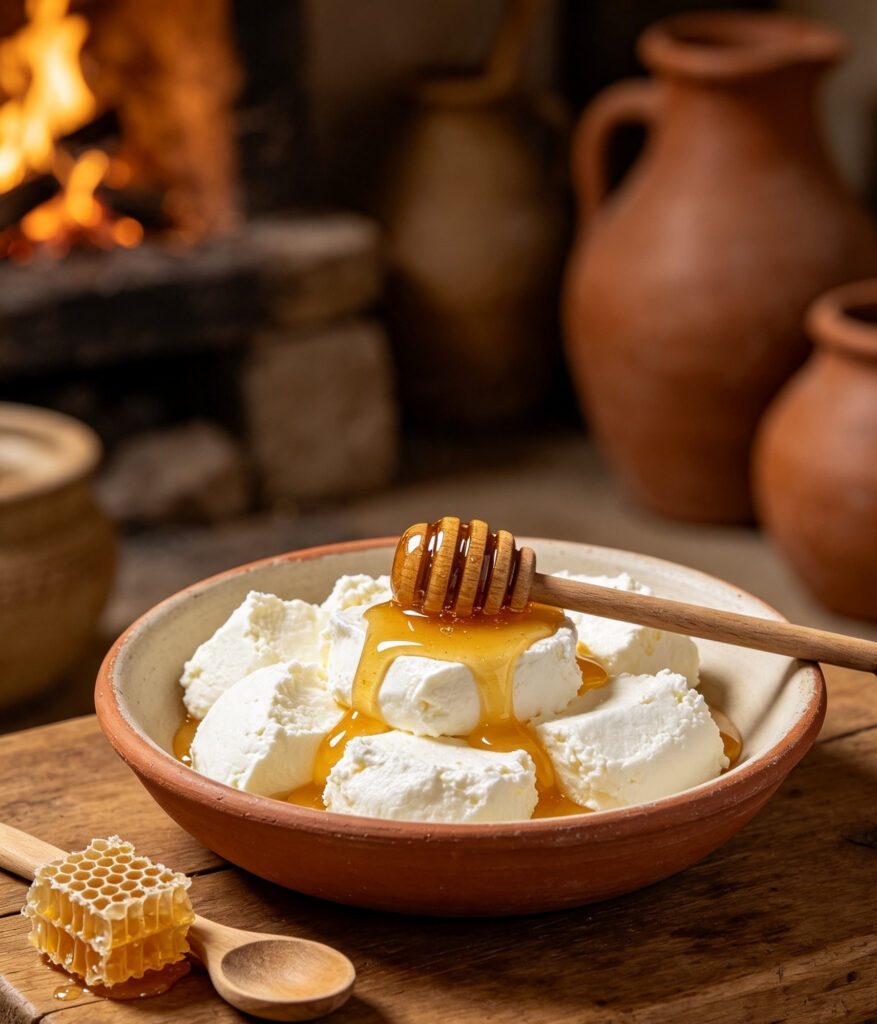
Introduction: Fresh soft curds separated from soured milk and drizzled with honey, a light morning food reflecting Gallic cattle-herding and the region’s documented taste for dairy.
Cultural Background: Cattle herding held major economic and social importance among continental Celtic peoples, reflected in the frequent depiction of cattle raiding and cattle wealth in the closely related insular Celtic literary tradition, and Pliny the Elder specifically records that the Gauls and Germans made notable use of butter, a dairy product he considered unusual enough among barbarian peoples to remark upon directly; curdled milk sweetened with honey is a plausible, simple reconstruction from this well-attested dairy economy rather than one directly named period dish.
Tips: – Heat gently and do not boil, or the curds will toughen rather than separate cleanly. – The reserved whey can be kept and used in bread dough or drunk on its own.
Variations: – Naturally vegetarian; not vegan, as it is a dairy-based dish. – A version without honey suits a plainer, less sweet breakfast.
Storage: Refrigerate covered for up to 2 days.
Reheating: Not applicable; served fresh, cold or at room temperature.
Nutrition: Per serving (approx.): 150 kcal, 8 g protein, 15 g carbohydrate, 6 g fat.
FAQs:
Q: Is Pliny the Elder’s comment about Gallic butter genuine?
A: Yes, Pliny the Elder directly records that Gauls and Germans made notable use of butter, remarking on it as a distinctive barbarian practice unlike Mediterranean cooking, which relied on olive oil rather than dairy fat.
Q: Why does this recipe rely on Roman sources rather than Celtic ones?
A: Because no continental Celtic written recipes survive at all; the Celts’ own culinary knowledge was transmitted orally, so information about their diet comes either from outside Greek and Roman observers or from archaeology.
- Fresh milk, soured — 1 L (4 cups)
- Honey — 1 tbsp
Please log in to leave a comment.