
Breakfast
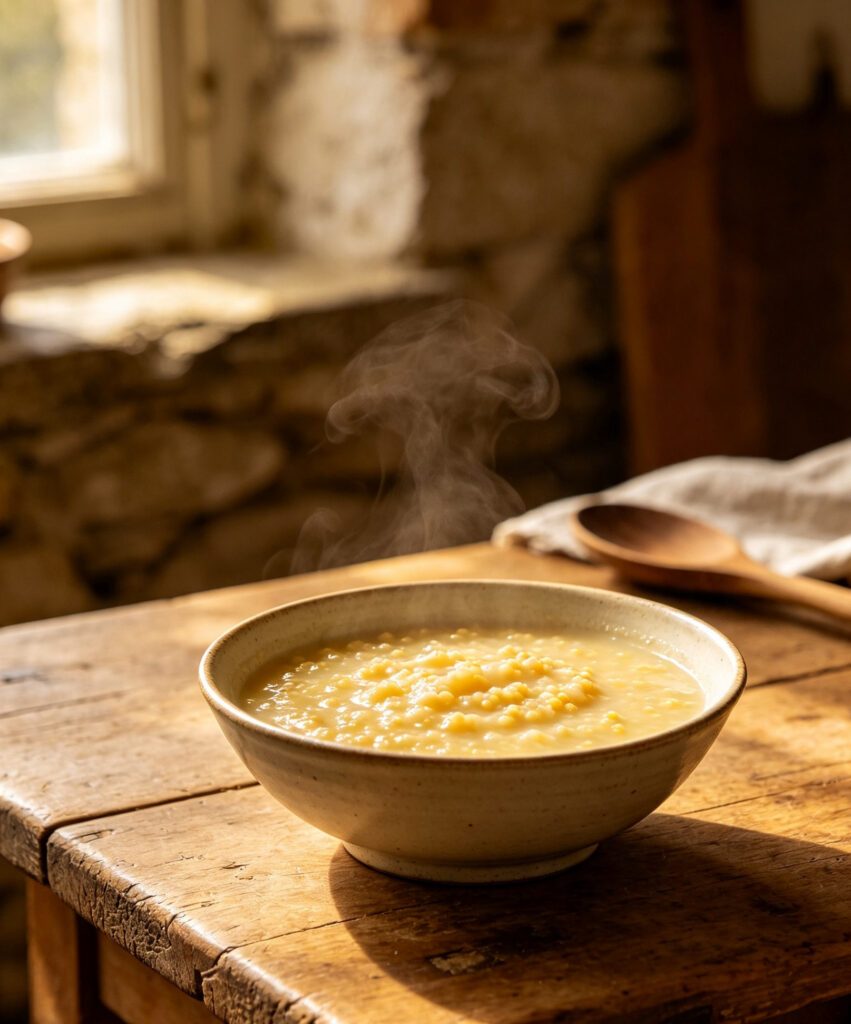
Millet Congee (小米粥 (Xiǎomǐ Zhōu))
sjfegan
Ingredients
- 200g (1 cup) Millet, rinsed
- 6 cups water (1.4 litres / 48 fl oz)
- Pinch of salt
Method
- Combine the rinsed millet and water in a pot and bring to a boil.
- Reduce heat to very low, cover, and simmer gently for 40–45 minutes, stirring occasionally, until the millet has broken down into a thick, creamy porridge.
- Season with a pinch of salt before serving warm.
Introduction: A simple, warming porridge of millet simmered slowly in water, the everyday breakfast of ordinary people across ancient China for millennia.
Cultural Background: Millet was the dominant staple grain of northern China for thousands of years before wheat and rice became widespread, and this humble porridge fed farmers and officials alike, prized for its gentle, easily digested character.
Tips: Stir occasionally during the long simmer to prevent the millet from sticking and scorching at the bottom. Rinse the millet well beforehand to remove any bitterness.
Variations: Add a few jujubes (dried red dates) for natural sweetness, a common addition. Serve alongside pickled vegetables for a more savoury breakfast.
Storage: Refrigerate leftovers in an airtight container for up to 2 days.
Reheating: Reheat gently with a splash of water, stirring, until warmed through.
Nutrition: Per serving (approx.): 160 kcal, 4 g protein, 1 g fat, 34 g carbohydrate.
FAQs:
Q: Why was millet so central to ancient Chinese cooking?
A: Millet was well suited to the drier climate of northern China and was cultivated there long before rice became dominant, making it the foundational grain of early Chinese civilization.
Q: Is this porridge similar to modern congee?
A: Yes, it is considered a direct ancestor of the rice congee eaten across China today, though ancient versions relied on millet rather than rice.
Please log in to leave a comment.