
Appetizers
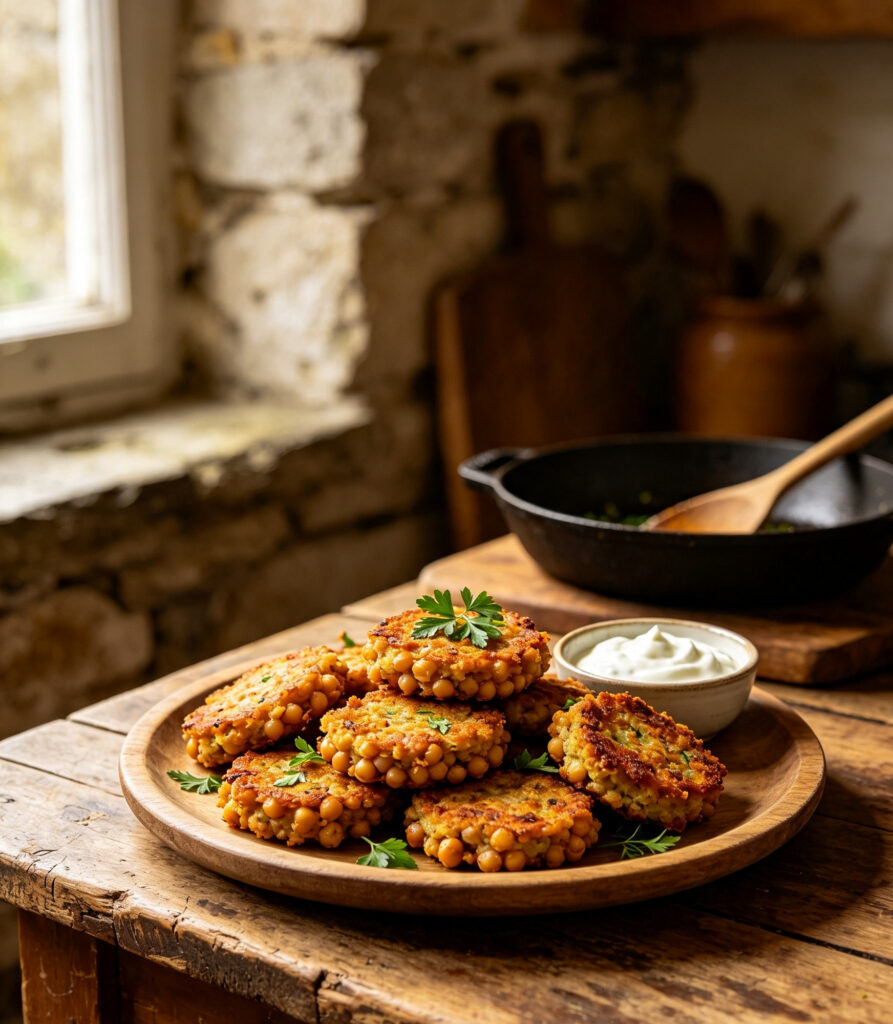
Chickpea Fritters (Levivot Chumus)
sjfegan
Ingredients
- 340g (2 cups) Cooked chickpeas
- 1 onion, finely chopped
- 2 tbsp fresh coriander, chopped
- 1 tsp ground cumin
- 2 tbsp barley flour
- Olive oil for frying
- Salt to taste
Method
- Mash the cooked chickpeas until mostly smooth, leaving some texture.
- Combine with the onion, coriander, cumin, barley flour and salt.
- Shape into small, flat patties.
- Heat a generous amount of olive oil in a frying pan over medium heat.
- Fry the patties for 3–4 minutes per side until golden and crisp.
- Drain briefly before serving warm.
Introduction: Small fritters made from ground chickpeas, fried until golden, a savoury starter reflecting Carthage’s Mediterranean and North African agricultural inheritance.
Cultural Background: Chickpeas were an established crop across Phoenician settlements in North Africa, and grinding them for frying reflects a practical way of transforming stored legumes into a flavourful dish, a technique with echoes still found across the wider region today.
Tips: Leave some texture when mashing the chickpeas for the best fritter structure. Fry over moderate heat so the fritters cook through without burning.
Variations: Add a pinch of ground coriander seed for extra warmth. Serve alongside olives and bread.
Storage: Refrigerate cooked fritters in an airtight container for up to 2 days.
Reheating: Reheat in a dry pan over low heat for a few minutes per side.
Nutrition: Per serving (approx., 2 fritters): 180 kcal, 7 g protein, 9 g fat, 18 g carbohydrate.
FAQs:
Q: Were chickpeas cultivated in Carthaginian territory?
A: Yes, chickpeas and other legumes were well-established crops across the North African Phoenician settlements, forming part of the region’s important agricultural output.
Q: Is this dish related to modern falafel?
A: While direct lineage cannot be firmly established, chickpea-based fritters reflect a very old culinary tradition across the region that continues in various related dishes today.
Please log in to leave a comment.