
Desserts
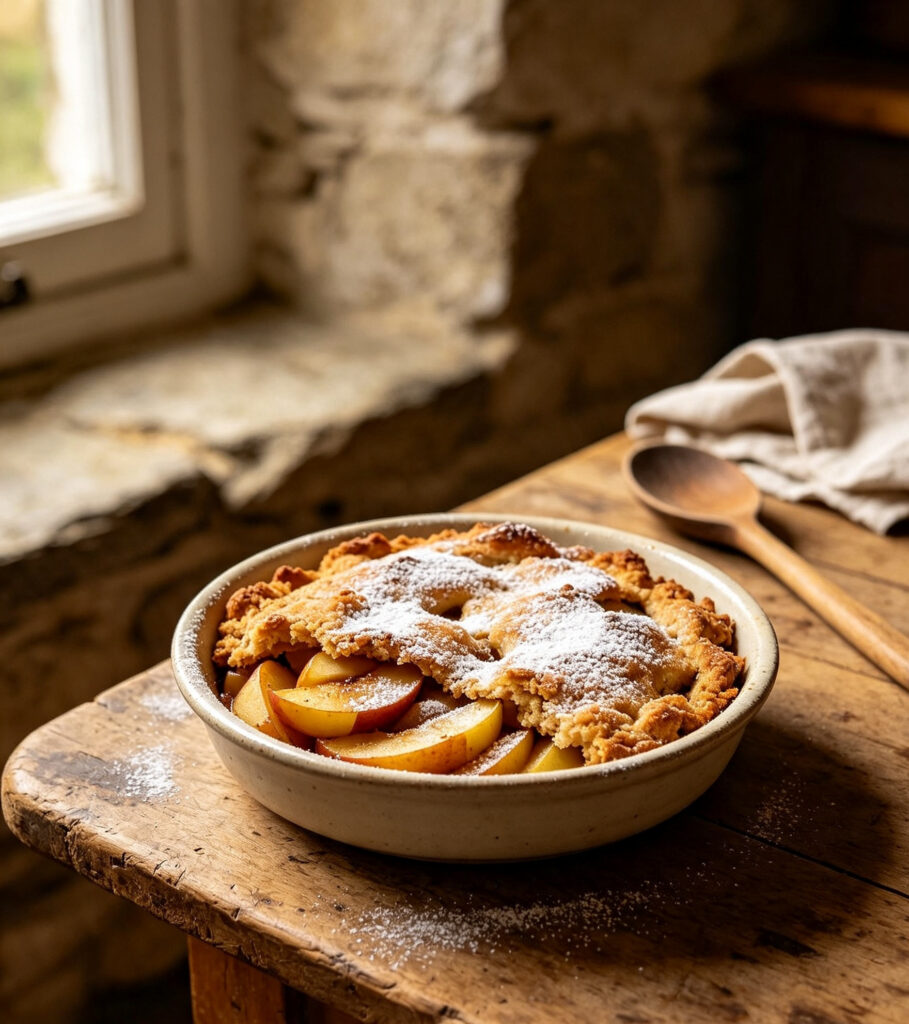
Apple Pandowdy (Apple Pandowdy)
sjfegan
Ingredients
- 6 apples, peeled and sliced
- 115g (1/3 cup) Molasses
- 1 tsp ground cinnamon
- 1/2 tsp ground nutmeg
- 190g (1.5 cups) Flour
- 115g (1/2 cup) Butter, cold and cubed
- 60ml (1/4 cup) Cold water
- Pinch of salt
Method
- Combine the flour and salt, then rub in the cold butter until crumbly.
- Add the cold water gradually, bringing the mixture together into a firm dough; chill for 20 minutes.
- Preheat the oven to 190°C (375°F).
- Combine the sliced apples with the molasses, cinnamon and nutmeg, and spread into a baking dish.
- Roll the dough out and place over the apples, tucking the edges in roughly (a rustic, imperfect finish is traditional).
- Bake for 35–40 minutes until the apples are tender and the crust is golden.
- Partway through baking, traditionally the crust is broken and pressed down into the fruit and juices
- ('dowdying'), then returned to the oven for the final stretch.
Introduction: Sliced apples baked beneath a rustic pastry crust, sweetened with molasses, a beloved and homely colonial dessert.
Cultural Background: Apple pandowdy represents the practical, resourceful dessert-making of colonial households, apples being widely grown and stored, and the simple, deep-dish preparation with a rough, broken crust making it a comforting, unfussy family treat.
Tips: The ‘dowdying’ step — breaking the crust and pressing it into the fruit partway through baking — is a traditional and distinctive part of this dessert. Use tart, firm apples that hold their shape well during the long bake.
Variations: Add a handful of raisins to the apple filling. Serve warm with a little cream poured over.
Storage: Refrigerate in an airtight container for up to 3 days.
Reheating: Reheat in an oven at 160°C (325°F) for 15 minutes, or enjoy at room temperature.
Nutrition: Per serving (approx.): 320 kcal, 4 g protein, 14 g fat, 48 g carbohydrate.
FAQs:
Q: What does ‘dowdying’ mean?
A: It refers to the traditional step of breaking the pastry crust and pressing it down into the fruit partway through baking, allowing the juices to soak through — a distinctive technique that gives the dessert its name.
Q: Why molasses instead of white sugar?
A: Molasses was more widely available and affordable in colonial America due to trade routes, making it a common sweetener in many colonial desserts.
Please log in to leave a comment.