
Mains
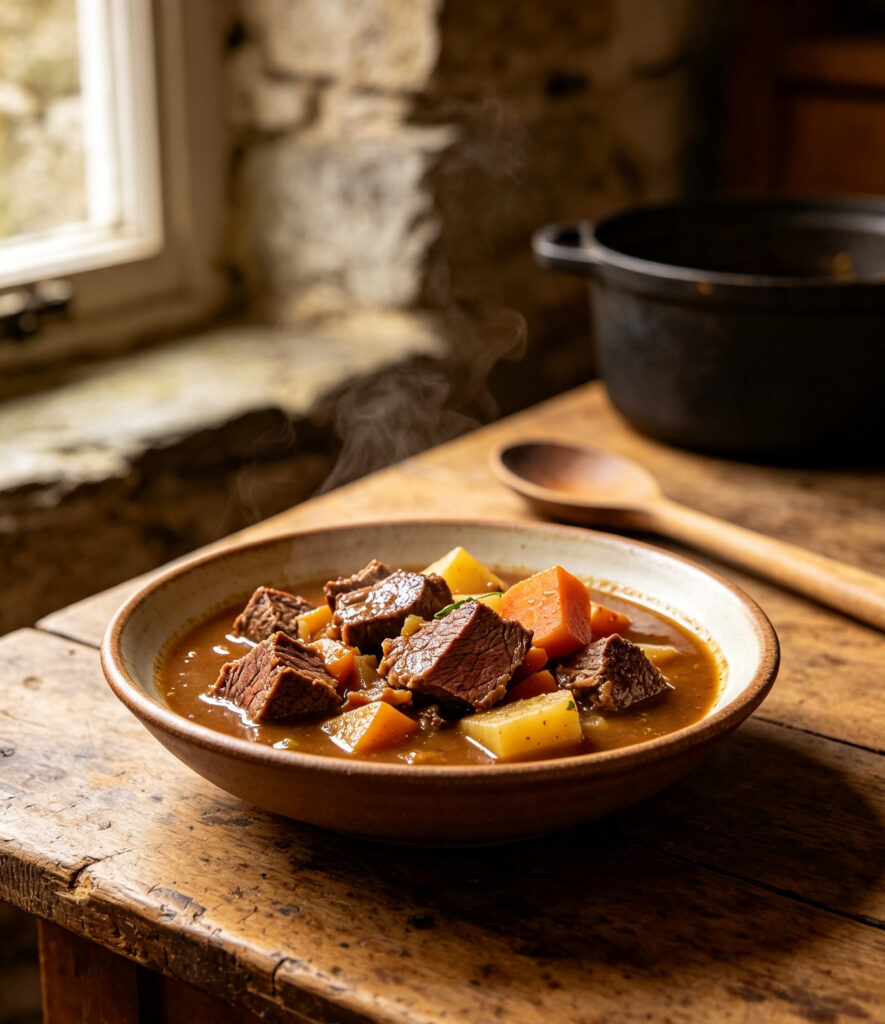
Venison Stew (Venison Stew)
sjfegan
Ingredients
- 800g Venison, cubed
- 2 tbsp flour, for dredging
- 2 tbsp butter or lard
- 1 onion, chopped
- 2 carrots, sliced
- 2 potatoes, cubed
- 1 bay leaf
- 960ml (4 cups) Stock or water
- Salt and pepper to taste
Method
- Dredge the venison cubes lightly in flour, seasoned with salt and pepper.
- Heat the butter or lard in a large pot and brown the venison on all sides; set aside.
- In the same pot, sauté the onion until softened.
- Return the venison to the pot, add the bay leaf and stock, and bring to a simmer.
- Cover and cook over low heat for 1.5–2 hours until the meat is tender.
- Add the carrot and potato, and simmer for a further 20–25 minutes until the vegetables are tender.
- Season with salt and pepper before serving hot.
Introduction: Wild venison slow-simmered with root vegetables and herbs, a hearty main dish reflecting the hunting traditions of colonial American life.
Cultural Background: Wild game, particularly venison, was an important protein source for colonial households, hunting supplementing farmed and preserved foods, and slow-simmered stews made practical use of tougher cuts from the hunt.
Tips: Dredging the meat in flour before browning helps thicken the stew naturally as it simmers. Simmer low and slow, as wild venison can be tougher than farmed meat and benefits from patient cooking.
Variations: Add a splash of vinegar or wine for extra depth, if available. Substitute other wild game or beef according to what’s on hand.
Storage: Refrigerate in an airtight container for up to 3 days.
Reheating: Reheat gently on the stovetop over low heat, stirring occasionally, until hot throughout.
Nutrition: Per serving (approx.): 380 kcal, 34 g protein, 14 g fat, 28 g carbohydrate.
FAQs:
Q: How important was hunting to colonial households?
A: Hunting wild game like venison and turkey provided an important supplement to farmed food, particularly valuable in frontier and rural colonial communities.
Q: Why dredge the meat in flour first?
A: This step, common in period cooking, helps brown the meat and naturally thickens the stewing liquid as it cooks, without needing a separate thickening step.
Please log in to leave a comment.