
Appetizers
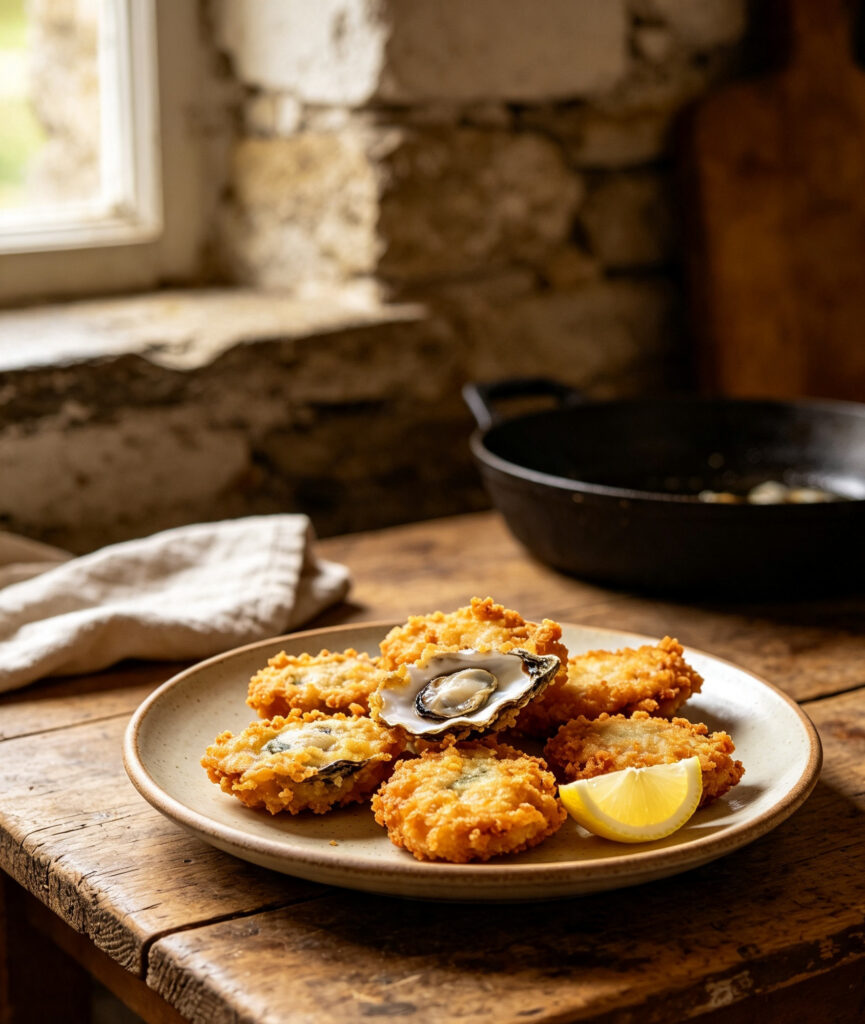
Oyster Fritters (Oyster Fritters)
sjfegan
Ingredients
- 24 fresh shucked oysters, drained
- 120g (1 cup) Flour
- 1 egg
- 120ml (1/2 cup) Milk
- 1/2 tsp salt
- Butter or lard for frying
Method
- Whisk together the flour, egg, milk and salt to form a smooth batter.
- Dip each oyster into the batter, coating fully.
- Heat a generous amount of butter or lard in a frying pan over medium-high heat.
- Fry the battered oysters for 2–3 minutes per side until golden.
- Drain briefly before serving hot.
Introduction: Fresh oysters dipped in a light batter and fried until golden, a beloved starter reflecting the abundant shellfish of colonial America’s coastal waters.
Cultural Background: With oysters remarkably abundant and inexpensive in colonial-era waters, particularly around the Chesapeake Bay and New York harbour, they featured prominently in colonial cooking, this simple fried preparation a popular way to enjoy them.
Tips: Pat the oysters dry before dipping in batter so it adheres well. Fry in batches to avoid overcrowding the pan, which can cause uneven cooking.
Variations: Serve with a simple vinegar or lemon-adjacent souring sauce. Season the batter with a pinch of nutmeg, a common colonial spice.
Storage: Best eaten fresh; not well suited to storing.
Reheating: Reheating is not recommended, as the texture suffers; best made fresh.
Nutrition: Per serving (approx., 6 oysters): 260 kcal, 12 g protein, 14 g fat, 22 g carbohydrate.
FAQs:
Q: Were oysters really that abundant in colonial times?
A: Yes, historical accounts describe oyster beds of remarkable size along the colonial Atlantic coast, making them an inexpensive, widely available food for people of many social classes.
Q: What fat was traditionally used for frying?
A: Butter or lard were the common cooking fats of the era, oil being less readily available in colonial kitchens.
Please log in to leave a comment.