
Desserts
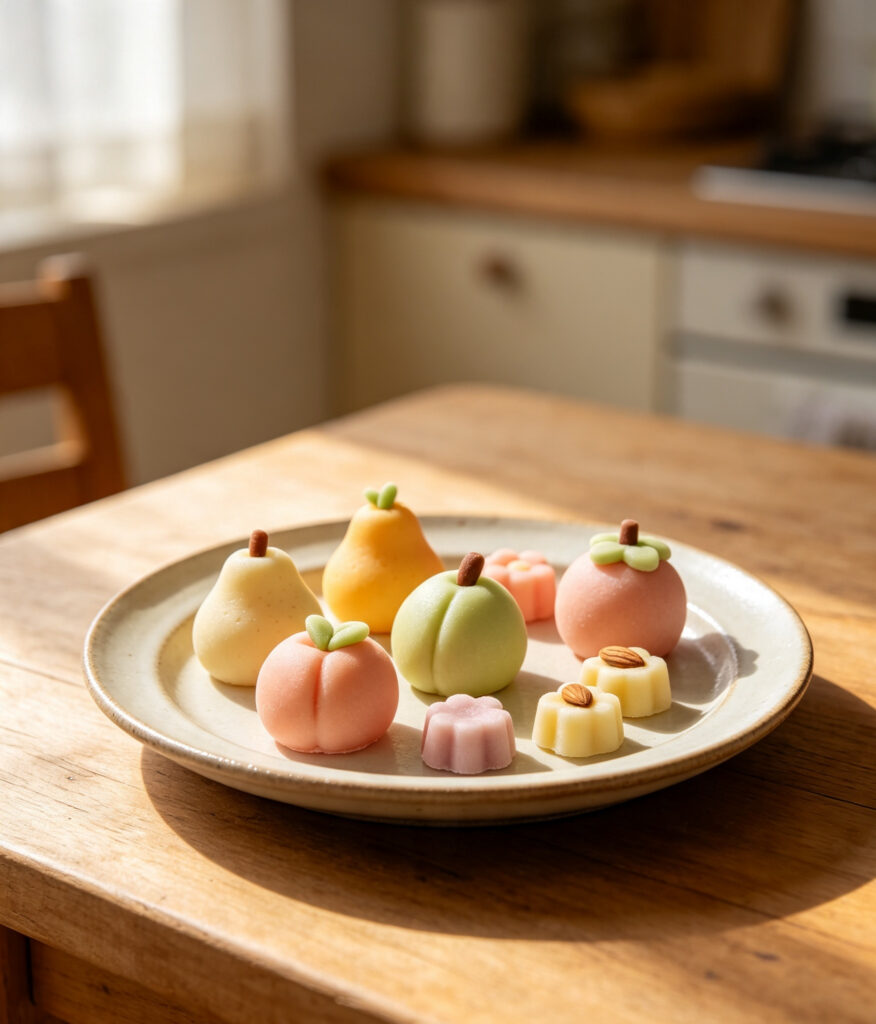
Marzipan Sweets (Marzipan)
sjfegan
Ingredients
- 200g (2 cups) Ground almonds
- 200g (1 cup) Sugar
- 2 egg whites
- 1 tsp almond extract (optional)
Method
- Combine the ground almonds and sugar in a bowl.
- Add the egg whites and almond extract if using, mixing into a smooth, firm paste.
- Shape the paste into small decorative forms.
- Preheat the oven to 150°C (300°F).
- Place on a baking tray and bake for 12–15 minutes until lightly golden.
- Let cool completely before serving.
Introduction: A dense, sweet almond paste shaped into small treats, a beloved confection reflecting the sugar and almond trade that flourished across Iberia during this era.
Cultural Background: Marzipan held deep roots in Iberian confectionery, and as sugar production expanded through Atlantic colonial plantations during this era, sweets like this became increasingly accessible beyond the wealthiest households.
Tips: Work the paste thoroughly for a smooth, cohesive texture. Bake at a low temperature to avoid over-browning while still setting the shapes.
Variations: Shape into fruit forms and colour naturally for a traditional decorative presentation. Serve alongside coffee or a light wine.
Storage: Store in an airtight container at room temperature for up to 2 weeks.
Reheating: Not applicable — served at room temperature.
Nutrition: Per serving (approx., 2 pieces): 220 kcal, 6 g protein, 12 g fat, 24 g carbohydrate.
FAQs:
Q: How did sugar become more available during this era?
A: The establishment of sugar plantations in Atlantic colonies, worked through the era’s expanding and deeply troubling system of forced labour, significantly increased European sugar supplies, though at grave human cost.
Q: Was marzipan already established in Iberia before this era?
A: Yes, marzipan-style almond confections had earlier roots in the region, and this era’s expanding sugar access helped make such sweets more widely enjoyed.
Please log in to leave a comment.