
Salads
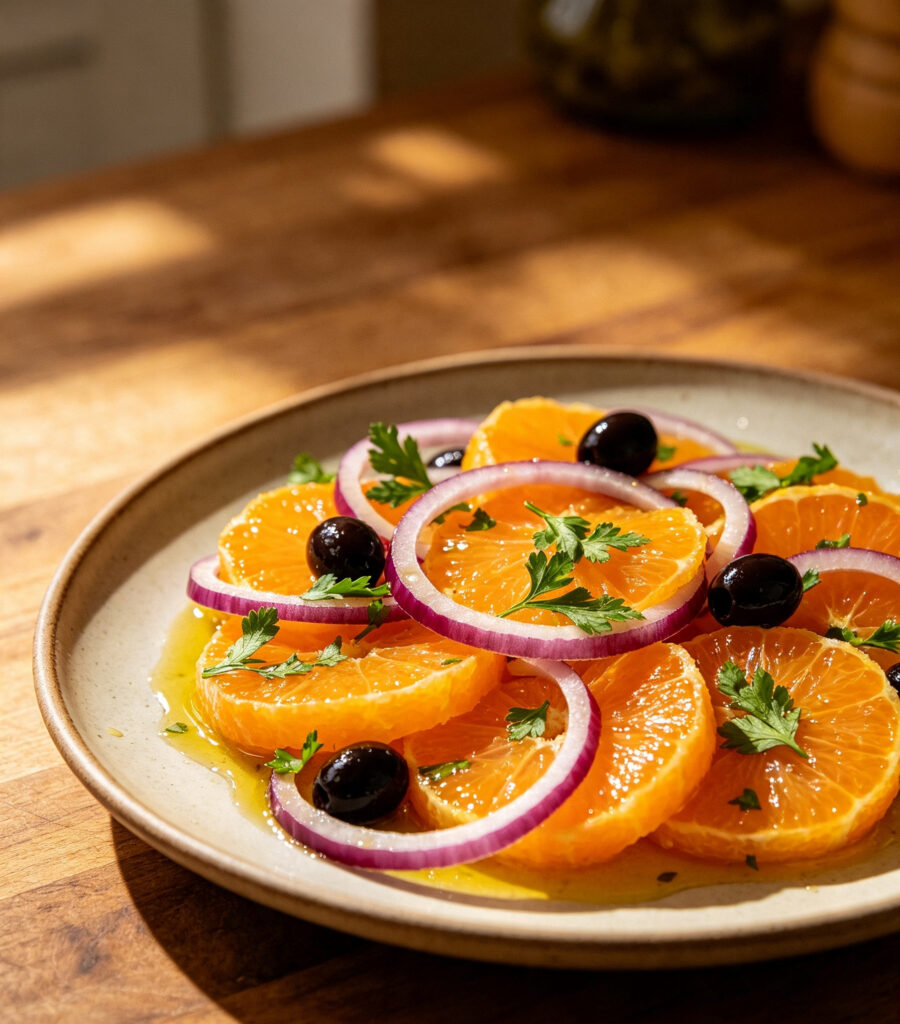
Orange and Onion Salad (Salada de Laranja)
sjfegan
Ingredients
- 4 oranges, peeled and sliced
- 1 onion, thinly sliced
- 3 tbsp olive oil
- 1 tsp paprika
- Salt to taste
- Black olives, to garnish
Method
- Arrange the sliced oranges and onion on a serving platter.
- Drizzle with olive oil and sprinkle with paprika and salt.
- Garnish with black olives before serving.
Introduction: Sliced oranges tossed with onion and olive oil, a bright salad reflecting citrus cultivation flourishing across Iberia during this era of expanding trade and agriculture.
Cultural Background: Citrus fruits, introduced to the Iberian Peninsula centuries earlier and by this era well established in cultivation, featured in dishes that combined sweet and savoury elements, this refreshing salad a beloved example still enjoyed across the region.
Tips: Slice the oranges thinly and evenly for the most attractive presentation. Let the salad sit for a few minutes before serving to allow the flavours to meld.
Variations: Add a few sprigs of fresh mint for extra freshness. Adjust the onion quantity to taste, as it can be quite pungent.
Storage: Best eaten fresh; store covered in the refrigerator for a few hours only.
Reheating: This is a cold salad and is not reheated.
Nutrition: Per serving (approx.): 140 kcal, 2 g protein, 9 g fat, 16 g carbohydrate.
FAQs:
Q: Was citrus fruit well established in Iberia by this era?
A: Yes, oranges and other citrus had been cultivated in the region for centuries by the Age of Exploration, and this style of orange salad remains a beloved dish in parts of Iberia today.
Q: Why is paprika used, given peppers were a New World introduction?
A: Peppers reached Iberia during this very era via the Americas, and paprika production developed over the following century, making its inclusion here a nod to the period’s transformative ingredient exchanges.
Please log in to leave a comment.