
Breakfast
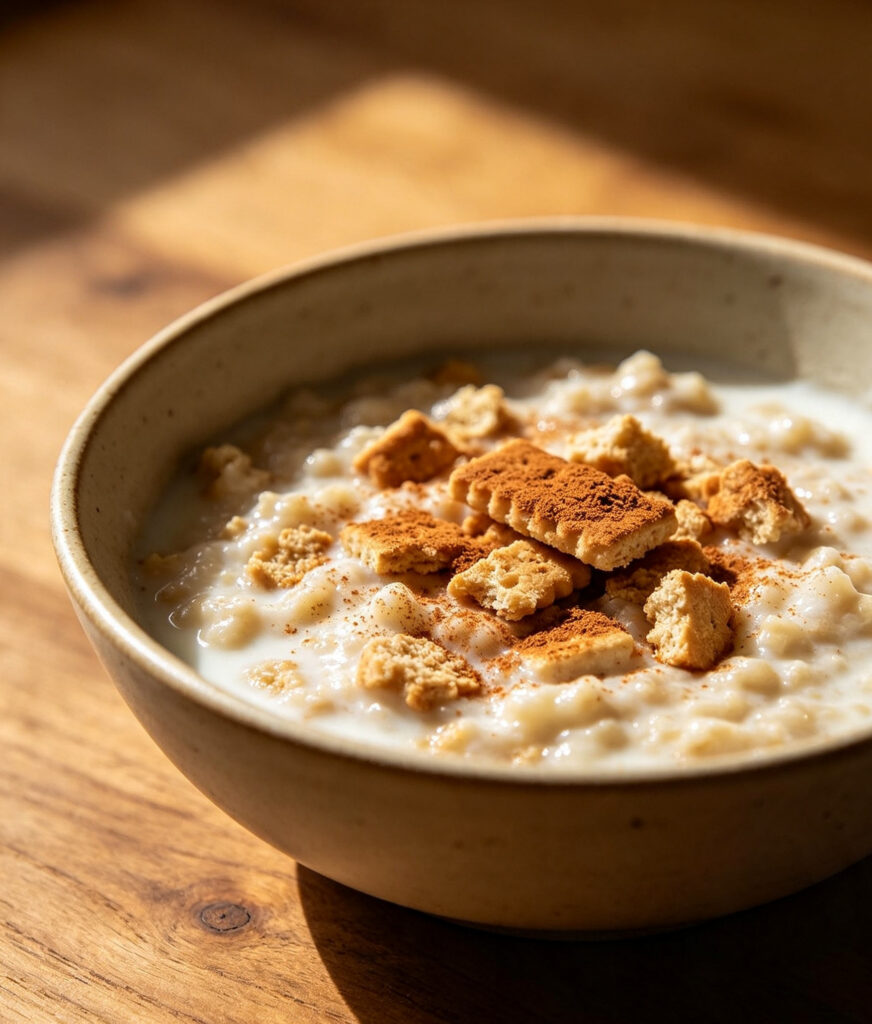
Ship’s Biscuit Porridge (Papas de Galleta)
sjfegan
Ingredients
- 4 pieces ship's biscuit or dry crackers, broken (or substitute dense unsalted crackers)
- 720ml (3 cups) Water or broth
- 2 tbsp butter or oil
- Pinch of salt
- Honey, to taste (optional)
Method
- Break the biscuit into small pieces and combine with the water or broth in a saucepan.
- Bring to a simmer and cook, stirring occasionally, for 12–15 minutes until softened into a thick, porridge-like consistency.
- Stir in the butter or oil and salt.
- Sweeten with honey if desired, and serve warm.
Introduction: Hardtack biscuit softened and simmered into a warm porridge, a practical breakfast reflecting the long sea voyages that defined the Age of Exploration.
Cultural Background: Ship’s biscuit (hardtack) was the fundamental preserved food of long ocean voyages, its rock-hard texture requiring softening before eating, and sailors on Iberian expeditions to the Americas and beyond relied on dishes like this to make their rations palatable.
Tips: Break the biscuit into small pieces beforehand, as this helps it soften more evenly. Adjust the liquid quantity for a thicker or looser porridge.
Variations: Add a few dried fruits if available for extra flavour, a treat when supplies allowed. Use broth instead of water for a more savoury version.
Storage: Refrigerate leftovers in an airtight container for up to 2 days.
Reheating: Reheat gently with a splash of water, stirring, until warmed through.
Nutrition: Per serving (approx.): 220 kcal, 5 g protein, 8 g fat, 32 g carbohydrate.
FAQs:
Q: What was ship’s biscuit?
A: A hard, long-lasting bread product, also called hardtack, baked to remove nearly all moisture so it could survive months at sea without spoiling, though it required softening before eating.
Q: Why was food preservation so critical during this era?
A: Long transatlantic and round-the-world voyages could last many months, making shelf-stable provisions like ship’s biscuit essential to survival at sea.
Please log in to leave a comment.