
Street Food
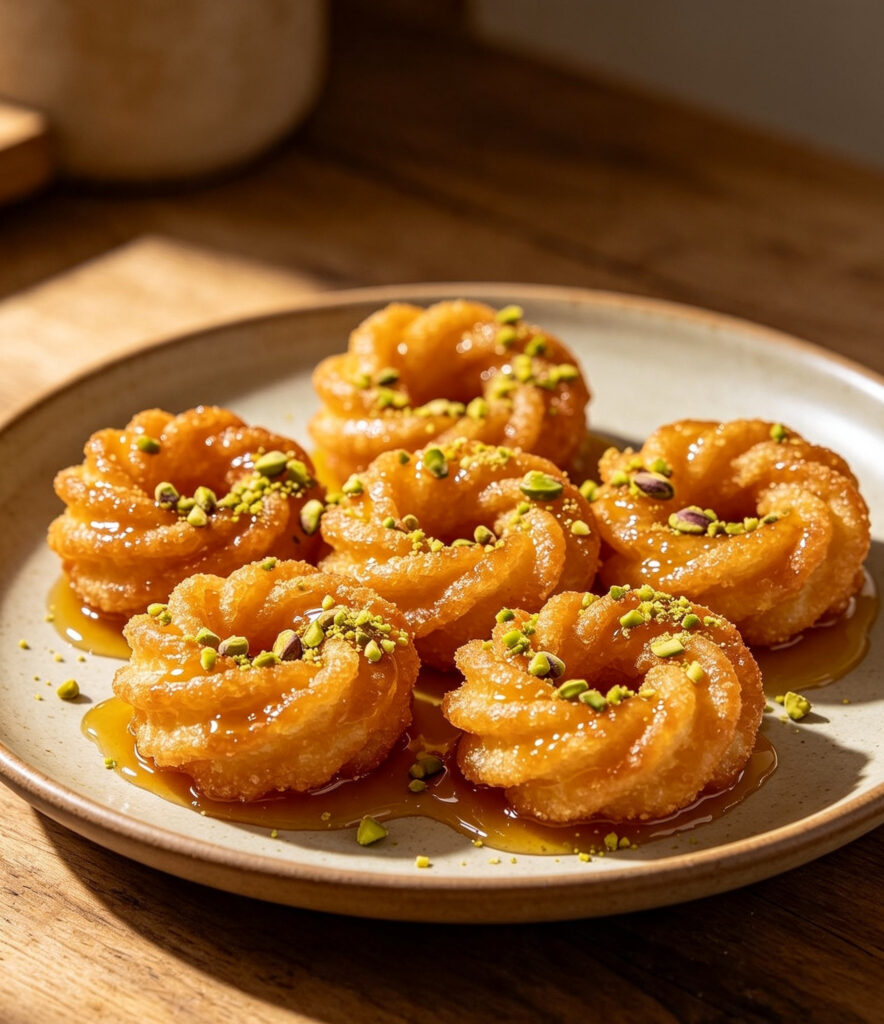
Fried Dough with Syrup (Zalabiya)
sjfegan
Ingredients
- 250g (2 cups) Flour
- 1.5 tsp active dry yeast
- 360ml (1.5 cups) Warm water
- 1/2 tsp salt
- 200g (1 cup) Sugar, for syrup
- 240ml (1 cup) Water, for syrup
- 1 tbsp rosewater
- Oil for deep frying
Method
- Dissolve the yeast in the warm water and let sit for 10 minutes until foamy.
- Combine the flour and salt in a bowl, then add the yeast mixture, whisking to form a smooth, thick batter.
- Cover and let rise in a warm place for 45–60 minutes until bubbly.
- Meanwhile, combine the sugar and water in a saucepan and simmer for 8–10 minutes until slightly thickened; stir in the rosewater and let cool.
- Heat oil to 175°C (350°F) in a deep pan.
- Transfer the batter to a piping bag and pipe coils or spirals directly into the hot oil.
- Fry for 2–3 minutes per side until golden and crisp.
- Drain briefly, then dip in the syrup before serving warm.
Introduction: Crisp, golden fried dough coils drenched in sweet syrup, a beloved street sweet documented extensively in Abbasid-era culinary texts.
Cultural Background: Zalabiya holds a well-documented place in Abbasid culinary literature, its crisp, syrup-soaked form sold by street vendors and street-side stalls, a tradition that spread throughout the Islamic world and continues in various forms to this day.
Tips: Let the batter rise fully for the lightest, crispest zalabiya. Fry in small batches to keep the oil temperature steady.
Variations: Sprinkle with crushed pistachios after dipping in syrup. Adjust the rosewater in the syrup to taste.
Storage: Best eaten fresh; leftovers can be stored for up to 1 day, though texture softens.
Reheating: Best made fresh; reheating is not typically recommended for this fried treat.
Nutrition: Per serving (approx.): 280 kcal, 5 g protein, 6 g fat, 52 g carbohydrate.
FAQs:
Q: Is zalabiya documented in historical Abbasid texts?
A: Yes, it appears in surviving Abbasid-era culinary literature, reflecting its established place as a beloved sweet street food of the period.
Q: Did this dish spread beyond the Abbasid Caliphate?
A: Yes, variations of this fried, syrup-soaked sweet spread throughout the Islamic world and beyond, with related dishes found across many cultures today.
Please log in to leave a comment.