
Salads
Pomegranate and Walnut Salad (Salatat Rumman wa Jawz)
sjfegan
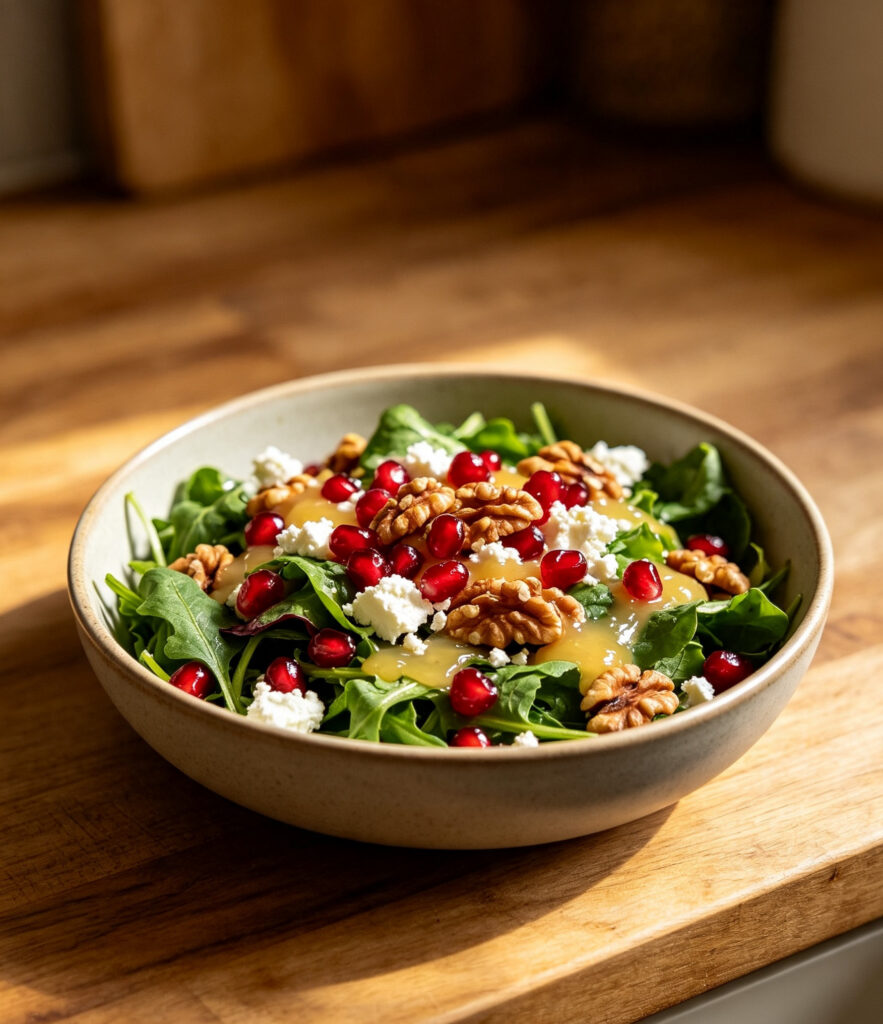
Ingredients
- 280g (2 cups) Pomegranate seeds
- 100g (1 cup) Walnuts, toasted and roughly chopped
- 2 tbsp olive oil
- 1 tbsp pomegranate molasses
- 2 tbsp chopped fresh mint
- Salt to taste
Method
- Combine the pomegranate seeds and toasted walnuts in a bowl.
- Whisk together the olive oil, pomegranate molasses and salt.
- Pour the dressing over the salad and toss gently.
- Garnish with chopped mint before serving.
Introduction: A bright, jewelled salad of pomegranate seeds and toasted walnuts, showcasing two ingredients celebrated across Abbasid cuisine.
Cultural Background: Pomegranates held deep symbolic and culinary significance across the medieval Islamic world, and pairing them with walnuts in a simple, elegant salad reflects Abbasid cuisine’s appreciation for beautiful, seasonally abundant ingredients.
Tips: Toast the walnuts lightly beforehand, as this deepens their flavour significantly. Toss gently to avoid crushing the pomegranate seeds.
Variations: Add a little crumbled cheese for extra richness. Adjust the pomegranate molasses to taste for more or less tang.
Storage: Best eaten fresh; store covered in the refrigerator for a few hours only.
Reheating: This is a cold salad and is not reheated.
Nutrition: Per serving (approx.): 220 kcal, 4 g protein, 18 g fat, 14 g carbohydrate.
FAQs:
Q: Were pomegranates significant in Abbasid culture?
A: Yes, pomegranates held both culinary and symbolic importance across the medieval Islamic world, frequently referenced in period literature and used extensively in cooking.
Q: What is pomegranate molasses?
A: A thick, tangy syrup made from reduced pomegranate juice, widely used across Middle Eastern cuisine as a souring and flavouring agent.
Please log in to leave a comment.