
Soups
Spiced Meat and Wheat Soup (Harisa)
sjfegan
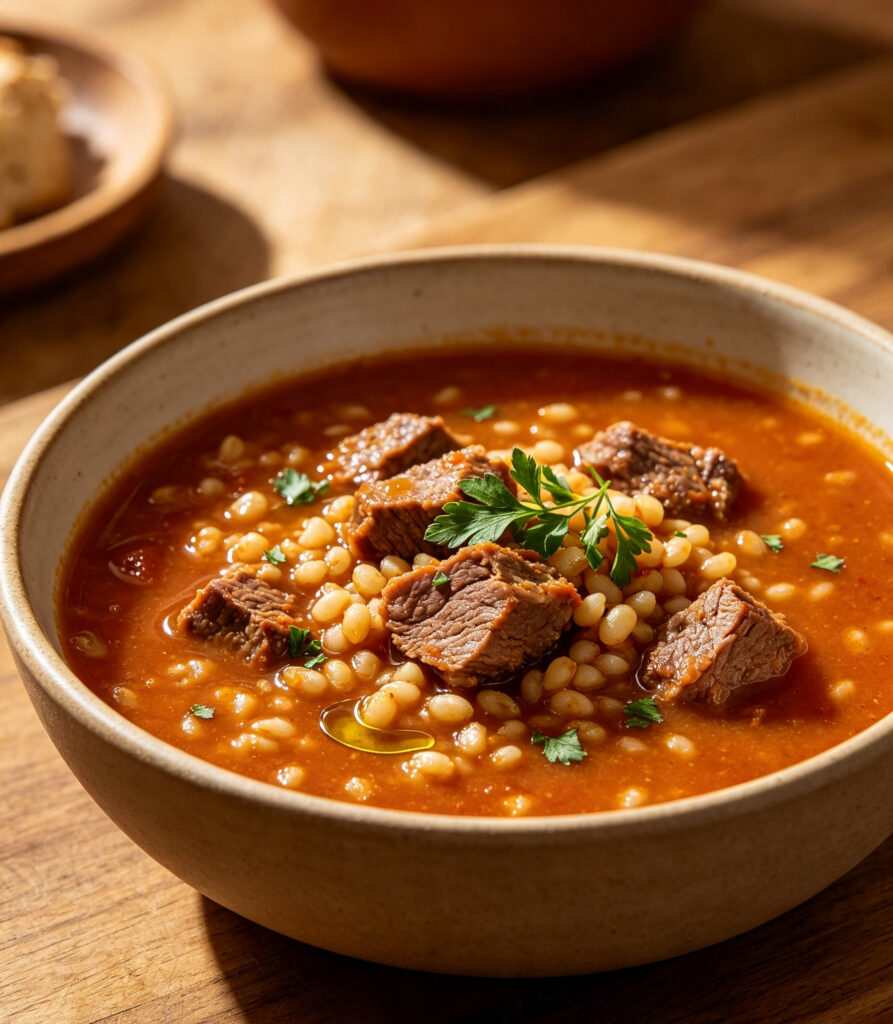
Ingredients
- 360g (2 cups) Cracked wheat, soaked for 2 hours
- 800g Lamb or chicken, bone-in
- 1 onion, chopped
- 1 tsp ground cinnamon
- 1/2 tsp ground cumin
- 60g (1/4 cup) Ghee
- 8 cups water (1.9 litres / 64 fl oz)
- Salt to taste
- Ground cinnamon, to garnish
Method
- Combine the soaked, drained wheat, meat, onion, cinnamon, cumin and water in a large pot.
- Bring to a boil, then reduce to a very low simmer and cook, covered, for 3–4 hours, stirring occasionally, until the wheat and meat are completely soft.
- Remove any bones from the meat.
- Beat vigorously with a wooden spoon or hand mixer until the mixture becomes smooth, thick and cohesive, shredding the meat further as you go.
- Stir in the ghee and season with salt.
- Serve hot, garnished with a dusting of cinnamon.
Introduction: A smooth, savoury porridge of wheat and meat beaten until creamy, a dish of great historical significance in Abbasid cuisine that spread throughout the Islamic world.
Cultural Background: Harisa (distinct from the modern chilli paste of the same name) was among the most celebrated dishes of Abbasid Baghdad, its long, careful preparation and smooth, luxurious texture making it a fixture of both everyday tables and grand celebrations across the caliphate.
Tips: The long, patient simmer and thorough beating are both essential — harisa should be smooth and almost velvety. Stir frequently during the final stages to prevent the thick mixture from catching on the bottom.
Variations: Add a little sugar for a sweeter variation, popular in some households. Adjust the spice blend to taste.
Storage: Refrigerate in an airtight container for up to 4 days.
Reheating: Reheat gently on the stovetop over low heat with a splash of water, stirring frequently.
Nutrition: Per serving (approx.): 380 kcal, 24 g protein, 16 g fat, 36 g carbohydrate.
FAQs:
Q: How significant was harisa in Abbasid cuisine?
A: It held a place of great historical importance, documented extensively in Abbasid-era cookbooks and celebrated as one of the era’s signature dishes.
Q: Is this the same as the North African chilli paste called harissa?
A: No, this is a wheat and meat porridge, an entirely different dish that happens to share a similar name with the unrelated spicy paste.
Please log in to leave a comment.