
Appetizers
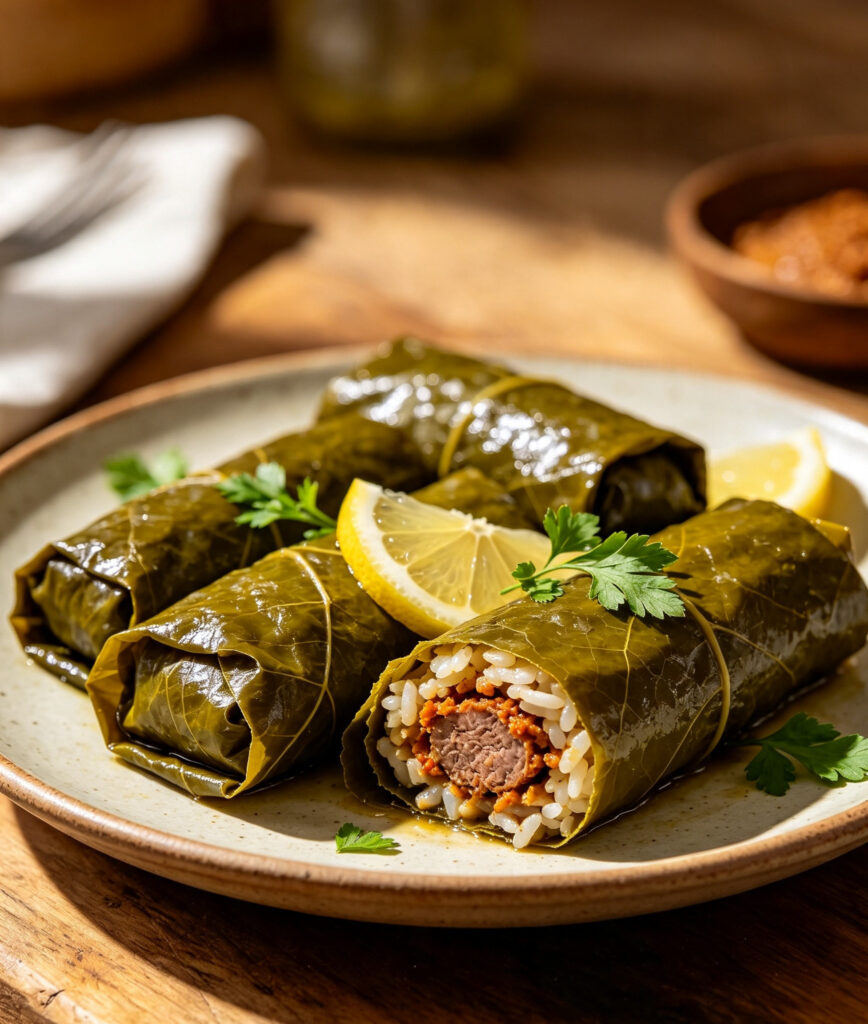
Stuffed Grape Leaves with Meat (Warak Enab bi Lahm)
sjfegan
Ingredients
- 40 grape leaves, fresh or jarred
- 300g Minced lamb or beef
- 185g (1 cup) Rice
- 1 onion, finely chopped
- 1 tsp ground allspice
- 1/2 tsp ground cinnamon
- 480ml (2 cups) Water
- 2 tbsp olive oil
- 1 tbsp vinegar
- Salt to taste
Method
- If using fresh grape leaves, blanch briefly to soften; if jarred, rinse well.
- Combine the minced meat, rice, onion, allspice, cinnamon and salt for the filling.
- Place a spoonful of filling near the stem end of each leaf, fold in the sides, and roll up snugly.
- Line the bottom of a large pot with a few extra leaves.
- Arrange the rolled leaves snugly in the pot.
- Add the water, olive oil and vinegar.
- Weight down with a plate, cover, and simmer gently for 45–50 minutes until the rice and meat are fully cooked.
- Serve warm.
Introduction: Grape leaves wrapped around a filling of spiced rice and minced meat, a beloved and enduring dish with roots in Abbasid-era cooking.
Cultural Background: Stuffed grape leaves reflect Abbasid cuisine’s sophisticated approach to combining grains, meat and warming spices, a technique that spread throughout the wider Islamic world and remains beloved across the Middle East today.
Tips: Roll the leaves snugly but not overly tight, as the rice will expand during cooking. Weighting the rolls down with a plate keeps them submerged and prevents unrolling.
Variations: Add a few pine nuts to the filling for extra richness, a period-appropriate touch. Serve with a dollop of yoghurt on the side.
Storage: Refrigerate in an airtight container for up to 3 days.
Reheating: Reheat gently on the stovetop with a splash of water, or in a covered dish in the oven.
Nutrition: Per serving (approx., 5 pieces): 320 kcal, 16 g protein, 14 g fat, 34 g carbohydrate.
FAQs:
Q: Did stuffed grape leaves originate in Abbasid Baghdad?
A: While the technique has roots across the ancient Mediterranean and Middle East, Abbasid cuisine’s sophisticated combination of spiced meat and rice fillings shaped the dish into forms very similar to what’s enjoyed today.
Q: What spices are traditionally used?
A: Allspice and cinnamon are classic, reflecting Abbasid cuisine’s characteristic warming spice profile in savoury dishes.
Please log in to leave a comment.