
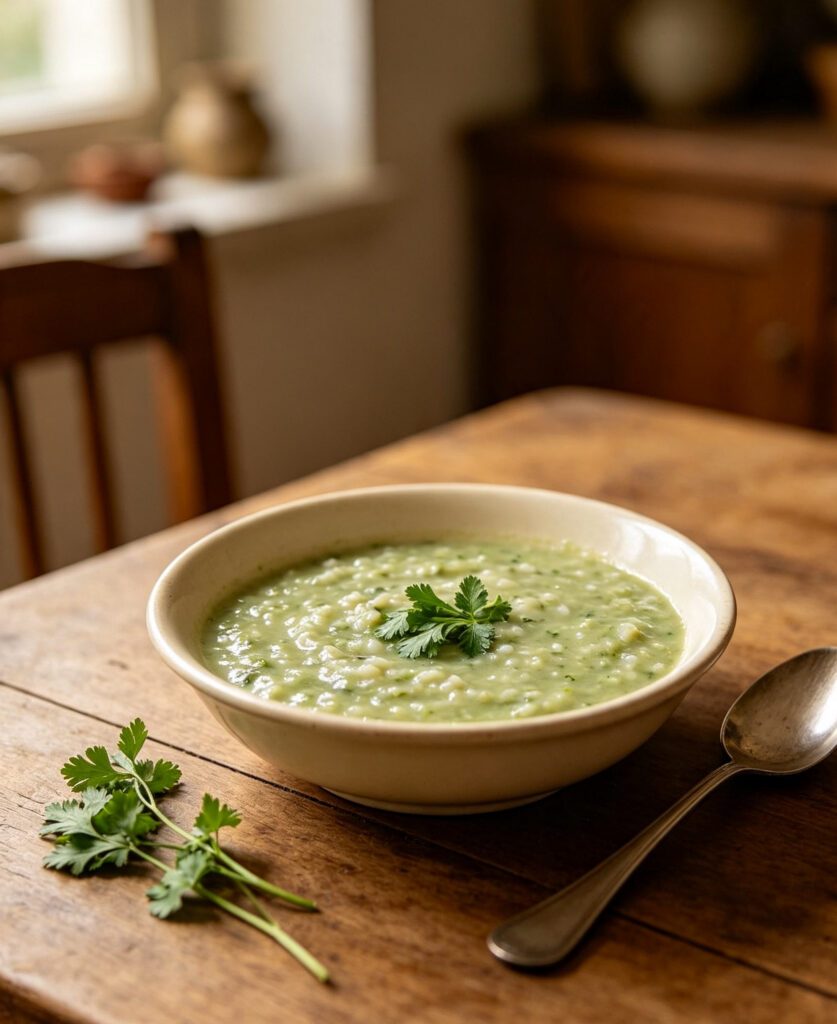
Kola Kanda (Herbal Rice Porridge)
The Quirky Foodster Team
Ingredients
- Red rice, or white rice (1/2 cup) — 100 g (3.5 oz)
- Water (1 litre) — 4 cups
- Gotukola leaves, washed and roughly chopped (or substitute spinach) (2 cups) — 60 g (2.1 oz)
- Thin coconut milk (1 cup) — 240 ml (1 cup)
- Small onion, sliced (50 g) — 1
- Ginger, sliced (1 inch) — 2 cm piece
- Salt (1/2 teaspoon) — 3 g
- Jaggery or kithul treacle, to serve, optional
Method
- Boil the rice in the water until fully soft and starting to break down, about 20 minutes.
- While the rice cooks, blend the gotukola leaves, onion and ginger with a little of the coconut milk to a smooth green paste.
- Stir the green paste into the cooked rice along with the remaining coconut milk and salt.
- Simmer gently for 5 minutes, stirring, until the porridge is smooth and heated through - do not boil hard, as this dulls the green colour and flavour.
- Serve hot, with a small piece of jaggery or a drizzle of kithul treacle on the side to sweeten as desired.
Introduction: Kola kanda is a savoury green rice porridge made from pounded leafy herbs, most often gotukola (Asiatic pennywort), cooked with rice and coconut milk into a thin, vividly green soup.
Cultural Background: Kola kanda is a savoury green rice porridge made from pounded leafy herbs, most often gotukola (Asiatic pennywort), cooked with rice and coconut milk into a thin, vividly green soup. Regarded as much a folk remedy as a food, it is traditionally drunk first thing in the morning, believed to cool the body, aid digestion and cleanse the blood, and is a common sight sold from roadside stalls in southern Sri Lanka alongside jaggery to sweeten each sip.
Tips: Add the herb paste at the end and only warm it through gently to keep the bright green colour and fresh, slightly bitter flavour. Adjust the thickness with extra hot water if you prefer a thinner, more drinkable porridge. Traditionally eaten with a piece of jaggery on the side rather than sweetened in the pot, so each person controls their own sweetness.
Variations: Other greens such as spinach, moringa leaves (murunga) or a mix of herbs can replace or supplement gotukola. Some versions add a pinch of roasted rice flour for a slightly thicker, silkier porridge. Naturally vegan as written.
Storage: Refrigerate for up to 1 day; the porridge thickens significantly once cold.
Reheating: Reheat gently on the stovetop over low heat with a splash of water or coconut milk to loosen, stirring often; avoid boiling.
Nutrition: Approx. 150 kcal, 3 g protein, 5 g fat, 24 g carbohydrates, 2 g fibre per serving
FAQs:
Q: What does gotukola taste like?
A: It has a mild, slightly bitter, grassy flavour similar to watercress, which mellows considerably once cooked into the porridge.
Q: Can I use dried gotukola or a substitute?
A: Fresh is strongly preferred for the colour and flavour, but fresh spinach makes a reasonable substitute if gotukola is unavailable.
Q: Why is kola kanda traditionally drunk on an empty stomach?
A: It is considered a cooling, cleansing tonic in Sri Lankan food culture, so it is customarily taken first thing in the morning before other food.
- Red rice, or white rice (1/2 cup) — 100 g (3.5 oz)
- Water (1 litre) — 4 cups
- Gotukola leaves, washed and roughly chopped (or substitute spinach) (2 cups) — 60 g (2.1 oz)
- Thin coconut milk (1 cup) — 240 ml (1 cup)
- Small onion, sliced (50 g) — 1
- Ginger, sliced (1 inch) — 2 cm piece
- Salt (1/2 teaspoon) — 3 g
- Jaggery or kithul treacle, to serve, optional
Please log in to leave a comment.