
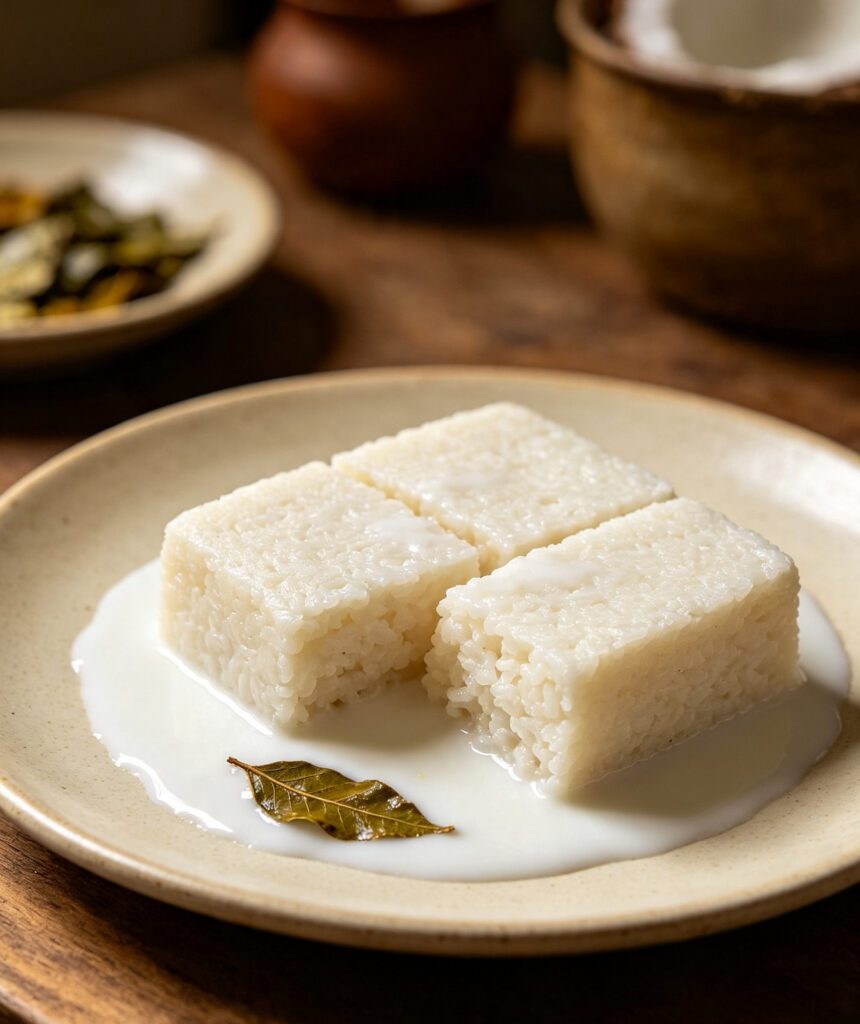
Kiribath (Coconut Milk Rice)
The Quirky Foodster Team
Ingredients
- White rice, short or medium grain (2 cups) — 400 g (14.1 oz)
- Water (3 cups) — 720 ml (3 cups)
- Thick coconut milk (2 cups) [US: 2 cups canned coconut milk] — 480 ml (2 cups)
- Salt (1 teaspoon) — 5 g (0.2 oz)
Method
- Rinse the rice two or three times until the water runs mostly clear, then drain well.
- Put the rice and water in a heavy-bottomed pot, cover, and bring to a boil over medium-high heat.
- Reduce the heat to low and simmer, covered, for about 15 minutes, until most of the water has been absorbed.
- Stir in the coconut milk and salt. Continue to cook uncovered over low heat, stirring gently every few minutes, for 12-15 minutes, until the rice is very soft and the mixture is thick, almost paste-like.
- Wet a flat tray or large plate with cold water (this stops sticking) and tip the hot rice onto it. Press it down firmly and evenly with the back of a spoon or a rice paddle to about 2 cm (3/4 inch) thickness.
- Let it rest and firm up for 15-20 minutes, then cut into diamonds or squares before serving.
Introduction: Kiribath is the most symbolically important dish in Sri Lankan cuisine.
Cultural Background: Kiribath is the most symbolically important dish in Sri Lankan cuisine. Rice cooked in thick coconut milk until creamy and set into a firm block, it is the first food eaten on auspicious occasions – the Sinhala and Tamil New Year, the first day of a new job, an exam morning, or any fresh start. Its plainness is deliberate: kiribath is meant to be paired with something bold, most often lunu miris (a fiery onion-chilli relish) or pol sambol, so the meal balances calm and heat, a pairing thought to bring good fortune.
Tips: Short or medium grain rice gives the classic sticky texture; long grain rice will not set properly. Wetting your hands or the spoon with cold water while pressing the rice stops it sticking. Don't rush the setting time – kiribath needs to cool slightly to hold its shape when cut.
Variations: Kaha Bath: the same base cooked with turmeric and spices for celebratory yellow rice, served with meat curry rather than sambol. Some households add a pandan leaf or a few curry leaves to the coconut milk for extra fragrance. Naturally vegan as written when made with plant-based coconut milk (no substitution needed).
Storage: Cover and refrigerate for up to 2 days in an airtight container.
Reheating: Steam gently for 5 minutes or microwave covered for 60-90 seconds; add a teaspoon of water if it has dried out.
Nutrition: Approx. 310 kcal, 6 g protein, 12 g fat, 44 g carbohydrates, 1 g fibre per serving (1 serving = 1/4 of tray)
FAQs:
Q: Can I use coconut milk from a carton instead of fresh?
A: Yes, use a thick, unsweetened variety – the higher the fat content, the creamier the result.
Q: Why did my kiribath not set firm?
A: This usually means the rice was overcooked to a porridge consistency or the rice variety was too long-grain; use short or medium grain rice and stop cooking once thick, not soupy.
Q: What is kiribath traditionally served with?
A: Lunu miris (spicy onion-chilli relish), pol sambol, or a mild curry – the contrast of plain rice against something bold is the point.
- White rice, short or medium grain (2 cups) — 400 g (14.1 oz)
- Water (3 cups) — 720 ml (3 cups)
- Thick coconut milk (2 cups) [US: 2 cups canned coconut milk] — 480 ml (2 cups)
- Salt (1 teaspoon) — 5 g (0.2 oz)
Please log in to leave a comment.