
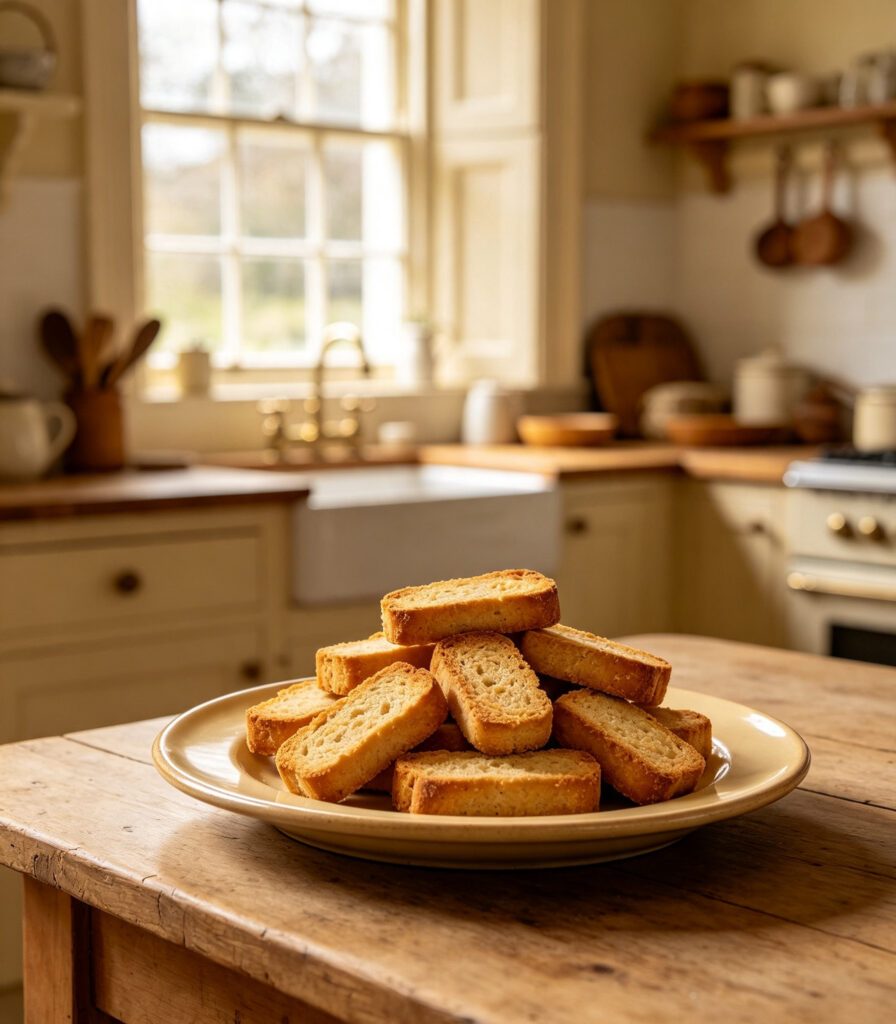
Boere Beskuit (Afrikaner Rusks)
The Quirky Foodster Team
Ingredients
- Self-raising flour — 1 kg (8 cups)
- Salt — 2 tsp
- Sugar — 200 g (1 cup)
- Butter, cold and cubed — 500 g (2 1/4 cups)
- Buttermilk — 500 ml (2 cups)
- Large eggs, lightly beaten — 3
- Aniseed (optional) — 1 tsp
Method
- Preheat the oven to 180°C (350°F) and grease a deep baking tin.
- In a large bowl, mix the flour, salt and sugar, then rub in the cold butter with your fingertips until the mixture resembles coarse crumbs.
- Whisk the buttermilk and eggs together, add the aniseed if using, and pour into the dry ingredients. Mix quickly to a soft, slightly sticky dough — do not overwork.
- Pinch off small balls of dough (about golf-ball size) and pack them tightly together in rows in the greased tin.
- Bake for 45 to 50 minutes until golden and a skewer comes out clean, then leave to cool for 15 minutes in the tin.
- Turn out and break the loaf apart along the rows into finger-shaped rusks.
- Arrange the pieces on a wire rack and dry in the oven at its lowest setting (about 80°C/175°F) with the door slightly ajar for 6 to 8 hours or overnight, until completely hard and dry.
Introduction: Beskuit are twice-baked buttermilk rusks that developed from the dried breads Voortrekker families carried on long ox-wagon journeys in the 19th century, since the double baking preserved them for weeks without refrigeration.
Cultural Background: Beskuit are twice-baked buttermilk rusks that developed from the dried breads Voortrekker families carried on long ox-wagon journeys in the 19th century, since the double baking preserved them for weeks without refrigeration. Today they remain a fixture of Afrikaner farm kitchens and are eaten daily throughout South Africa, dunked in strong coffee or rooibos tea at breakfast.
Tips: Keep the butter and buttermilk cold for the best crumbly texture. Drying is the step that makes them true rusks, not just bread — do not skip it, or they will go soft rather than crisp.
Variations: Add 100 g bran or muesli for wholesome bran rusks, or replace the aniseed with orange zest for a citrus version. The World Cookbook Project — South Africa — Full Recipes Page 4 Not naturally vegan due to butter, buttermilk and eggs; a plant-based version can be made with vegan butter, plant-based buttermilk (plant milk plus lemon juice) and a flax-egg substitute, though texture will differ.
Storage: Store in an airtight tin once fully dried and cooled; they will keep for up to a month at room temperature.
Reheating: No reheating needed — beskuit are eaten dry or dunked directly in hot coffee or tea.
Nutrition: Approx. 310 kcal, 5 g protein, 34 g carbohydrate, 17 g fat per rusk.
FAQs:
Q: Why did my rusks stay soft?
A: They likely weren't dried long enough — return them to a low oven until they snap cleanly when broken.
Q: Can I freeze the dough or baked loaf?
A: The baked, undried loaf freezes well; thaw, slice into fingers, and dry as normal.
- Self-raising flour — 1 kg (8 cups)
- Salt — 2 tsp
- Sugar — 200 g (1 cup)
- Butter, cold and cubed — 500 g (2 1/4 cups)
- Buttermilk — 500 ml (2 cups)
- Large eggs, lightly beaten — 3
- Aniseed (optional) — 1 tsp
Please log in to leave a comment.