
Dakgalbi (Spicy Stir-Fried Chicken)
The Quirky Foodster Team
Ingredients
- Boneless chicken thigh, cut into bite-sized pieces — 600 g (1.3 lb)
- Gochujang — 3 tbsp (45 g)
- Gochugaru — 1 tbsp (15 g)
- Soy sauce — 2 tbsp (30 ml)
- Sugar — 2 tbsp (30 g)
- Rice wine (mirin) — 1 tbsp (15 ml)
- Garlic cloves, minced — 4
- Grated ginger — 1 tsp (5 g)
- Cabbage, roughly chopped — 1/4 head
- Sweet potato, sliced — 1
- Sliced rice cakes (tteok) — 200 g (7 oz)
- Onion, sliced — 1/2
- Spring onions, cut into batons — 2
- Vegetable oil — 1 tbsp (15 ml)
- Perilla leaves, shredded, for garnish (optional) — 1 sheet
Method
- Combine the gochujang, gochugaru, soy sauce, sugar, rice wine, garlic and ginger in a bowl to make the marinade.
- Add the chicken pieces, mix thoroughly to coat, and marinate in the fridge for at least 1 hour, or up to overnight.
- Heat the oil in a large, wide pan over medium-high heat and add the marinated chicken, cooking for 5–6 minutes until starting to brown.
- Add the sweet potato and onion, and cook for a further 5 minutes, stirring occasionally.
- Add the cabbage and rice cakes, and continue cooking for 8–10 minutes, stirring frequently, until the chicken is fully cooked, the sweet potato is tender and the rice cakes are soft and slightly glossy.
- Stir in the spring onion in the final 2 minutes, scatter with shredded perilla leaf if using, and serve straight from the pan while bubbling.
Introduction: Dakgalbi originated in Chuncheon in the 1960s as an affordable, filling dish for university students and factory workers, cooked communally in a large pan at the centre of the table.
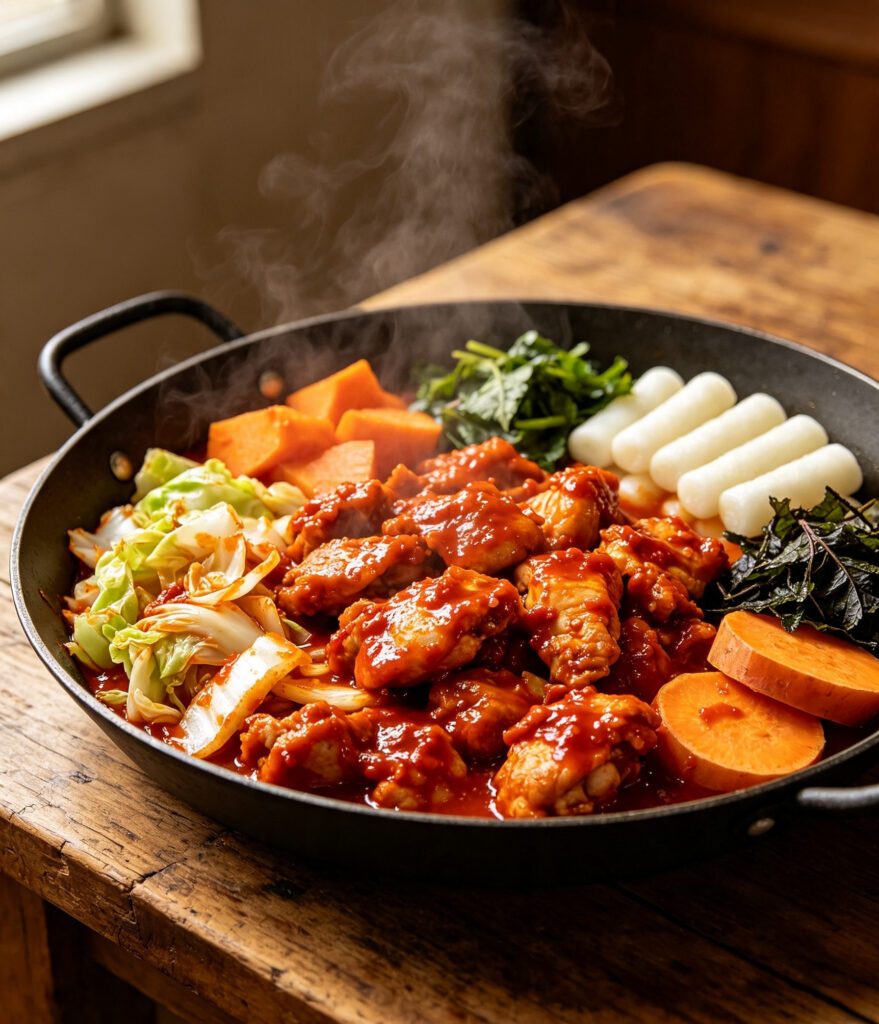
Cultural Background: Dakgalbi originated in Chuncheon in the 1960s as an affordable, filling dish for university students and factory workers, cooked communally in a large pan at the centre of the table. Bite-sized marinated chicken is stir-fried with cabbage, sweet potato, tteok (rice cakes) and a fiery gochujang sauce, and it remains one of the most popular group dining dishes in Korea today.
Tips: Marinate the chicken for as long as possible — even overnight — for the deepest flavour. If the pan looks dry as it cooks, add a splash of water or stock rather than extra oil to keep the sauce from catching.
Variations: Cheese dakgalbi: add a generous handful of mozzarella to one side of the pan at the end and let it melt for a popular modern variation. Once most of the dish is eaten, stir cooked rice and a little extra gochujang into the remaining sauce and fry it against the pan for a classic finishing 'bokkeumbap'. Substitute the chicken with thick slices of king oyster mushroom and firm tofu, marinated the same way.
Storage: Refrigerate leftovers in an airtight container for up to 3 days.
Reheating: Reheat in a pan over medium heat with a splash of water until piping hot; the microwave also works but the pan gives a better texture.
Nutrition: Calories: 440 kcal | Protein: 30 g | Carbs: 42 g | Fat: 16 g | Fibre: 4 g | Sodium: 920 mg Per serving; estimate only.
FAQs:
Q: Can I make dakgalbi less spicy?
A: Reduce the gochugaru and use a milder gochujang, or add a little extra sugar to balance the heat; the dish will still be authentic, just gentler.
Q: What are rice cakes (tteok) and where do I find them?
A: Tteok are chewy cylindrical or sliced rice cakes made from glutinous rice, sold fresh, refrigerated or frozen in Korean and Asian grocery stores.
Q: Is dakgalbi traditionally cooked at the table?
A: Yes, in Chuncheon it's classically cooked on a large communal griddle set into the table, though a regular stovetop pan works well at home.
- Boneless chicken thigh, cut into bite-sized pieces — 600 g (1.3 lb)
- Gochujang — 3 tbsp (45 g)
- Gochugaru — 1 tbsp (15 g)
- Soy sauce — 2 tbsp (30 ml)
- Sugar — 2 tbsp (30 g)
- Rice wine (mirin) — 1 tbsp (15 ml)
- Garlic cloves, minced — 4
- Grated ginger — 1 tsp (5 g)
- Cabbage, roughly chopped — 1/4 head
- Sweet potato, sliced — 1
- Sliced rice cakes (tteok) — 200 g (7 oz)
- Onion, sliced — 1/2
- Spring onions, cut into batons — 2
- Vegetable oil — 1 tbsp (15 ml)
- Perilla leaves, shredded, for garnish (optional) — 1 sheet
Please log in to leave a comment.