
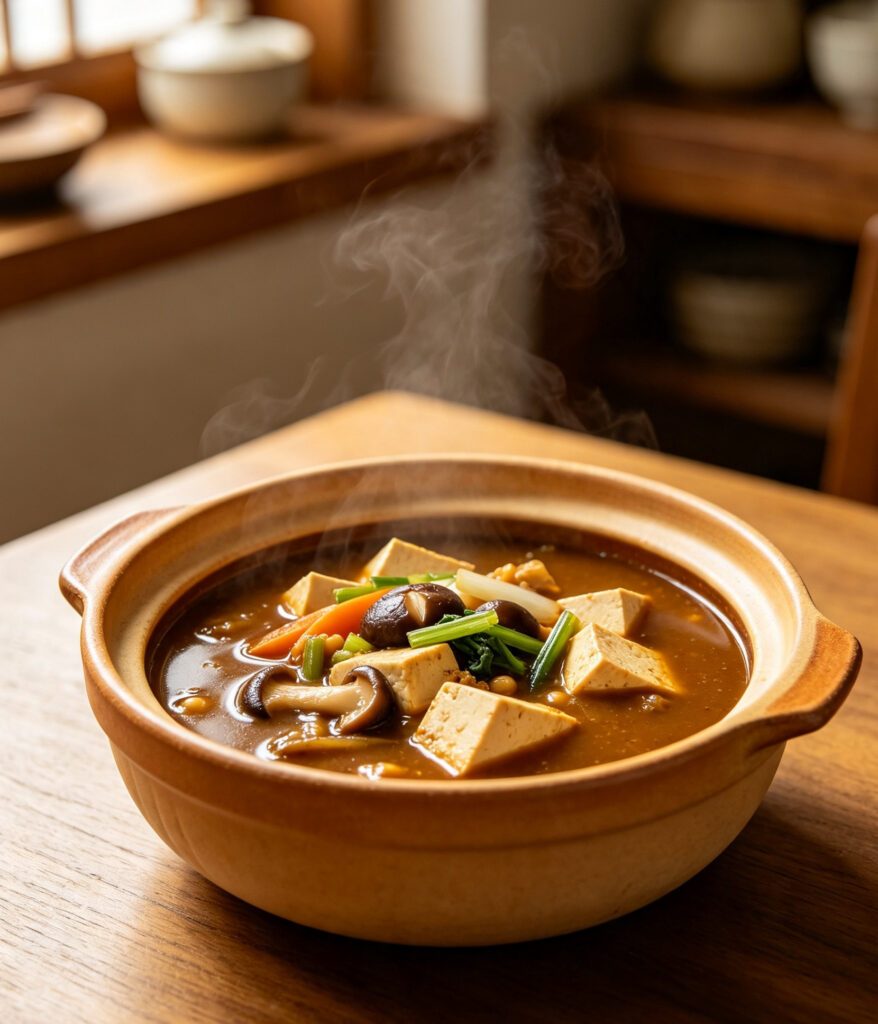
Doenjang-jjigae (Fermented Soybean Paste Stew)
The Quirky Foodster Team
Ingredients
- Doenjang (Korean fermented soybean paste) — 3 tbsp (45 g)
- Gochugaru, optional — 1 tsp (5 g)
- Anchovy and kelp stock — 600 ml (2 1/2 cups)
- Firm tofu, cubed — 200 g (7 oz)
- Medium potato, cubed — 1
- Small courgette (zucchini), sliced — 1
- Onion, sliced — 1/2
- Fresh green or red chilli, sliced — 1
- Garlic cloves, minced — 2
- Spring onion, sliced — 1
Method
- Bring the anchovy and kelp stock to a boil in a pot.
- Whisk the doenjang (and gochugaru, if using) into the hot stock until fully dissolved with no lumps.
- Add the potato and onion first, and simmer for 6–7 minutes until the potato begins to soften.
- Add the tofu, courgette and garlic, and simmer for a further 6–8 minutes until all the vegetables are tender.
- Add the chilli in the last 2 minutes of cooking.
- Stir in the spring onion, taste and adjust with a little more doenjang if a stronger flavour is wanted, then serve bubbling hot straight from the pot with steamed rice.
Introduction: Doenjang-jjigae is built on doenjang, Korea's fermented soybean paste and one of the country's oldest and most essential seasonings.
Cultural Background: Doenjang-jjigae is built on doenjang, Korea's fermented soybean paste and one of the country's oldest and most essential seasonings. Considered the ultimate home-cooked comfort dish, it appears at nearly every Korean family table, with each household holding its own preferred mix of vegetables and tofu.
Tips: Whisk the doenjang into a little hot stock first in a small bowl to dissolve it smoothly before adding to the pot, avoiding lumps. An earthenware ttukbaegi pot keeps the stew boiling at the table far longer than a regular saucepan, which is part of the dish's appeal.
Variations: Add clams or small shrimp for a seafood-enriched version. Stir in a spoonful of gochujang alongside the doenjang for a spicier, deeper-red stew. Use a kelp and dried shiitake stock in place of anchovy stock; already meat-free as written.
Storage: Refrigerate in an airtight container for up to 3 days; flavour often improves the next day.
Reheating: Reheat gently on the stovetop until bubbling; add a splash of stock if it has thickened too much.
Nutrition: Calories: 190 kcal | Protein: 12 g | Carbs: 16 g | Fat: 9 g | Fibre: 4 g | Sodium: 870 mg Per serving; estimate only.
FAQs:
Q: Is doenjang the same as Japanese miso?
A: They are related fermented soybean pastes, but doenjang is fermented longer and has a coarser texture and stronger, funkier flavour than most miso.
Q: Can I make this less salty?
A: Use less doenjang and season to taste at the end, or use a lower-sodium doenjang variety; taste before adding extra salt since doenjang is already salty.
Q: What vegetables work well as substitutes?
A: Mushrooms, Korean radish and cabbage are all traditional, flexible additions depending on what's in season or in the fridge.
- Doenjang (Korean fermented soybean paste) — 3 tbsp (45 g)
- Gochugaru, optional — 1 tsp (5 g)
- Anchovy and kelp stock — 600 ml (2 1/2 cups)
- Firm tofu, cubed — 200 g (7 oz)
- Medium potato, cubed — 1
- Small courgette (zucchini), sliced — 1
- Onion, sliced — 1/2
- Fresh green or red chilli, sliced — 1
- Garlic cloves, minced — 2
- Spring onion, sliced — 1
Please log in to leave a comment.