
Saleeg
The Quirky Foodster Team
Ingredients
- Whole Chicken, cut into pieces, or 1 kg (2.2 lb) chicken pieces — 1
- Onion, quartered — 1
- Cardamom Pods — 3
- Cinnamon Stick — 1
- Water — 1.5 L (6 cups)
- Short-grain rice, rinsed — 300 g (1 1/2 cups)
- Whole milk — 500 ml (2 cups)
- Butter — 2 tbsp
- Salt and white pepper, — to taste
Method
- Combine the chicken, onion, cardamom, cinnamon and water in a large pot.
- Bring to a boil, then reduce heat and simmer 35-40 minutes until the chicken is tender.
- Remove the chicken and set aside; strain and reserve the broth.
- In a separate saucepan, combine the rinsed rice with 750 ml (3 cups) of the reserved broth and the milk.
- Bring to a gentle simmer, stirring occasionally, and cook 25-30 minutes until the rice is very soft and the mixture is thick and creamy.
- Stir in the butter and season with salt and white pepper.
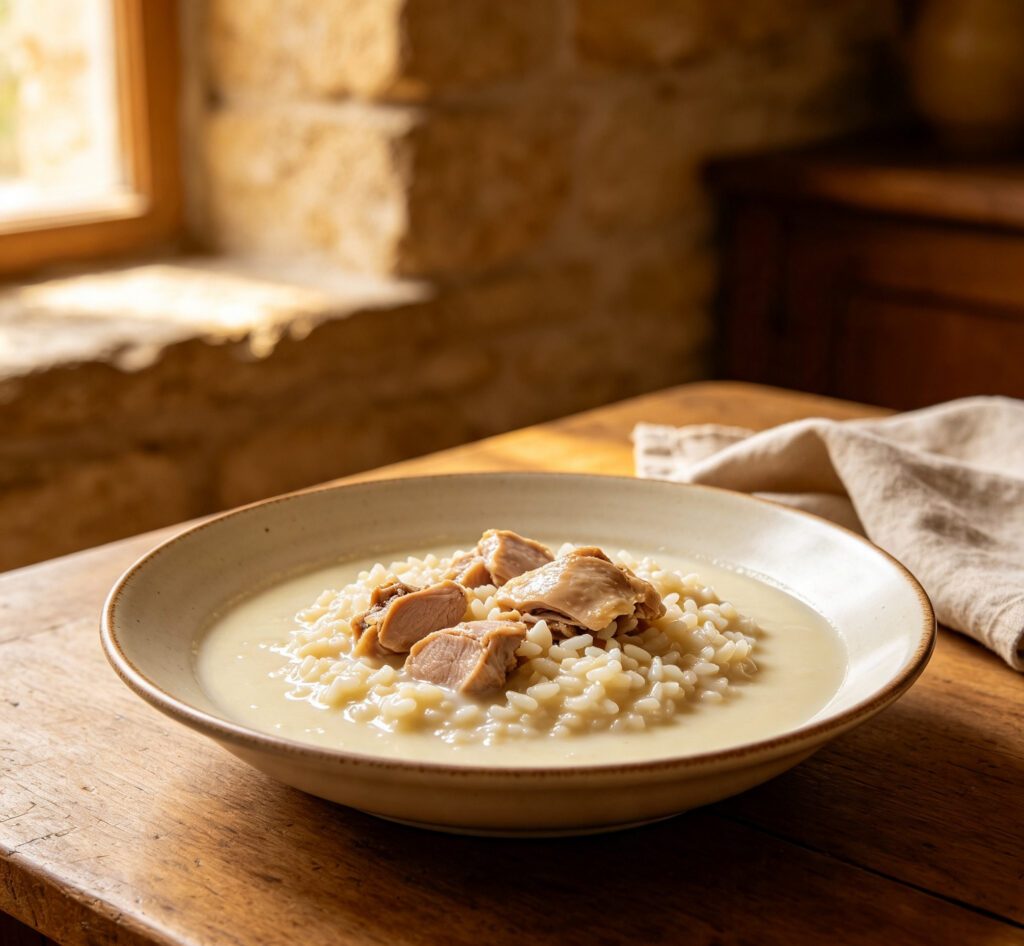
- Serve the creamy rice topped with the tender chicken.
Introduction: Creamy, milk-cooked rice served with tender chicken, a specialty of the Hejaz region.
Cultural Background: Saleeg, particularly associated with the Hejaz region of Saudi Arabia including Jeddah and Medina, features rice cooked slowly in milk until velvety and creamy, a distinctive alternative to the more common tomato-based rice dishes.
Tips: Stir the rice occasionally as it cooks in the milk mixture to prevent sticking and encourage the creamy consistency. Use short-grain rice, as it breaks down slightly for the classic soft texture.
Variations: Add a pinch of ground cardamom to the rice for extra fragrance; some versions grill or roast the chicken separately for a crisp skin before serving atop the rice.
Storage: Store rice and chicken separately in airtight containers in the refrigerator for up to 2 days.
Reheating: Reheat the rice gently on the stovetop with a splash of milk to loosen; reheat the chicken in a covered dish in a low oven.
Nutrition: Approx. 480 kcal, 32 g protein, 42 g carbohydrate, 20 g fat per serving.
FAQs:
Q: How is saleeg different from kabsa?
A: Saleeg uses milk to create a creamy, mild rice dish, while kabsa uses a spiced tomato-based broth for a more robust flavour.
Q: Can saleeg be made with lamb instead of chicken?
A: Yes, lamb is a traditional alternative, adjusting the simmering time for tenderness.
- Whole Chicken, cut into pieces, or 1 kg (2.2 lb) chicken pieces — 1
- Onion, quartered — 1
- Cardamom Pods — 3
- Cinnamon Stick — 1
- Water — 1.5 L (6 cups)
- Short-grain rice, rinsed — 300 g (1 1/2 cups)
- Whole milk — 500 ml (2 cups)
- Butter — 2 tbsp
- Salt and white pepper, — to taste
Please log in to leave a comment.