
Nidi di Rondine
The Quirky Foodster Team
Ingredients
- Fresh lasagne sheets — 12
- Cooked ham, finely chopped — 150 g (5 oz)
- Grated Emmental or similar cheese — 150 g (1 1/2 cups)
- Mortadella, finely chopped — 100 g (3.5 oz)
- Grated Parmesan — 50 g (1/2 cup)
- Béchamel sauce — 500 ml (2 cups)
- Butter, for greasing — 2 tbsp
- Extra Parmesan, for topping
Method
- Preheat the oven to 190°C (375°F) and grease a baking dish.
- Combine the chopped ham, cheese, mortadella and Parmesan in a bowl.
- Lay out each lasagne sheet and spread a portion of the filling evenly over it.
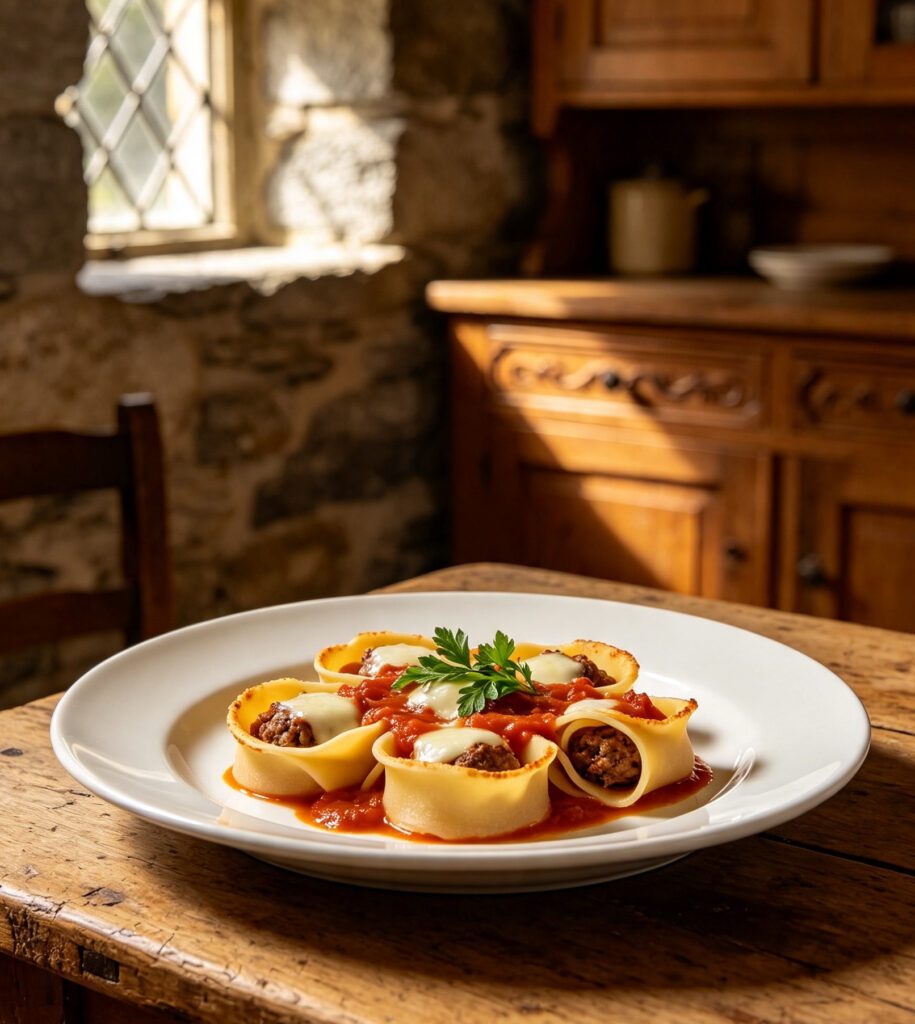
- Roll each sheet up tightly into a spiral, resembling a small nest.
- Stand the rolls upright in the prepared baking dish, cut-side up.
- Pour the béchamel sauce evenly over the rolls.
- Sprinkle with extra Parmesan.
- Bake for 25-30 minutes until golden and bubbling.
Introduction: ‘Swallow’s nests’ — rolled pasta filled with ham and cheese, baked in a creamy sauce.
Cultural Background: Nidi di Rondine, meaning ‘swallow’s nests’, are a specialty of San Marino’s traditional cuisine, pasta sheets rolled around a savoury filling and baked until golden, a festive dish often served for special family meals.
Tips: Roll the pasta sheets snugly but not too tightly, so the filling stays enclosed without tearing the sheet. Use fresh pasta sheets for the best rolling flexibility.
Variations: Add finely chopped spinach to the filling for extra colour and nutrition; use a mix of cheeses for a more complex flavour.
Storage: Store in an airtight container in the refrigerator for up to 3 days.
Reheating: Reheat in a moderate oven, covered with foil, for 15-20 minutes until warmed through.
Nutrition: Approx. 480 kcal, 24 g protein, 38 g carbohydrate, 26 g fat per serving.
FAQs:
Q: Can dried lasagne sheets be used?
A: Fresh sheets are easier to roll without cracking; if using dried, pre-cook them briefly until pliable first.
Q: What does ‘nidi di rondine’ mean?
A: It translates to ‘swallow’s nests’, referring to the dish’s spiral, nest-like shape once rolled and baked.
- Fresh lasagne sheets — 12
- Cooked ham, finely chopped — 150 g (5 oz)
- Grated Emmental or similar cheese — 150 g (1 1/2 cups)
- Mortadella, finely chopped — 100 g (3.5 oz)
- Grated Parmesan — 50 g (1/2 cup)
- Béchamel sauce — 500 ml (2 cups)
- Butter, for greasing — 2 tbsp
- Extra Parmesan, for topping
Please log in to leave a comment.