
Chop Suey with Taro
The Quirky Foodster Team
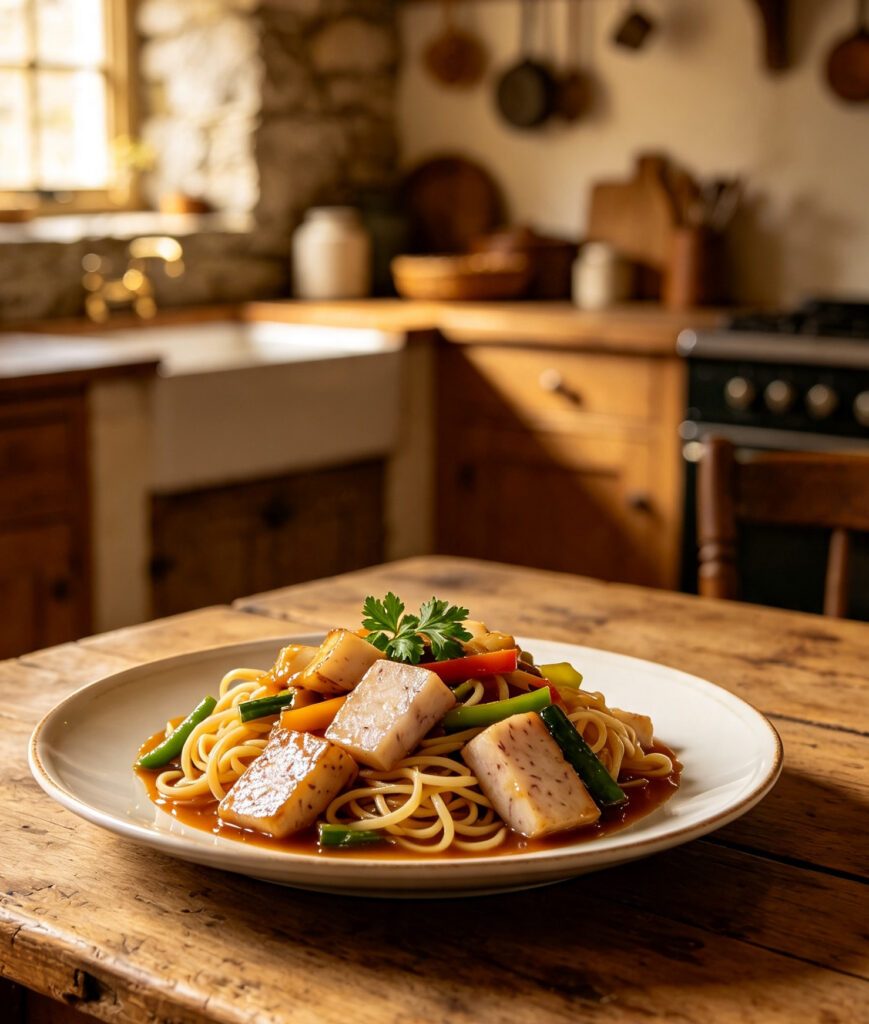
Ingredients
- Glass (cellophane) noodles — 150 g (5 oz)
- Chicken or corned beef, sliced — 300 g (10 oz)
- Onion, sliced — 1
- Garlic, minced — 2 cloves
- Carrot, julienned — 1
- Cabbage, shredded — 150 g (5 oz)
- Soy sauce — 3 tbsp
- Vegetable oil — 1 tbsp
- Chicken stock — 500 ml (2 cups)
- Taro, peeled and cut into chunks — 800 g (1.75 lb)
- Salt and black pepper, — to taste
Method
- Boil the taro in salted water for 20-25 minutes until fork-tender; drain and keep warm.
- Soak the glass noodles in warm water 10 minutes until softened; drain and cut into shorter lengths.
- Heat oil in a wok and stir-fry the onion and garlic until fragrant.
- Add the chicken or corned beef and cook until browned.
- Add the carrot and cabbage, stir-frying 3-4 minutes.
- Pour in the stock and soy sauce, bring to a simmer, then add the noodles and cook 5 minutes.
- Season with salt and pepper and serve over the boiled taro.
Introduction: Samoan-style stir-fried noodles and vegetables served over boiled taro for a heartier main.
Cultural Background: This variation on sapasui adds boiled taro to make a more substantial main course, reflecting how imported Chinese-influenced dishes have been adapted with local Samoan staples over generations.
Tips: Boil the taro separately so its texture stays distinct from the noodles. Don’t over-soak the noodles before adding to the sauce.
Variations: Add sliced sausage for extra flavour; a vegetarian version omits the meat and uses vegetable stock.
Storage: Store components separately in airtight containers in the refrigerator for up to 2 days.
Reheating: Reheat the noodle mixture in a covered pan with a splash of stock; warm the taro separately.
Nutrition: Approx. 460 kcal, 24 g protein, 60 g carbohydrate, 14 g fat per serving.
FAQs:
Q: Why add taro to chop suey?
A: It turns the dish into a more filling main course, in keeping with Samoan preference for starchy staples at meals.
Q: Can rice be served instead of taro?
A: Yes, rice is a common alternative if taro isn’t available.
- Glass (cellophane) noodles — 150 g (5 oz)
- Chicken or corned beef, sliced — 300 g (10 oz)
- Onion, sliced — 1
- Garlic, minced — 2 cloves
- Carrot, julienned — 1
- Cabbage, shredded — 150 g (5 oz)
- Soy sauce — 3 tbsp
- Vegetable oil — 1 tbsp
- Chicken stock — 500 ml (2 cups)
- Taro, peeled and cut into chunks — 800 g (1.75 lb)
- Salt and black pepper, — to taste
Please log in to leave a comment.