
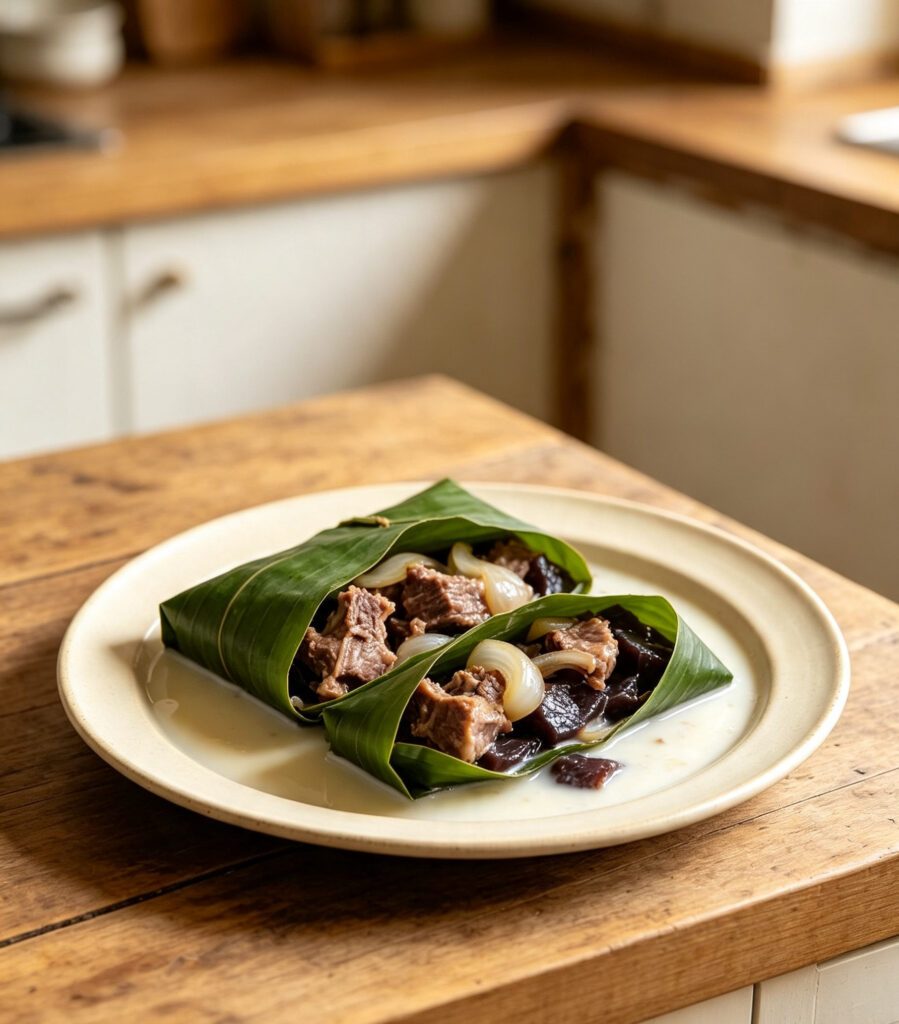
Lu Sipi (Lamb in Taro Leaves with Coconut Milk)
The Quirky Foodster Team
Ingredients
- Large taro leaves, stems trimmed, well washed — 20–24
- Lamb shoulder or ribs, cut into small pieces — 800 g (1 3/4 lb)
- Onion, sliced — 1
- Garlic cloves, minced — 2
- Coconut milk — 500 ml (2 cups)
- Salt — 1 tsp
- Black pepper — 1/2 tsp
Method
- Preheat the oven to 180°C (350°F).
- Layer about 4–5 taro leaves, overlapping slightly, in the base of a baking dish to form a wide leaf-lined base.
- Spoon a portion of the lamb, onion and garlic into the centre of the leaves.
- Fold the leaves up and over the filling to fully enclose it into a neat parcel, then place seam-side down in the dish.
- Repeat to make 4–6 parcels, arranging them snugly together in the dish.
- Pour the coconut milk evenly over the parcels, and season with salt and pepper.
- Cover the dish tightly with foil and bake for 1 hour 20 minutes to 1 hour 30 minutes, until the lamb is very tender and the taro leaves are completely soft.
- Serve hot, spooning the coconut sauce over each portion, with rice or boiled taro.
Introduction: Lu sipi follows the same taro-leaf-and-coconut-milk method as lu pulu, but uses tender pieces of lamb
instead of corned beef, and is especially popular at Tongan celebrations for its rich, comforting flavour,
with the coconut milk deeply infusing both the meat and the leaves.
Cultural Background: Lu sipi follows the same taro-leaf-and-coconut-milk method as lu pulu, but uses tender pieces of lamb
instead of corned beef, and is especially popular at Tongan celebrations for its rich, comforting flavour,
with the coconut milk deeply infusing both the meat and the leaves.
Tips: As with lu pulu, make sure the taro leaves are cooked all the way through, as undercooked leaves can feel unpleasantly itchy. Choose a well-marbled cut of lamb, such as shoulder or ribs, for the richest, most tender result after the long bake.
Variations: Use turkey tails instead of lamb for pele mui'ipipi, a well-known regional variation. Add a little grated pumpkin to the parcels for natural sweetness. This dish's identity centres on the lamb, so no authentic vegetarian version exists; a
taro-leaf-and-coconut-milk parcel with pumpkin and onion is a reasonable vegetarian dish inspired by the
same technique, though not the traditional recipe itself.
Storage: Refrigerate in an airtight container for up to 3 days.
Reheating: Reheat in a covered dish in a 160°C (325°F) oven for 15–20 minutes, or gently on the stovetop.
FAQs:
Q: What's the difference between lu sipi and lu pulu?
A: Lu sipi uses lamb, while lu pulu uses corned beef; both share the same taro leaf and coconut milk cooking method.
Q: Can I use lamb chops instead of shoulder?
A: Shoulder or ribs give a more tender result after the long bake, though chops can work with a shorter cooking time.
Q: Why is this dish associated with celebrations?
A: Its rich flavour and the effort of preparing taro leaf parcels make it a special dish reserved for feasts and gatherings.
- Large taro leaves, stems trimmed, well washed — 20–24
- Lamb shoulder or ribs, cut into small pieces — 800 g (1 3/4 lb)
- Onion, sliced — 1
- Garlic cloves, minced — 2
- Coconut milk — 500 ml (2 cups)
- Salt — 1 tsp
- Black pepper — 1/2 tsp
Please log in to leave a comment.