
Rissóis de Camarão (Portuguese-Timorese Shrimp Rissoles)
The Quirky Foodster Team
Ingredients
- Shrimp, peeled, deveined, and finely chopped — 300 g (10.5 oz)
- Butter — 45 g (3 tbsp)
- All-purpose flour, for the filling — 45 g (⅓ cup)
- Milk — 375 ml (1½ cups)
- Onion, finely chopped — ½
- Garlic, minced — 1 clove
- Salt and black pepper, — to taste
- All-purpose flour, for the dough — 250 g (2 cups)
- Water — 350 ml (1½ cups)
- Eggs, beaten — 2
- Breadcrumbs — 150 g (1½ cups)
- Vegetable oil, for deep-frying — 750 ml (3 cups)
Method
- Make the filling: melt butter in a saucepan over medium heat. Sauté onion and garlic until soft, about 3 minutes. Add chopped shrimp and cook 2–3 minutes until just pink.
- Stir in 45 g flour and cook 1 minute, then gradually whisk in milk, stirring constantly until a very thick, smooth paste forms, about 5 minutes. Season with salt and pepper. Transfer to a bowl, cover with plastic wrap directly on the surface, and chill for at least 1 hour until firm.
- Make the dough: bring water to a boil in a saucepan with a pinch of salt, then add 250 g flour all at once, stirring vigorously until it forms a smooth dough that pulls away from the pan. Let cool slightly until safe to handle.
- Roll the dough thin on a floured surface and cut into rounds using a glass or cutter.
- Place a spoonful of the chilled shrimp filling on each round, fold over into a crescent shape, and press the edges firmly to seal.
- Dip each rissole in beaten egg, then coat thoroughly in breadcrumbs.
- Heat oil to 175°C (350°F) and fry the rissoles in batches for 3–4 minutes until golden brown and crisp. Drain on paper towel and serve hot.
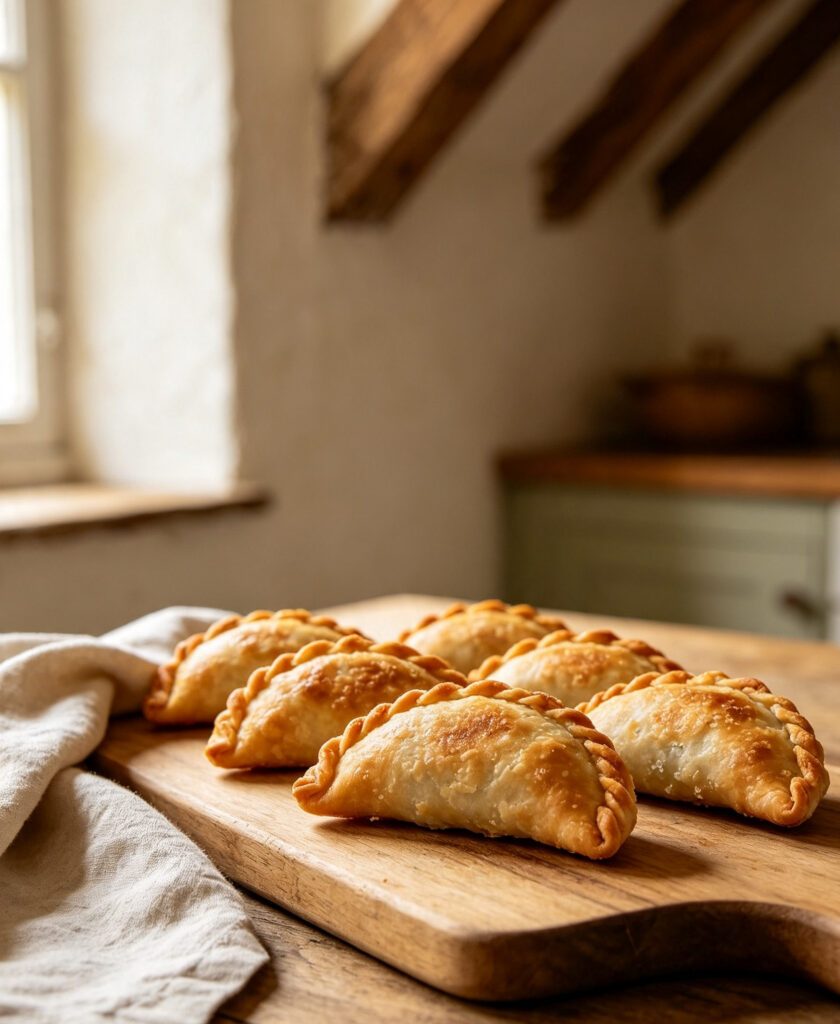
Introduction: Rissóis de camarão are crescent-shaped, breaded shrimp pastries with a creamy béchamel filling, a beloved legacy of Portuguese colonial rule that remains popular at Timorese parties and celebrations.
Cultural Background: Rissóis de camarão are crescent-shaped, breaded shrimp pastries with a creamy béchamel filling, a beloved legacy of Portuguese colonial rule that remains popular at Timorese parties and celebrations. Their delicate, crisp shell and rich filling make them a standout appetizer at family gatherings.
Tips: Chilling the filling thoroughly before assembling is essential — a firm filling is much easier to enclose neatly and prevents leaks during frying.
Variations: Finely chopped cooked chicken or ham can replace the shrimp for a different classic Portuguese-Timorese rissole filling.
Storage: Refrigerate uncooked, breaded rissoles for up to 1 day, or freeze for up to 2 months; fry directly from frozen, adding 1–2 minutes to the frying time.
Reheating: Reheat cooked rissoles in a 190°C (375°F) oven or air fryer for 8–10 minutes to restore crispness.
FAQs:
Q: Why did my rissoles burst open while frying?
A: The edges likely weren’t sealed tightly enough, or the filling wasn’t chilled firm enough — press edges firmly and ensure the filling is cold and set.
Q: Can I bake rissoles instead of frying?
A: Yes, brush with oil and bake at 200°C (400°F) for 20–22 minutes, turning halfway, though the texture will be less crisp than fried.
Q: Are rissóis de camarão gluten-free?
A: No, due to the flour dough and breadcrumbs; gluten-free flour and breadcrumbs can be substituted with some adjustment to texture.
- Shrimp, peeled, deveined, and finely chopped — 300 g (10.5 oz)
- Butter — 45 g (3 tbsp)
- All-purpose flour, for the filling — 45 g (⅓ cup)
- Milk — 375 ml (1½ cups)
- Onion, finely chopped — ½
- Garlic, minced — 1 clove
- Salt and black pepper, — to taste
- All-purpose flour, for the dough — 250 g (2 cups)
- Water — 350 ml (1½ cups)
- Eggs, beaten — 2
- Breadcrumbs — 150 g (1½ cups)
- Vegetable oil, for deep-frying — 750 ml (3 cups)
Please log in to leave a comment.