
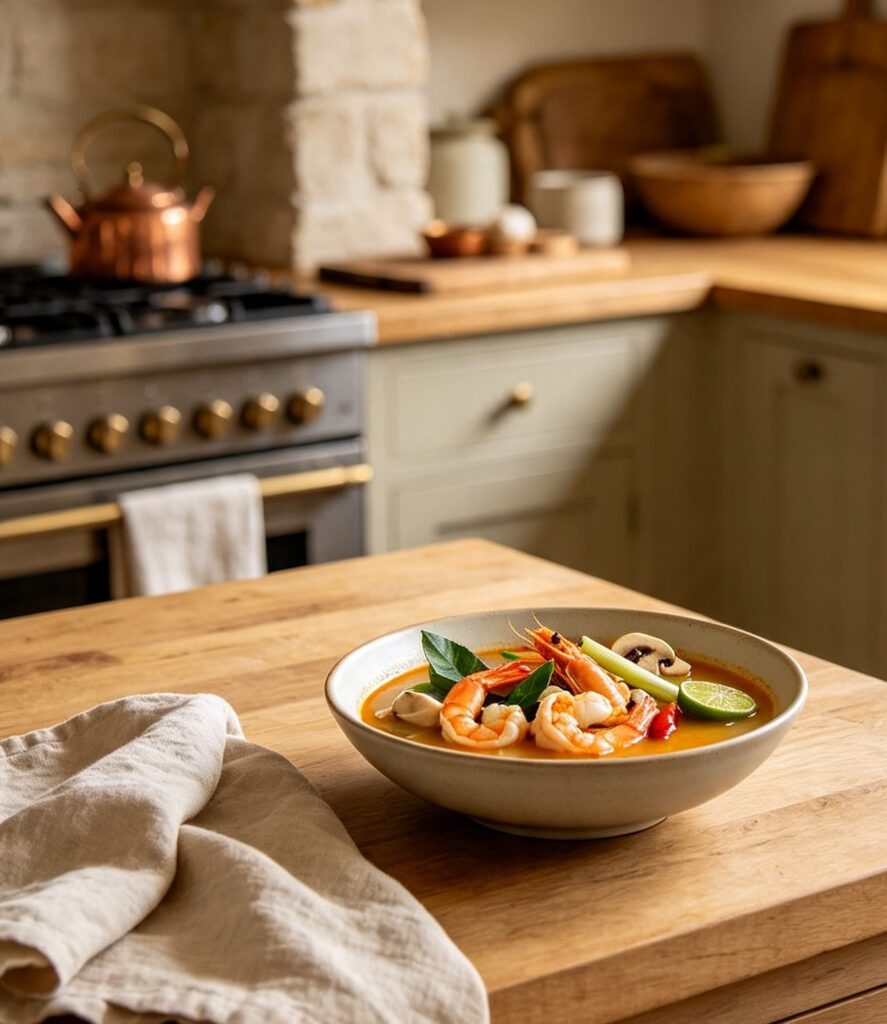
Tom Yum Goong (Spicy and Sour Shrimp Soup)
The Quirky Foodster Team
Ingredients
- Water or light stock — 1 L (4 cups)
- Lemongrass, bruised and cut into lengths — 3 stalks
- Galangal — 5 slices
- Kaffir lime leaves, torn — 5
- Small red or green chillies, bruised (adjust to taste) — 5–8
- Shrimp, peeled and deveined, shells reserved — 300 g (10 oz)
- Mushrooms, halved — 200 g (7 oz)
- Fish sauce — 3 tbsp
- Lime juice — 4 tbsp
- Chilli paste in oil (nam prik pao) — 1 tbsp
- Fresh coriander, chopped, to serve — 2 tbsp
Method
- If using shrimp shells, simmer them in the water or stock for 10 minutes to build extra flavour, then strain and discard the shells, returning the broth to the pot.
- Add the lemongrass, galangal, kaffir lime leaves and chillies to the broth and bring to a boil.
- Simmer for 5 minutes to infuse the aromatics.
- Add the mushrooms and shrimp, and cook for 2–3 minutes, until the shrimp just turn pink and are cooked through.
- Remove from the heat and stir in the fish sauce, lime juice and chilli paste.
- Taste and adjust the balance of sour, salty and spicy as needed, then scatter with coriander before serving hot.
Introduction: Tom yum goong is one of Thailand's most famous dishes, a fragrant, fiery soup balancing sour, spicy and
salty flavours through lemongrass, galangal, kaffir lime leaves and fresh chillies, with plump shrimp as the
star ingredient.
Cultural Background: Tom yum goong is one of Thailand's most famous dishes, a fragrant, fiery soup balancing sour, spicy and
salty flavours through lemongrass, galangal, kaffir lime leaves and fresh chillies, with plump shrimp as the
star ingredient. Its bold, layered aromatics are considered a hallmark of central Thai cooking.
Tips: Add the lime juice off the heat, at the very end, so its bright flavour doesn't dull from prolonged cooking. The lemongrass, galangal and lime leaves are meant to be aromatics, not eaten directly — diners typically push them aside.
Variations: Make tom yum nam khon, a creamier version, by stirring in a splash of coconut milk or evaporated milk at the end. Use chicken or a mix of seafood instead of shrimp. A vegetarian version, tom yum het, can be made by omitting the shrimp and using extra mushrooms and
vegetable stock, with soy sauce in place of fish sauce.
Tom Yum Het (Vegetarian Version): Omit the shrimp and shrimp shells, using vegetable stock as the base
instead. Increase the mushrooms to 400 g (14 oz), using a mix of varieties if possible. Replace the fish
sauce with an equal amount of soy sauce, and ensure the chilli paste used is a vegetarian version.
Proceed exactly as directed.
Storage: Refrigerate in an airtight container for up to 2 days; the shrimp are best enjoyed fresh.
Reheating: Reheat gently on the stovetop, being careful not to overcook the shrimp further.
FAQs:
Q: What is galangal?
A: A rhizome similar in appearance to ginger but with a sharper, more citrusy flavour, essential to authentic tom yum; fresh or frozen galangal is available at Asian grocers.
Q: Do I eat the lemongrass and lime leaves?
A: No, these aromatics are meant to flavour the broth and are typically pushed aside rather than eaten.
Q: What is nam prik pao?
A: A Thai roasted chilli paste in oil, adding depth, colour and a mild sweetness to the soup; available at Asian grocers.
- Water or light stock — 1 L (4 cups)
- Lemongrass, bruised and cut into lengths — 3 stalks
- Galangal — 5 slices
- Kaffir lime leaves, torn — 5
- Small red or green chillies, bruised (adjust to taste) — 5–8
- Shrimp, peeled and deveined, shells reserved — 300 g (10 oz)
- Mushrooms, halved — 200 g (7 oz)
- Fish sauce — 3 tbsp
- Lime juice — 4 tbsp
- Chilli paste in oil (nam prik pao) — 1 tbsp
- Fresh coriander, chopped, to serve — 2 tbsp
Please log in to leave a comment.