
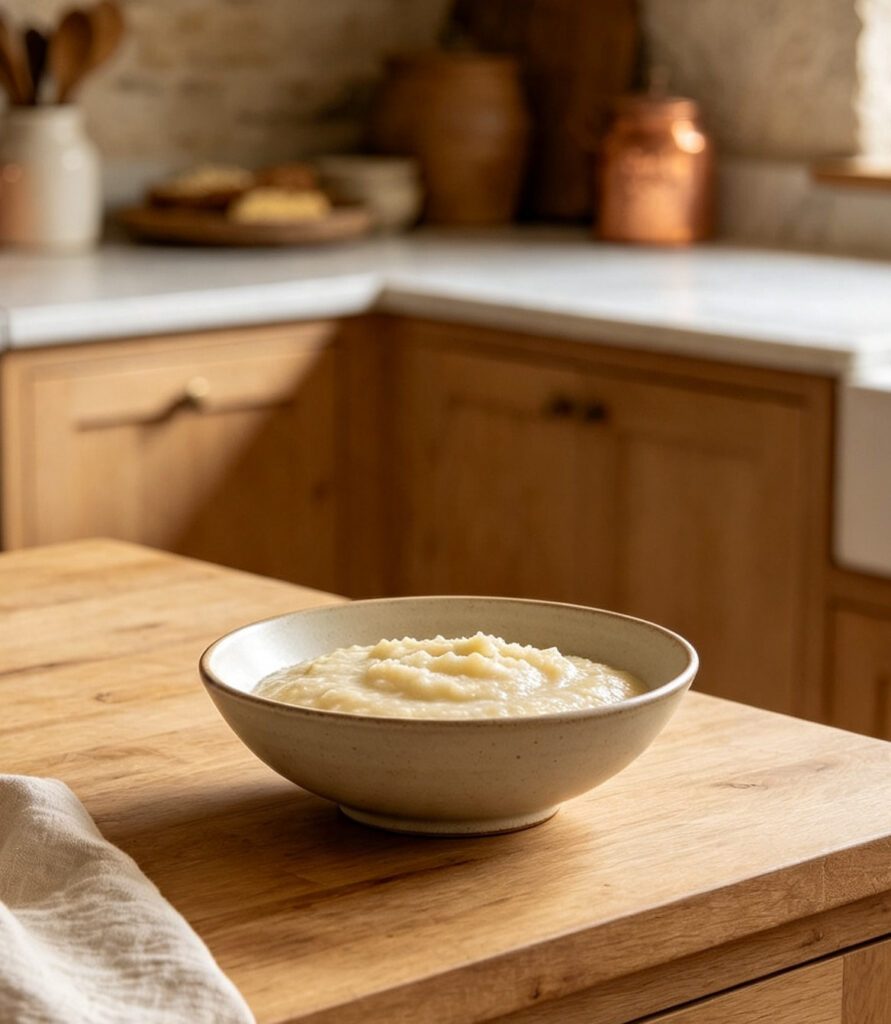
Uji (Fermented Millet Porridge)
The Quirky Foodster Team
Ingredients
- Millet or sorghum flour — 150 g (1 1/4 cups)
- Water, divided — 800 ml (3 1/3 cups)
- Sugar, — to taste
- Salt — a pinch
- Ground cinnamon (optional) — 1/2 tsp
Method
- In a bowl, whisk the flour with 200 ml (scant 1 cup) of the water to form a smooth, lump-free slurry. For a traditional tangy flavour, cover and let this slurry ferment at room temperature overnight.
- Bring the remaining 600 ml (2 1/2 cups) water to a boil in a saucepan.
- Slowly whisk in the flour slurry, stirring constantly to prevent lumps.
- Reduce the heat to low and simmer for 10–12 minutes, stirring frequently, until thickened to a smooth, pourable porridge.
- Stir in a pinch of salt and cinnamon, if using.
- Ladle into cups or bowls and sweeten with sugar to taste before serving hot.
Introduction: Uji is a warming, slightly sour porridge made from fermented millet, sorghum or maize flour, sold hot from
street vendors each morning across Tanzania and enjoyed as a filling, nourishing start to the day, often
sweetened with sugar to taste.
Cultural Background: Uji is a warming, slightly sour porridge made from fermented millet, sorghum or maize flour, sold hot from
street vendors each morning across Tanzania and enjoyed as a filling, nourishing start to the day, often
sweetened with sugar to taste.
Tips: Whisk the flour into a smooth slurry before adding it to boiling water to avoid lumps. Fermenting the batter overnight gives uji its traditional gentle tang, though it can be made fresh without fermenting for a milder porridge.
Variations: Use maize flour instead of millet for a different, equally traditional version. Add a splash of coconut milk or peanut butter for extra richness. Naturally vegan and vegetarian.
Storage: Refrigerate in an airtight container for up to 2 days; the texture will thicken further when chilled.
Reheating: Reheat gently over low heat, whisking in a splash of water to loosen the consistency.
FAQs:
Q: Why is uji sometimes fermented?
A: Fermenting the batter gives the porridge a gentle sourness that many find characteristic and refreshing, though it's optional for a milder result.
Q: Can I use other grains?
A: Yes, maize, sorghum or a mix of grains are all traditional depending on the region and what's available.
Q: How is it usually served?
A: Hot, often sweetened with sugar, and sometimes with a splash of milk stirred in.
- Millet or sorghum flour — 150 g (1 1/4 cups)
- Water, divided — 800 ml (3 1/3 cups)
- Sugar, — to taste
- Salt — a pinch
- Ground cinnamon (optional) — 1/2 tsp
Please log in to leave a comment.