
Urwagwa
The Quirky Foodster Team
Ingredients
- Very ripe bananas, peeled — 10
- Sorghum flour — 280 g (10 oz)
- Water — 960 ml (32 fl oz)
- Banana leaves, for wrapping (traditional)
Method
- Mash the ripe bananas thoroughly in a large basin.
- Traditionally, the mashed bananas are wrapped in banana leaves and left to ripen and soften further for a day.
- Mix the fermented banana pulp with the sorghum flour and water, combining thoroughly.
- Strain the mixture through a cloth to remove solids, collecting the liquid.
- Transfer to a fermentation vessel and let sit at room temperature for 2–3 days until it develops a mild alcoholic content and tangy flavour.
- Serve at room temperature, traditionally shared from a communal container.
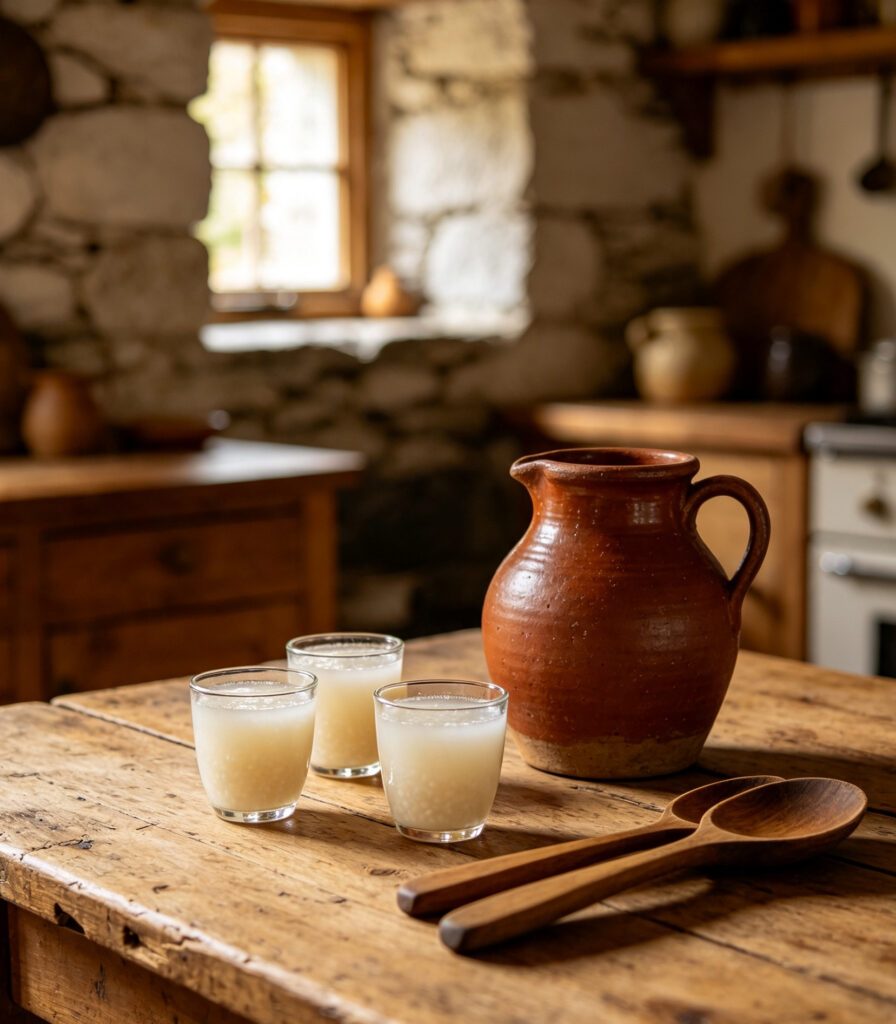
Introduction: A traditional fermented banana beer, a culturally significant beverage central to Rwandan social and ceremonial life.
Cultural Background: Urwagwa holds deep cultural importance in Rwanda, traditionally brewed from ripe bananas and sorghum, and shared during important social occasions, ceremonies and gatherings as a symbol of hospitality and community.
Tips: Use only very ripe, sweet bananas, as their natural sugars are essential for proper fermentation. This traditional process varies by region and family; some methods and timings differ.
Variations: Adjust the sorghum quantity for a different balance of flavour and body. Traditionally shared communally using a straw or cup passed among the group.
Storage: Best consumed within a few days of straining, as fermentation continues and the flavour changes over time.
Reheating: This drink is served at room temperature and is not heated.
FAQs:
Q: What is urwagwa used for?
A: It holds deep social and ceremonial significance in Rwanda, traditionally shared during important gatherings, celebrations and as a gesture of hospitality.
Q: Is urwagwa alcoholic?
A: Yes, the fermentation process produces a mild alcoholic content, though it varies depending on fermentation time.
- Very ripe bananas, peeled — 10
- Sorghum flour — 280 g (10 oz)
- Water — 960 ml (32 fl oz)
- Banana leaves, for wrapping (traditional)
Please log in to leave a comment.