
Madrouba
The Quirky Foodster Team
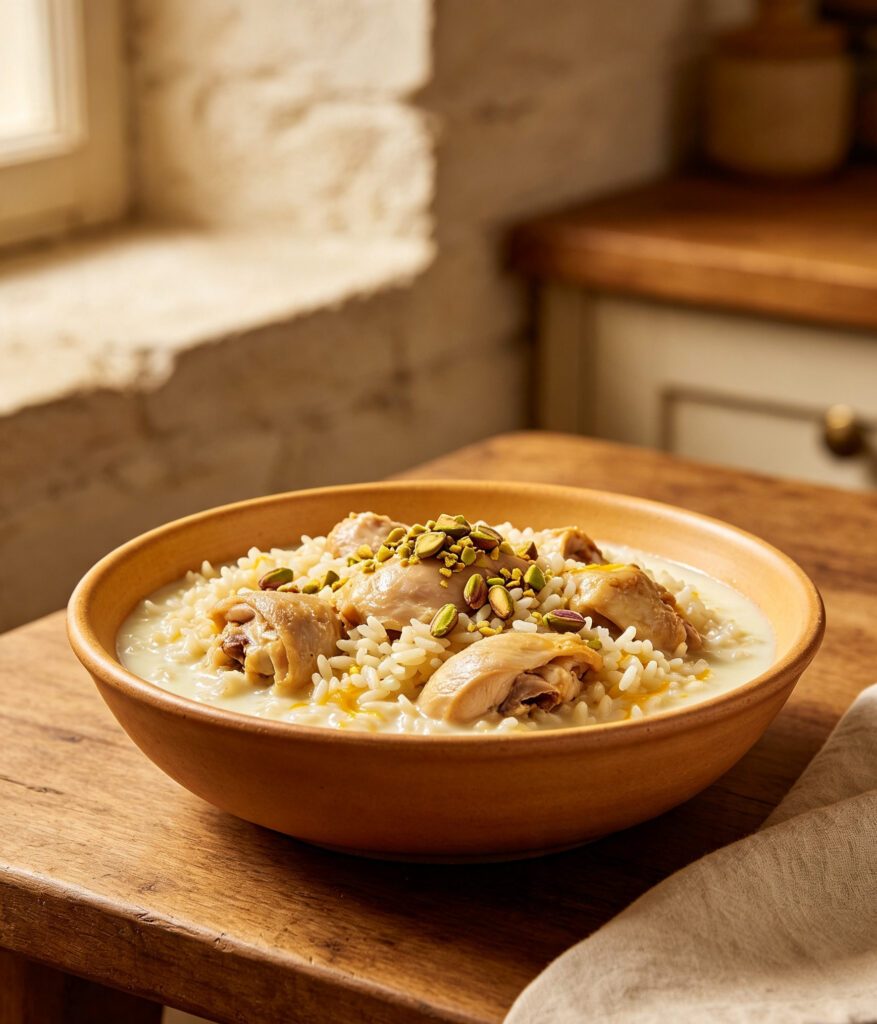
Ingredients
Method
- Heat the ghee in a large pot and sauté the onion and garlic until softened.
- Add the turmeric and cumin, cooking briefly.
- Add the fish and cook for 3–4 minutes until it starts to flake.
- Add the rice and water or stock, and bring to a boil.
- Reduce to a simmer and cook, covered, for 30–35 minutes, stirring occasionally, until the rice is very soft and starting to break down.
- Mash and beat the mixture with a wooden spoon until it reaches a smooth, creamy, porridge-like consistency, breaking up the fish further as you go.
- Season with salt and serve hot, garnished with fried onions.
Introduction: A creamy, mashed rice and fish porridge flavoured with warm spices, a comforting and beloved Qatari specialty.
Cultural Background: Madrouba reflects Qatar's coastal heritage, combining fish with rice cooked down into a soft, mashed consistency, its comforting texture making it a cherished family dish, especially for children and during Ramadan.
Tips: Beat the mixture thoroughly toward the end of cooking, as this develops madrouba's characteristic smooth, creamy texture. Use a firm white fish that breaks down well but retains some flavourful texture.
Variations: Add a little extra ghee at the end for richness. Adjust the spice blend to taste for a milder or more robust flavour.
Storage: Refrigerate in an airtight container for up to 2 days.
Reheating: Reheat gently on the stovetop with a splash of water, stirring, until warmed through.
FAQs:
Q: What does 'madrouba' mean?
A: Roughly 'beaten' or 'mashed' in Arabic, referencing the technique of beating the rice and fish into a smooth, porridge-like consistency.
Q: When is madrouba especially popular?
A: During Ramadan and as a comforting family meal, particularly favoured for its soft, easy-to-eat texture.
- White fish fillets — 500 g (1 lb 2 oz)
- Rice — 370 g (13 oz)
- Onion, chopped — 1
- Garlic, minced — 2 cloves
- Ground turmeric — 1 tsp
- Ground cumin — 1 tsp
- Ghee — 60 g (2 oz)
- Water or fish stock — 1.2 L (40 fl oz)
- Salt — to taste
- Fried onions, to garnish
Please log in to leave a comment.