
Pho Bo
The Quirky Foodster Team
Ingredients
- Beef bones (oxtail or knuckle) — 1.5 kg (3.3 lb)
- Beef sirloin, thinly sliced — 400 g (14 oz)
- Onion, halved — 1
- Ginger (about 6 cm/2.5 inches), halved lengthways — 1 knob
- Star anise — 3
- Cinnamon stick — 1
- Cloves — 3
- Water — 3 L (12 cups)
- Dried flat rice noodles (banh pho) — 400 g (14 oz)
- Fish sauce, plus extra to taste — 2 tbsp
- Sugar — 1 tbsp
- Bean sprouts, Thai basil, lime wedges, sliced chilli, to serve
- Salt, — to taste
Method
- Char the onion and ginger halves directly over a gas flame or under a hot grill until blackened in spots, about 5 minutes, then rinse off any loose char.
- Place the beef bones in a stockpot, cover with water, bring to a boil, then drain and rinse the bones to remove impurities.
- Return the bones to the pot with the fresh 3 litres of water, charred onion and ginger.
- Toast the star anise, cinnamon and cloves in a dry frying pan for 1-2 minutes until fragrant, then add to the pot.
- Bring to a boil, then reduce heat and simmer gently, uncovered, for 3-4 hours, skimming any foam periodically.
- Strain the broth through a fine sieve, discarding the solids, and season with fish sauce, sugar and salt to taste.
- Cook the rice noodles according to package instructions, then divide among serving bowls.
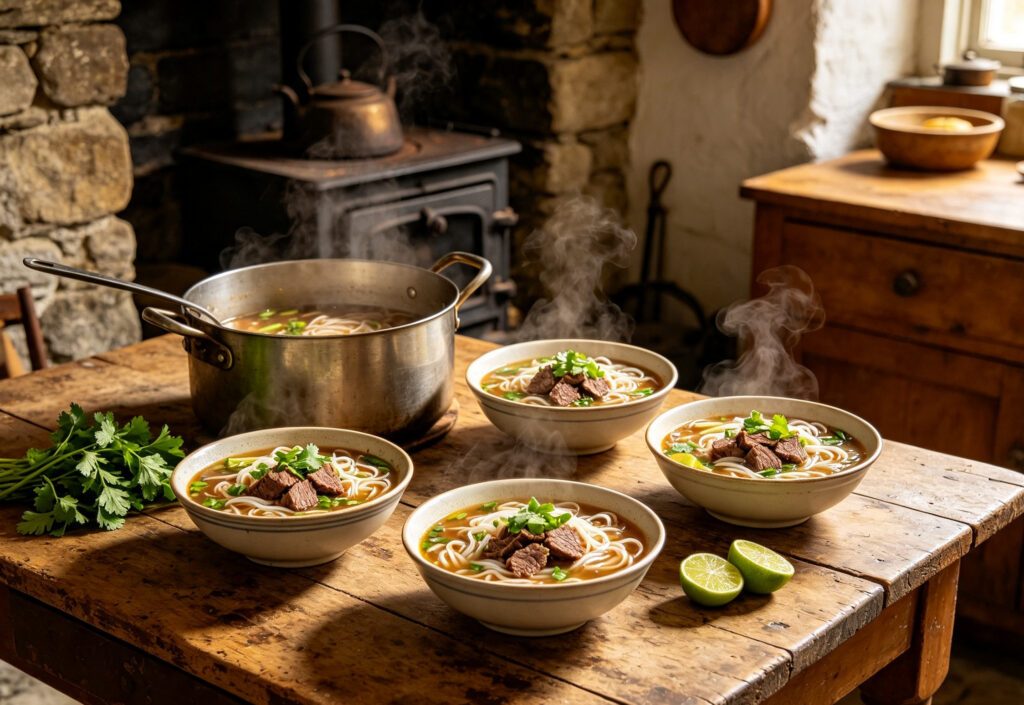
- Top with thinly sliced raw beef and ladle the very hot broth over the top, which will gently cook the beef.
- Serve immediately with bean sprouts, Thai basil, lime wedges and sliced chilli on the side.
Introduction: Pho is Vietnam's most famous dish, a fragrant beef broth simmered for hours with charred onion, ginger and warm spices, poured over rice noodles and thinly sliced beef.
Cultural Background: Pho is Vietnam's most famous dish, a fragrant beef broth simmered for hours with charred onion, ginger and warm spices, poured over rice noodles and thinly sliced beef. Traditionally eaten for breakfast at street stalls across Hanoi and beyond, it's considered a defining symbol of Vietnamese cuisine.
Tips: Rinsing the parboiled bones before making the final broth removes impurities for a cleaner, clearer result. Char the aromatics well — this step is essential for pho's distinctive depth of flavour. Serve the broth piping hot so it gently cooks the thin beef slices right in the bowl.
Variations: Use chicken (pho ga) in place of beef for a lighter version. Add well-done brisket or beef meatballs alongside the raw beef. Adjust the balance of fish sauce and sugar to suit personal taste. A vegetarian version can be made with a mushroom and vegetable broth in place of beef bones, and tofu instead of beef, though this departs from the traditional recipe.
Storage: Refrigerate the broth in an airtight container for up to 4 days, or freeze for up to 3 months; store noodles and toppings separately.
Reheating: Reheat the broth to a rolling boil on the stovetop before assembling fresh bowls with noodles and raw beef.
FAQs:
Q: Why is the broth simmered for so long?
A: A long, gentle simmer extracts maximum flavour and collagen from the bones, giving pho its signature rich, clear broth.
Q: Can I make this dish ahead of time?
A: Yes, the broth can be made a day or two ahead and reheated; assemble bowls with fresh noodles and beef just before serving.
Q: Is pho traditionally eaten for breakfast?
A: Yes, it's a very common breakfast dish across Vietnam, though it's enjoyed at any time of day.
- Beef bones (oxtail or knuckle) — 1.5 kg (3.3 lb)
- Beef sirloin, thinly sliced — 400 g (14 oz)
- Onion, halved — 1
- Ginger (about 6 cm/2.5 inches), halved lengthways — 1 knob
- Star anise — 3
- Cinnamon stick — 1
- Cloves — 3
- Water — 3 L (12 cups)
- Dried flat rice noodles (banh pho) — 400 g (14 oz)
- Fish sauce, plus extra to taste — 2 tbsp
- Sugar — 1 tbsp
- Bean sprouts, Thai basil, lime wedges, sliced chilli, to serve
- Salt, — to taste
Please log in to leave a comment.