
Arroz Doce
The Quirky Foodster Team
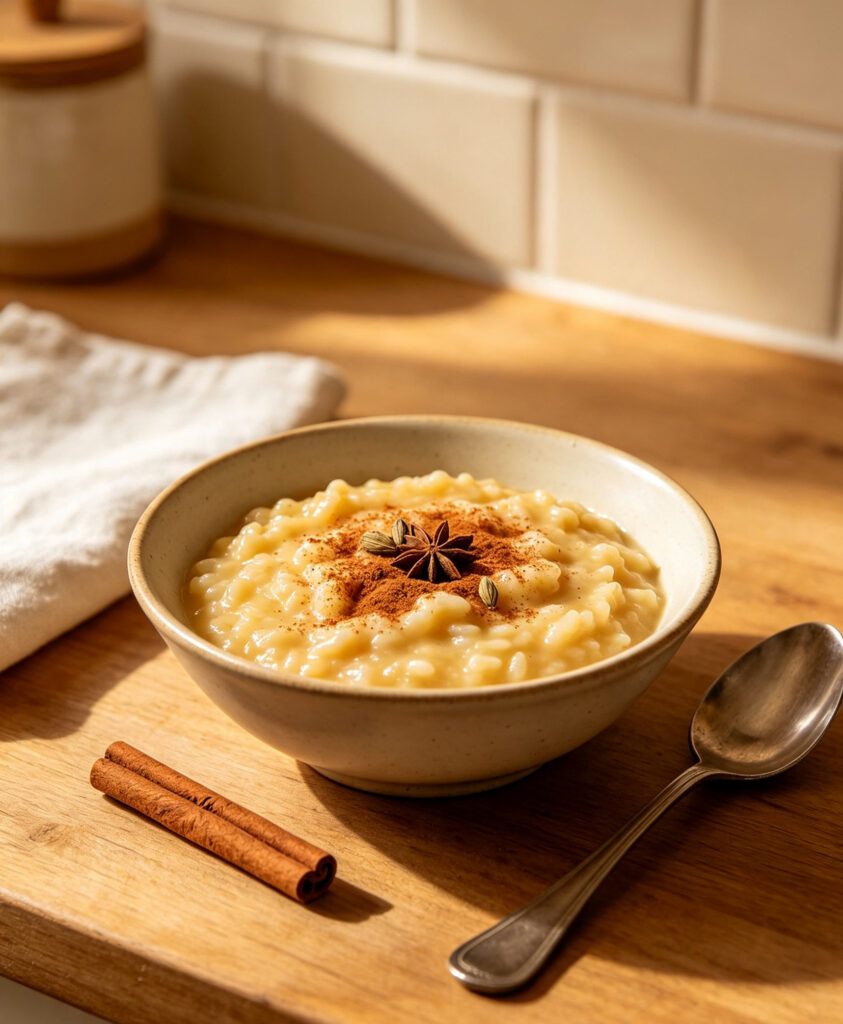
Ingredients
- Rice — 185 g (6.5 oz)
- Milk — 960 ml (32 fl oz)
- Water — 240 ml (8 fl oz)
- Sugar — 150 g (5 oz)
- Strip lemon peel — 1
- Cinnamon stick — 1
- Egg yolks — 4
- Ground cinnamon, to garnish
Method
- Combine the rice and water in a saucepan and simmer for 10 minutes until the water is mostly absorbed.
- Add the milk, sugar, lemon peel and cinnamon stick, and continue simmering, stirring frequently, for
- 20–25 minutes until the rice is very tender and the mixture has thickened.
- Remove the lemon peel and cinnamon stick.
- Whisk the egg yolks with a little of the hot rice mixture to temper them, then stir this back into the pan.
- Cook over low heat for a further 2–3 minutes, stirring constantly, until slightly thickened further (do not boil after adding the eggs).
- Pour into a serving dish or individual bowls.
- Dust with ground cinnamon, often in a decorative pattern, before serving warm or chilled.
Introduction: A creamy rice pudding flavoured with lemon and cinnamon, a beloved traditional Portuguese dessert served at celebrations and family meals.
Cultural Background: Arroz doce is a cherished dessert across Portugal, appearing at Christmas and other family gatherings, its rich, comforting texture and fragrant lemon-cinnamon flavour making it a nostalgic favourite passed down through generations.
Tips: Stir frequently throughout cooking to prevent the milk from catching on the bottom of the pan. Temper the egg yolks carefully with a little hot liquid before adding them back to the pan, to prevent scrambling.
Variations: Create a decorative pattern with the cinnamon on top, a traditional touch for special occasions. Adjust the sweetness to taste.
Storage: Store covered in the refrigerator for up to 4 days.
Reheating: Serve chilled or at room temperature; if reheating, do so very gently to avoid curdling the eggs.
FAQs:
Q: When is arroz doce traditionally served?
A: At Christmas and other family celebrations, though it's enjoyed as an everyday dessert throughout the year.
Q: Why is the cinnamon often arranged decoratively on top?
A: This is a traditional touch, particularly for special occasions, adding a visually appealing finish to the simple, comforting dessert.
- Rice — 185 g (6.5 oz)
- Milk — 960 ml (32 fl oz)
- Water — 240 ml (8 fl oz)
- Sugar — 150 g (5 oz)
- Strip lemon peel — 1
- Cinnamon stick — 1
- Egg yolks — 4
- Ground cinnamon, to garnish
Please log in to leave a comment.